


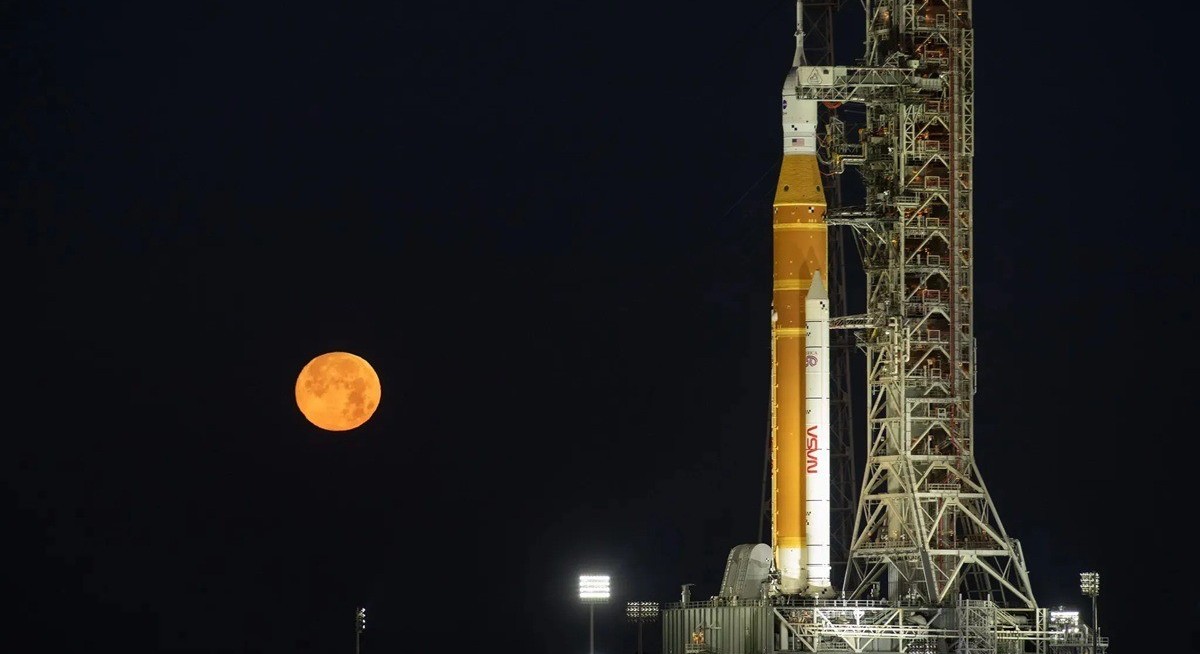


(March 24): Nasa plans to invest US$20 billion over the next seven years to develop a base on the surface of the moon, the latest major strategy shakeup aimed at enabling humans to live on the lunar surface long-term.
Nasa administrator Jared Isaacman and other agency officials laid out the framework Tuesday in Washington, DC, at a meeting with partners and contractors involved in the Artemis programme, the agency’s lunar programme as well as US representatives and international government officials.
In addition to the moon base plans, Nasa also announced that it would develop an entirely new spacecraft to reach Mars. Both projects are meant to satisfy an executive order US President Donald Trump signed in December, calling on the US to land astronauts back on the moon by 2028 and begin building a permanent lunar outpost by 2030.
“Taxpayers support Nasa because we can change the world in air and space and science and inspire the next generation along the way,” Isaacman said. “We cannot be spread thin, trying to undertake dozens of externally imposed and self-inflicted distractions, jumping straight to the dream state at the expense of an achievable strategy.”
The announcement comes roughly a week before Nasa aims to launch humans to the moon for the first time in more than 50 years, as part of a mission called Artemis II. The upcoming mission, which will send a crew of four to slingshot around the moon, will help set the stage for a crewed moon landing in the coming years.
Pausing gateway
See also: Lufthansa bookings surge with carrier shifting capacity to Asia
As part of this new strategy, Nasa is reconsidering a long-held plan to build a space station in orbit around the moon.
For years, the US space agency has been developing Gateway, a space station that would live in lunar orbit. Gateway was meant to serve as a place future astronauts could live and work, as well as a waypoint before humans travelled down to the lunar surface.
But now Nasa intends to repurpose some elements of Gateway so that they can exist on the moon’s surface instead. That could impact one of Gateway’s habitation modules being built by Northrop Grumman Corp, called Halo, as well as another habitat module called I-Hab, being built by the European Space Agency.
See also: Philippines says grounding planes a ‘distinct possibility’ due to war-induced jet fuel shortage
“It should not really surprise anyone that we are pausing Gateway in its current form and focusing on infrastructure that supports sustained operations on the lunar surface,” Isaacman said. “Despite some of the very real hardware and scheduled challenges, we can repurpose equipment and international partner commitments to support surface and other programme objectives.”
Isaacman also said Nasa would develop an entirely new spacecraft called Space Reactor‑1 Freedom, a nuclear-powered spacecraft that Nasa intends to send to Mars by 2028. SR-1 Freedom will be tasked with deploying helicopters on the Red Planet, similar to the Ingenuity helicopter that Nasa flew with its Perseverance Mars rover.
Challenges ahead
Nasa’s Artemis programme has come under significant criticism for being both costly and plagued by development delays. A report by Nasa’s inspector general estimated that the entire Artemis effort has cost US$93 billion through 2025, with hardware often failing to meet intended schedules.
The agency noted that it plans to increase the frequency of moon landings in the years ahead. On Tuesday, Nasa released a request for information to industry to help transition from “government-driven missions to the commercially sustained lunar transportation ecosystem” starting with Artemis VI and missions beyond. Isaacman said the goal is to work with at least two companies to launch crewed missions to the month once every six months in the future.
“America will never again give up the moon,” he said.
Nasa also faces an extremely tight deadline for putting humans on the moon in just two and a half years with the contractors it already has. Nasa has tapped SpaceX and Jeff Bezos' Blue Origin LLC to develop lunar landers that can safely carry astronauts. However, both companies must overcome significant engineering hurdles and a recent report from Nasa’s inspector general said that more delays are likely for SpaceX’s Starship rocket, which the company is developing into a lunar lander.
Isaacman’s announcement Tuesday followed a significant revamp of the Artemis mission last month. As part of the makeover, Nasa plans to conduct an additional test mission in 2027, which will send a crew to dock with one or two of the lunar landers in Earth orbit as practice ahead of the planned moon landing in 2028.
Uploaded by Arion Yeow




