




(Jan 26): Next time you apply for a job, your initial interview and training sessions might be with a talking bot.
That’s the vision of Synthesia, an artificial intelligence startup in London that creates digital humans for businesses. Synthesia’s software lets clients turn written scripts into presentations that feature realistic-looking video avatars. Now the company plans to offer interactive audio-visual “agents” — avatars that can go beyond a script to carry on conversations on specific topics, starting with sales training before expanding into recruiting and other corporate communication.
To fund that technology, Synthesia has raised US$200 million in financing at a US$4 billion valuation, the company said on Monday (Jan 26).
Earlier backer GV, Alphabet Inc’s fund, led the round, which includes a tender offer for employees and participation from existing investors Nvidia Corp and Accel. New investors Hedosophia and Evantic Capital also joined the round. The funding nearly doubles Synthesia’s valuation from a year ago.
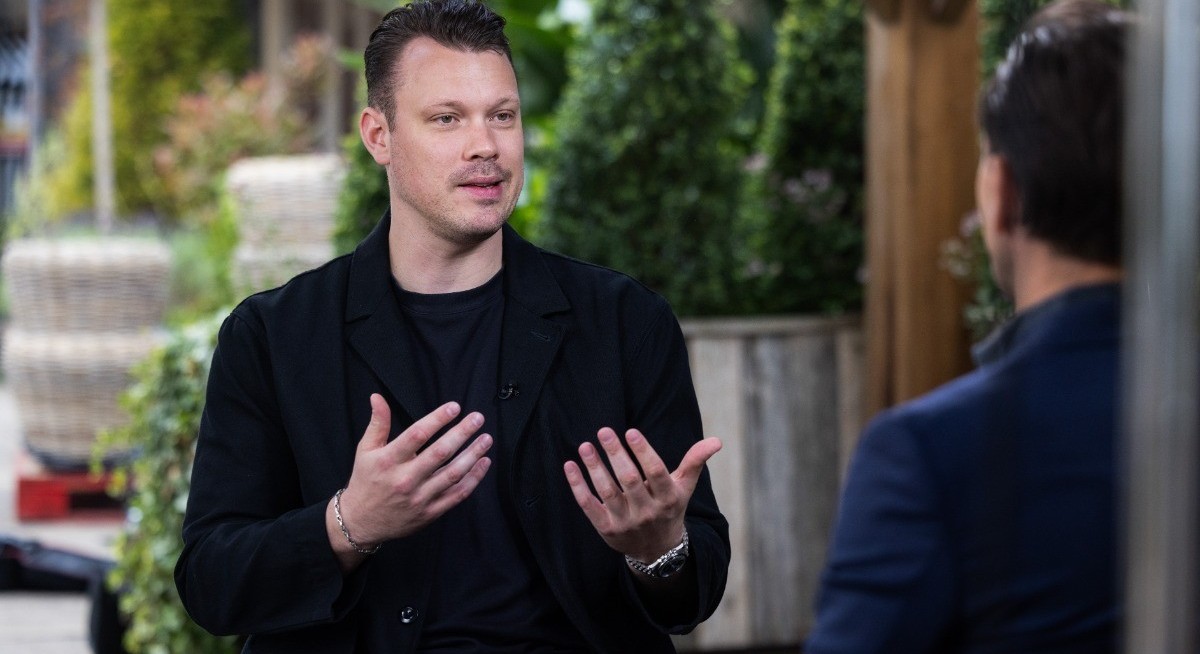
Victor Riparbelli, Synthesia’s chief executive, described the new product as a way to meet the demand from companies to “upskill” employees using automation. “We’re providing one part of the solution today,” he said in an interview. “The problem is that the other part – the role-playing, the coaching, the feedback – has to be done by humans.”
Synthesia is one of the leading startups that will serve as a test case of whether generative AI can successfully sell into enterprises, something public investors are watching closely as they judge the financial prospects of the sector. While the tech has captivated the corporate world, few AI firms have shown profits or significant traction in business sales. Video AI, in particular, is a costly, competitive field that’s drawing increasing interest from larger tech companies.
See also: Microsoft’s new programme targets faster AI rollouts in Singapore
In October, The Information reported that Adobe Inc held talks with Synthesia about a US$3 billion acquisition. Riparbelli declined to comment on those discussions. The publication also reported earlier on parts of Synthesia’s fundraising plans.
Formed in 2017 by Riparbelli and three researchers, Synthesia searched for a steady business model until the arrival of ChatGPT. The startup has since used that product and other chatbots to develop avatars that can speak in multiple languages for human resources training, marketing pitches or other workplace programmes.
Initially, Synthesia wanted to move into consumer media, making AI-generated commercials and films. As recently as 2024, the startup promoted its work for an ad that used avatars of football star Lionel Messi.
See also: AI race: Alphabet, Amazon, Meta and Microsoft set for US$650 bil capex this year
But Riparbelli said his company has dropped those plans to focus on the “much bigger market” of corporate communications. “If it competes in a newsfeed, that’s not something we want to do,” he said. “A lot of our competitors have gone bust because they tried to tackle these use cases.”
The company says it serves major enterprises including Microsoft, UBS and Ford. In April, Synthesia disclosed that it crossed US$100 million in annual recurring revenue, a figure commonly used by startups to demonstrate software sales growth. Riparbelli said that figure is now “significantly higher” but declined to provide details.
Vidu Shanmugarajah, a GV general partner, said that Synthesia is one of the fastest-growing companies by sales in its portfolio of hundreds of startups. He attributed that chiefly to the company’s focus on selling to enterprises. “They’re solving a real problem,” Shanmugarajah said.
Synthesia, unlike other AI startups, doesn’t have an outpost in Silicon Valley or sell much there. Riparbelli said the startup sells more to financial services, healthcare and retail than the tech sector.
The startup has been trialling new agents with dozens of customers for four months. In a recent demo, the interactive avatar deftly handled questions about a theoretical sales training process, although the video still had the clearly uncanny feel of a computer creation. The avatar also had to hear some questions twice, hiccups the company blamed on its office Wi-Fi.
The startup’s current prices vary based on client usage. Pricing on the new product “isn’t finalised yet”, Riparbelli said. (Before the interview, he said he practised with an avatar customised for handling press questions.)
The company last raised funds a year ago, bringing in US$180 million for a US$2.1 billion valuation. Its new valuation puts it among the most valuable British AI startups, along with self-driving car firm Wayve and voice-cloning developer ElevenLabs. Still, Synthesia has a smaller price tag than other high-profile startups. Riparbelli attributes that to its strategy — Synthesia doesn’t develop general models, like OpenAI — and his prudence. He said Synthesia turned down higher-valued offers, preferring a price in line with comparable public companies.
“Maybe you look cooler because you have a higher valuation,” he said. “I would rather have a business that I feel good about.” He also said that, because he’s chosen to invest in technical development and market expansion, Synthesia is not yet profitable.
Uploaded by Arion Yeow




