




(Feb 6): Four of the biggest US technology companies together have forecast capital expenditures that will reach about US$650 billion ($828 billion) in 2026 — a mind-boggling tide of cash earmarked for new data centres and the long list of equipment needed to make them tick, including artificial intelligence (AI) chips, networking cables and backup generators.
The spending planned by Alphabet Inc, Amazon.com Inc, Meta Platforms Inc and Microsoft Corp, all in pursuit of dominance in the still-nascent market for AI tools, is a boom without a parallel this century. Each of the companies’ estimated outlay for this year would set a high-water mark for capital spending by any single corporation in any one of the past 10 years, according to Bloomberg data.
The search for a comparison to the high-flying spending projections — which came as the four reported earnings in the past two weeks — requires going back at least as far as the telecommunications bubble of the 1990s, and perhaps to the build-out of the US rail road networks in the 19th century or postwar federal investments in interstate highways or even New Deal-era relief programmes.
The ever-larger numbers — in total, an estimated 60% increase from a year ago — means yet another acceleration in the wave of data centre construction taking place around the world. The sprint to build these sprawling facilities, which hold racks of humming servers powered by expensive processors, has pinched energy supplies, raised worries of inflated prices for other users, and brought developers into conflict with communities worried about competition for power or water. It also raises the risk that construction spending by a narrow set of affluent companies, already accounting for a rising share of economic activity in the US, will distort big-picture economic data.
The four companies “see the race to provide AI compute as the next winner-take-all or winner-takes-most market”, said Gil Luria, an analyst at DA Davidson. “And none of them is willing to lose.”

See also: Anthropic AI tool sparks US$285 bil rout in software, financial services, asset management sectors
Last week, Meta said full-year capex will rise to as much as US$135 billion — a potential jump of about 87%. Microsoft the same day reported a 66% increase in second-quarter capital spending, topping estimates, and analysts project it will shell out almost US$105 billion in capex for the financial year ending in June. The news triggered the second-biggest single-day decline in market value for any stock.
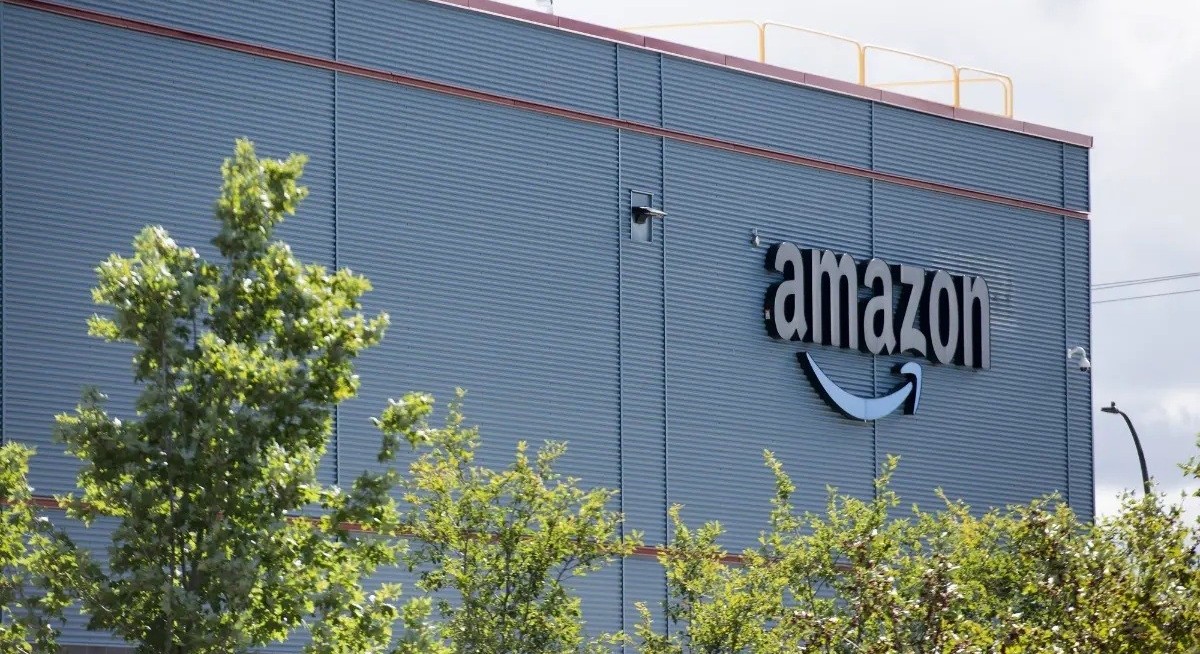
Alphabet, founded in a garage south of San Francisco in 1998, on Wednesday rattled investors when it revealed a capital spending forecast that exceeded not just analyst estimates, but the spending of a vast swath of US industry — it plans to spend as much as US$185 billion. And Amazon on Thursday bested that with a planned US$200 billion in capex for 2026, also sending its shares tumbling in extended trading.
By contrast, the largest US-based automakers, construction equipment manufacturers, rail roads, defence contractors, wireless carriers, parcel delivery outfits, along with Exxon Mobil Corp, Intel Corp, Walmart Inc and the spun-off progeny of General Electric — 21 companies — are projected to spend a combined US$180 billion in 2026, according to estimates compiled by Bloomberg.
See also: Anthropic plans employee tender offer at US$350 bil valuation
Each tech giant has laid out a slightly different route to recouping their investments, but their spending is based on the same premise: that OpenAI’s ChatGPT and rival tools capable of generating text and displaying elements of human reasoning will play an increasingly important role for people at work and at home.
Building the cutting-edge software models that makes this shift possible is an extraordinarily expensive process that requires stringing together thousands of chips that sell for tens of thousands of dollars apiece. Hence the big bills. The spending is also predicated on the notion that the end products will result in exponentially higher future revenue.
The outlays are transforming companies that just a few years ago had a relatively small physical footprint, even as their digital services found their way to billions of people. For much of their existence, Meta and Google parent Alphabet counted their plush corporate campuses and office space as a significant portion of their real-world assets. Most of their spending went towards salaries and stock grants for the engineers and salespeople who worked there.
No longer. Last year, Meta spent more on capital projects than research and development — mostly engineers’ salaries — for the first time in six years. The Facebook and Instagram parent at the end of last year owned US$176 billion in property and equipment, about five times the tally at the end of 2019.
As the numbers push higher, what is still unclear is whether the companies will all be able to execute on their lofty ambitions. Since the data centre build-out has escalated, they are already competing for finite crews of electricians, cement trucks and Nvidia Corp chips rolling out of Taiwan Semiconductor Manufacturing Co (TSMC) factories. “There are and will be bottlenecks,” Luria said.
There’s also the question of how they will afford it. Meta and Google, whose profit mainly comes from digital advertising, Amazon, the largest online retailer and cloud-computing provider, and Microsoft, the biggest seller of business software, are each dominant in their industries and have ample cash cushions. Their willingness to plough huge chunks of that cash into an AI-fuelled future means those reserves, and investors’ patience, will be tested.
“You have had these cash-generating machines,” said Tomasz Tunguz, an investor at Theory Ventures, who earlier in his career worked at Google. “Now, all of a sudden they need that cash, and they need more of it, so they are borrowing.”
To stay ahead of Singapore and the region’s corporate and economic trends, click here for Latest Section
Tunguz, who published a blog last year comparing the AI boom to past investment frenzies, says they don’t always end well. But on the way up, he said, “they are all huge catalysts for the economy”.
What is more certain is that investors who had rushed to buy the tech titans’ stocks over the past year have shown greater hesitance in the face of the skyrocketing capital spending across the board, in some cases selling even when their main businesses — from online advertising and web search to ecommerce and productivity software — have held steady and revenue has exceeded estimates.
“What’s spooking people? Definitely the analyst narrative and the rhetoric” about the pace at which AI will disrupt businesses, said Steve Lucas, the chief executive officer of Boomi, a firm that helps companies stitch together their data and software.
“I would not debate the potential of AI,” he said. “I would absolutely debate the time frame, and I would passionately debate the economics.”
Uploaded by Tham Yek Lee




