


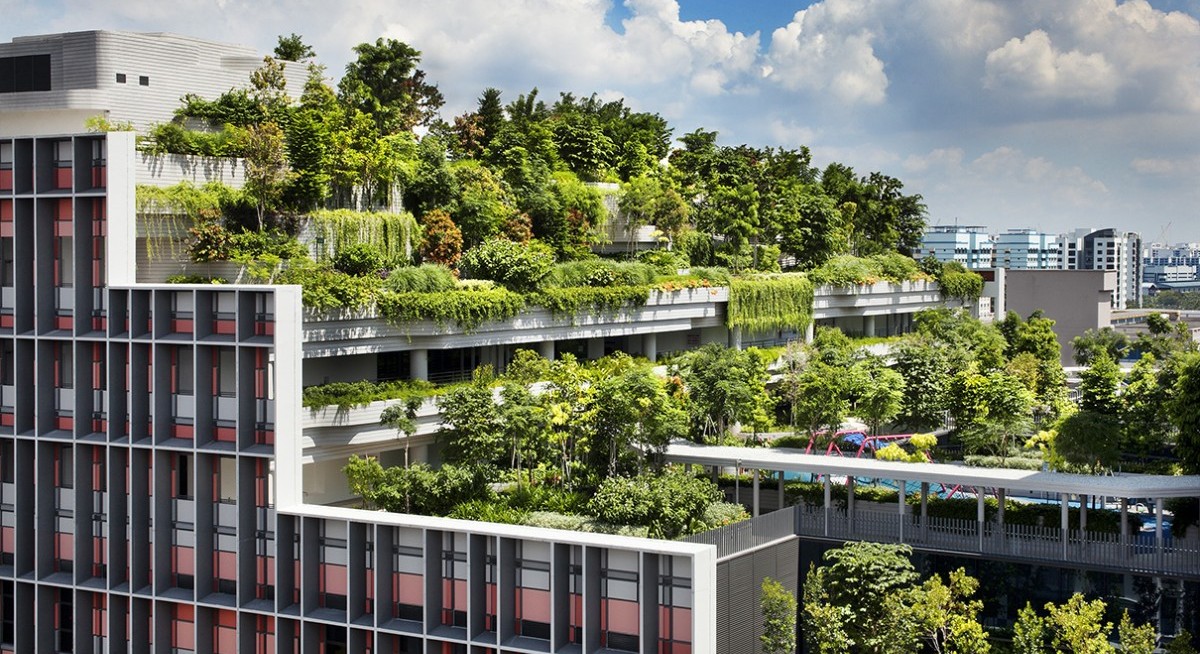


Released in October 2025, Aprea’s 57-page playbook spells out the need for NbS; defines NbS types like peatlands, mangroves, green roofs and urban forests; and includes case studies of how corporates and countries are integrating NbS into their plans.
Approximately 60% of Southeast Asia’s GDP is “highly dependent on nature”, reads Aprea’s NbS Playbook for Real Assets in Asia Pacific, citing data from the Asia Investor Group on Climate Change.
“With Southeast Asia hosting 15% of global tropical forests and 20% of mangrove coverage, these natural resources are both an immense asset — underpinning the productivity of land, water and essential ecosystem services — and a critical risk factor.”

See also: The city that knows itself
Higher insurance premiums
The real assets industry is fundamentally built on and sustained by nature in several ways, including converting and using terrestrial, freshwater, or marine ecosystems for development; generating emissions and potential pollutants; and consuming natural resources such as water, sand, gravel and timber.
Even when all materials have been assembled, construction also depends on nature for essential services, such as stable land, clean water and natural systems for flood protection and climate regulation, notes Aprea.
See also: OCBC launches free ESG tool for more sustainable SMEs and supply chains
But these resources are finite and conditions are ever-changing; this deep reliance creates a potent systemic risk — as nature degrades, these essential resources will become scarce or compromised.
Nature loss is projected to cost Asean economies US$28 billion ($36.13 billion) annually by 2030, translating directly into depreciated asset values, higher insurance premiums and stranded investments, adds Aprea.
Extreme weather events in the Asia-Pacific (APAC) region have led to average annual losses of US$48.4 billion from 2000 to 2023. However, a mere 5% to 7% of these catastrophic losses were insured, says Aprea, citing Organisation for Economic Co-operation and Development (OECD) data.
The insurance industry is responding to climate change by raising premiums to reflect increasing physical risks. According to a report by GlobalData, property insurance premiums in APAC are projected to surge from an estimated US$92.3 billion in 2023 to US$141.8 billion by 2027. This shift in the insurance market is creating significant financial pressure on real asset owners
This threat is not unique to Southeast Asia. The top four long-term global risks identified by the World Economic Forum (WEF) in its previous Global Risks Report, released in January 2025, are extreme weather events, biodiversity loss and ecosystem collapse, critical changes to earth systems and natural resource shortages.
Biodiversity is the “backbone” of a healthy planet, says Esther An, chief sustainability officer of City Developments and chair of Aprea’s regional sustainability and ESG committee.

“According to the WEF, over half of global GDP, approximately US$44 trillion, is moderately or highly dependent on nature and its services. In fact, biodiversity is set to be an asset class that will enhance the natural and financial capital for businesses through investment and value-creation adaptation,” adds An in remarks accompanying the launch of Aprea’s playbook.
Implementing NbS
From mangrove restoration and green roofs to permeable pavements and urban forests, NbS provide “cost-effective, scalable and resilient alternatives to traditional infrastructure”, writes Aprea. “Beyond mitigating environmental risks, they unlock new opportunities to enhance asset performance, reduce operational costs and attract green financing.”
As an example, Kampung Admiralty in Woodlands is a “pioneering model” of integrated urban development that maximises land value while delivering climate resilience and social value, says Aprea.

Designed by Singaporean architectural and industrial design firm WOHA for the Housing & Development Board, Kampung Admiralty was completed in 2017 and officially opened in 2018. Using what the architects call a “layered ‘club sandwich’ approach”, the 11-storey development is home to 104 flats for the elderly, a medical centre, a senior care centre, a childcare centre, as well as retail and dining outlets, including a 900-seat hawker centre.
The development captures rainwater from upper levels, filters it through a cascading system of basins and a rain garden, and stores it for irrigation in a mezzanine-level tank. Swales, a cleansing biotope and an eco-pond provide additional filtration and gradual discharge.
Kampung Admiralty captures and treats 33% of the site’s runoff, recycling up to 4.1 million litres of water annually while reducing flood risk.
Another example is the River of Life project, a brownfield urban regeneration initiative focused on transforming the Klang River corridor in the heart of Kuala Lumpur. Initiated by Malaysia’s then Prime Minister Najib Razak in 2011, AECOM was chosen as a delivery partner to revitalise over 781ha of urban land and water bodies along the Klang River.
Works include “naturalising” riverbanks with native vegetation and bioengineering, which improves flood resilience and habitat connectivity, Aprea notes. The project also includes a continuous pedestrian and cycling promenade.
The River of Life project, originally scheduled for completion by 2024, is now expected to finish by 2030. Still, the transformation of 10.7km of riverfront has resulted in increased land values, improved public health amenities and growing visitor footfall, according to Aprea’s playbook.
The full playbook also includes guidance on overcoming common barriers such as financing gaps, fragmented policy frameworks and valuation challenges. Aprea CEO Sigrid Zialcita calls the playbook a “pioneering step” for the real assets industry. “By embracing nature-based solutions, we are not only addressing climate and biodiversity challenges but also creating long-term value for investors and communities.”
Aprea members can now download the Nature-Based Solutions Playbook via the association’s website.
For more sustainability updates and breaking news, visit City & Country’s microsite at theedgesingapore.com/cityandcountry




