


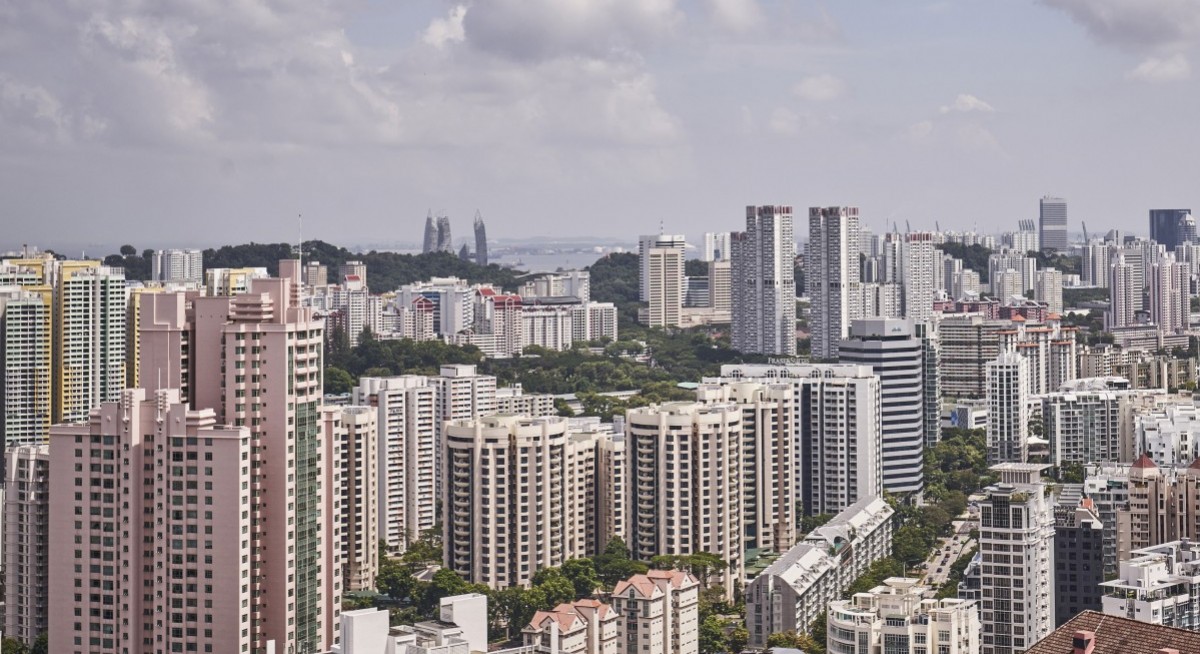


Meanwhile, prices of non-landed private residential properties decreased by 0.1% in 4Q2025, compared to a 0.8% increase in the previous quarter.

Prices of non-landed private residential properties in the Core Central Region (CCR) decreased by 3.2% in 4Q2025, compared to a 1.7% increase in 3Q2025.
Prices in the Rest of Central Region (RCR) increased by 0.7% in 4Q2025, compared to a 0.3% increase in the previous quarter.
See also: Fewer GCB deals in 1H2026, but larger quantums lift average psf near record: PropNex
Prices in the Outside Central Region (OCR) increased by 1.0% in 4Q2025, compared to a 0.8% increase in the previous quarter.
Prices of landed properties increased by 3.5% in 4Q2025, compared to a 1.4% increase in the previous quarter, marking the strongest quarterly growth in two years, notes PropNex.
The landed market contributed most to rising private residential property prices in 2025. Landed home prices increased by a “significant” 7.7% y-o-y in 4Q2025, after a “rather indifferent” increase of 0.9% y-o-y in 2024, says Knight Frank Singapore research head Leonard Tay.
See also: ‘Breathe life’ into precincts by investing in commercial property: Steward Asia
“Even though sellers continued to be sticky with asking prices, the lowered interest rate environment improved affordability among buyers,” he adds.
The flash estimates are compiled based on transaction prices submitted for stamp duty payment and data on units sold by developers up till mid-December 2025. The statistics will be updated on Jan 23 when URA releases its full set of real estate data for 4Q2025.
Best-performing year since 2021: ERA
Following the bumper slate of new launches that propelled private property price growth in 3Q2025, this momentum carried into 4Q2025, largely underpinned by strong new home sales, with 2,856 units sold during the quarter, says Marcus Chu, CEO of ERA Singapore.
“Overall, the primary market delivered a stellar performance in 2025, with 10,611 units sold, marking the best-performing year since 2021,” Chu adds.
Household wealth has grown “tremendously” since 2023, says Mark Yip, CEO of Huttons Asia. The currency and deposits of households stood at $696,102 million as of 3Q2025, 18.1% higher than 1Q2023.
In 2026, there may be up to 24 new private residential launches with an estimated 11,317 units. This is on par with 2025’s launched units, notes Yip.
Compared to the 3.4% growth in private home prices for 2025 and 3.9% in 2024, Cushman & Wakefield’s research head for Singapore and Southeast Asia Wong Xian Yang is “cautiously optimistic” that prices could grow by 2.0% to 4.0% in 2026, supported by low borrowing costs, increasing land prices and resilient buyer confidence, underpinned by “still-low” unemployment rates.
CBRE Research shares Wong’s forecast for private home price growth. Knight Frank has a more bullish forecast of between 3% and 5% in 2026, and PropNex projects a narrower 3% to 4% growth. Realion Group (formerly OrangeTee & ETC) believes prices will rise by 2.5% to 4.5% next year.
Despite the slowdown in price increases, private residential prices ended 2025 at a record high for the ninth consecutive year.
“Affordability concerns are likely to play a larger role in shaping upgrading decisions, particularly as private home prices continue to climb,” adds Cushman & Wakefield’s Wong.
HDB upgrader demand is still expected to persist, says Wong, though overall momentum could slow.

Slowest full-year HDB resale price growth since 2019
Separately, resale prices of public housing stayed flat q-o-q in 4Q2025, according to HBD’s flash estimates released Jan 2, with the Resale Price Index standing at 203.6 compared to 203.7 in 3Q2025.
This is the first time public housing resale prices have remained unchanged since 1Q2020, and the 4Q2025 flash estimate follows four consecutive quarters of slower price growth for resale flats, says HDB.
Based on HDB’s flash estimate, the full-year growth in resale flat prices has slowed significantly, from 9.7% in 2024 to 2.9% in 2025, marking the slowest price growth since 2019.
HDB resale prices held steady after 22 consecutive quarters of growth, notes Christine Sun, chief researcher and strategist of Realion Group. “The slower pace of price growth over the past year and the subsequent zero price growth in the last quarter indicate a cooling in demand for resale flats.”
Resale transaction volume in 4Q2025 fell 29% q-o-q to 5,129 units, 18.8% lower than the 6,314 cases recorded in the same period last year. This is the second consecutive quarter with a double-digit y-o-y percentage drop in quarterly resale volume, and it marks the steepest quarterly decline in transaction volume since the circuit breaker in 2Q2020, says Lee Sze Teck, senior director of data analytics at Huttons Asia.
For the whole of 2025, total resale volume fell 9.8% y-o-y to 26,042 units. According to HDB, the last time annual resale volume declined was in 2023, when it fell by 4.2% compared to 2022 — less than half the current rate of decline.
Huttons’ Lee attributes the slowdown in transactions to the October 2025 Build-to-Order (BTO) launch, which attracted more than 30,000 applicants, “resulting in a very quiet October for the resale market”.

Million-dollar HDBs hit new peak
Commenting on HDB resale figures, ERA Singapore key executive officer Eugene Lim says the number of million-dollar flat transactions is rising, but still accounts for a small share of the market.
In 4Q2025, 331 million-dollar flat transactions were recorded up to Dec 30, 2025, the lowest quarterly tally for the year. This brings the total number of million-dollar flat transactions to 1,574 units for the full year, about 52.1% higher than the previous peak in 2024.
“Overall, HDB resale prices remained affordable in 4Q2025, with about 73% of transactions taking place below the $750,000 price point. Additionally, million-dollar flats made up only 6.9% of all transactions in the quarter,” says Lim.
These higher-value transactions remained concentrated in mature estates, which accounted for around 91% of all million-dollar deals over 4Q2025.
In addition, over half (52.4%) of million-dollar deals in the year till Dec 30, 2025 involved newer flats aged 15 years or below. This reflects ongoing demand for newer HDB homes in centrally-located, mature estates, adds Lim.
During the quarter, Toa Payoh saw the highest number of million-dollar flats at 62, followed by Bukit Merah at 46 and Queenstown at 44, according to data from Huttons Asia.

For more market data and breaking news, visit City & Country’s microsite at theedgesingapore.com/cityandcountry




