


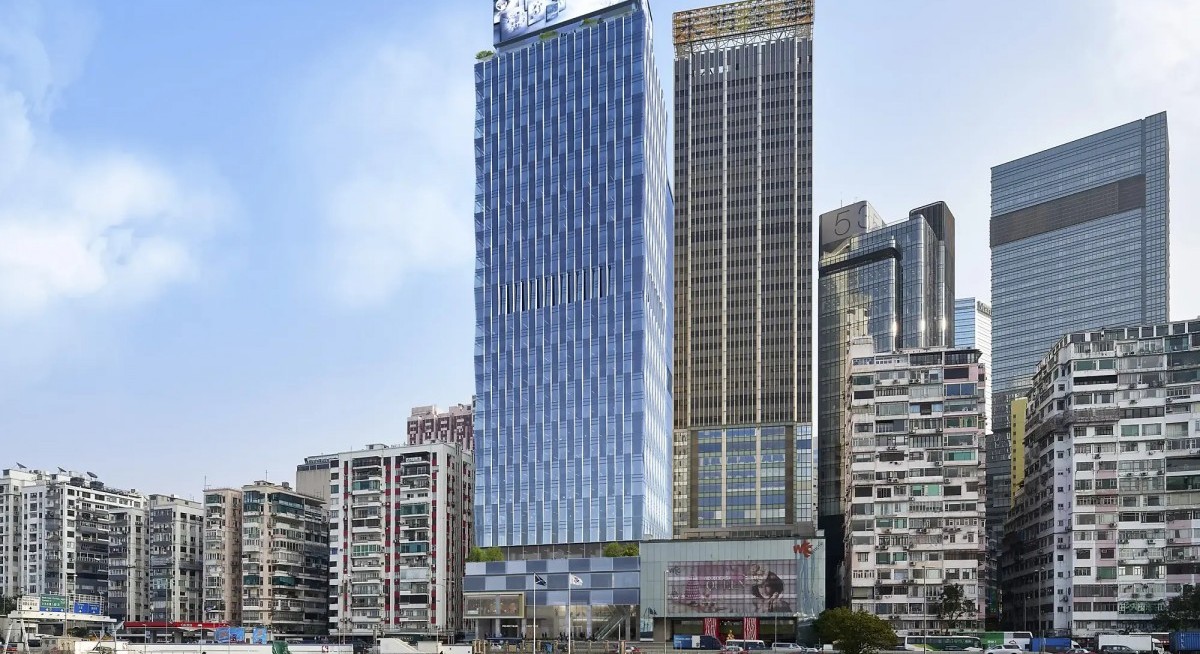


Mandarin Oriental announced in October 2025 that it would sell the top 13 floors of One Causeway Bay, its Hong Kong commercial tower, to Alibaba and Ant Group. Mirae Asset announced that same month the sale of its Seoul asset to Korea Investment & Securities and KakaoBank; known for its tech parks, the Pangyo area is often referred to as South Korea’s “Silicon Valley”.
This renewed momentum is set to carry over into 2026, adds Young, as investors look to deploy an “increasing pool of dry powder” that has been accumulated over the years.
Cushman & Wakefield’s head of international research Dominic Brown says his team is “seeing trends toward early growth” across Apac real estate markets. “Investor confidence is rebounding, with transaction activity and deal sizes on the rise, supported by interest rate cuts and liquid debt markets fuelling competition for prime assets.”

See also: Local firms powering Singapore’s strong green revenues
Brown adds: “We believe that now is an opportune time for investors to intensify their focus and put their dollars into the region to capitalise on its long-term growth potential.”
Nearly half of Apac markets ‘underpriced’
For Cushman & Wakefield’s 15-page 3Q2025 APAC Investment Atlas report, the New York-listed global commercial real estate services firm analysed results from two proprietary models: the TIME (Timing of real estate Investment Market Entry and exit) score and Fair Value Index (FVI).
See also: ‘Generational’ investment opportunity in green economy: LSEG
TIME identifies the timing of real estate investment market entry and exit. It is broadly composed of multiple sub-indicators across four key aspects of the market — cyclical, momentum, growth and risk — to identify when best to invest in a market. The score runs from 1, indicating contraction, to 5, indicating expansion.
The overall TIME score for the Apac region currently stands at 3.1, “which indicates that the market has firmly entered the stabilisation phase and continues to trend towards early growth”, reads the report.

The logistics and industrial sector is slightly further through the cycle, supported by strong rental growth and ongoing investor demand. The retail sector is next in line, having experienced selective yield compression over the past 12 months.
Lastly, the office sector, which has seen the most significant structural changes and the greatest levels of repricing during the rate-hiking cycle, has also moved firmly into the stabilisation phase, says Cushman & Wakefield.
This is not even across Apac. “If you were to strip out Greater Chinese markets from the Apac TIME score, all three sectors see an uplift,” reads the report. “Taking a slightly longer view, the office sector has shown the largest increase over the past 18 months.”
Meanwhile, FVI measures the attractiveness of current pricing for investors and addresses the question of whether investors are likely to make a return higher, similar or lower than the risk-adjusted rate of return from investing in commercial property, assuming a five-year holding period.
The overall index is scored from 0 to 100, with zero indicating that all markets are fully priced and 100 indicating that all markets are underpriced.
Apac FVI surged to 62.5 in 3Q2025, up from 60.4 in 1Q2025 and a low of 22.7 in 3Q2022, indicating that 46% of markets are now underpriced compared to just 18% two years ago.
The majority of logistics & industrial markets (63%) remain underpriced, unchanged from 1Q2025, notes Cushman & Wakefield; this has been the case since 1Q2024.
Valuations in the industrial sector have trended upwards throughout 2025, as some previously fully priced markets become more fairly valued. Meanwhile, the office sector experienced a modest improvement in select markets across the region over the course of the year.
Overall, 46% of markets tracked across Apac are underpriced, while only 20% of markets are fully priced. This stands in stark contrast to two years ago, when half of all markets were fully priced, and just 18% of markets were seen as being underpriced.

“An adjustment in yields across the region has also helped to bring property valuations more in line with fundamentals,” reads the report. “It appears that the bulk of repricing associated with higher interest rates in most markets is behind us.”
According to Cushman & Wakefield, Australia and Singapore stand out as particularly compelling markets for value-driven investors while Japan remains attractive for industrial and office assets due to low vacancy rates and stable macroeconomic conditions.
In addition, growth markets like India and Southeast Asia continue to draw cross-border capital, particularly for industrial assets.
“Capital-raising is accelerating, with core and core-plus strategies returning alongside value-add plays in high-growth sectors such as data centres, living and self-storage,” says Young.

“These alternative assets have become prime investment assets over the last few years and we expect continued interest in them, particularly the living sector in key markets like Australia, Japan and South Korea.”
For more investing strategies and breaking news, visit City & Country’s microsite at theedgesingapore.com/cityandcountry




