


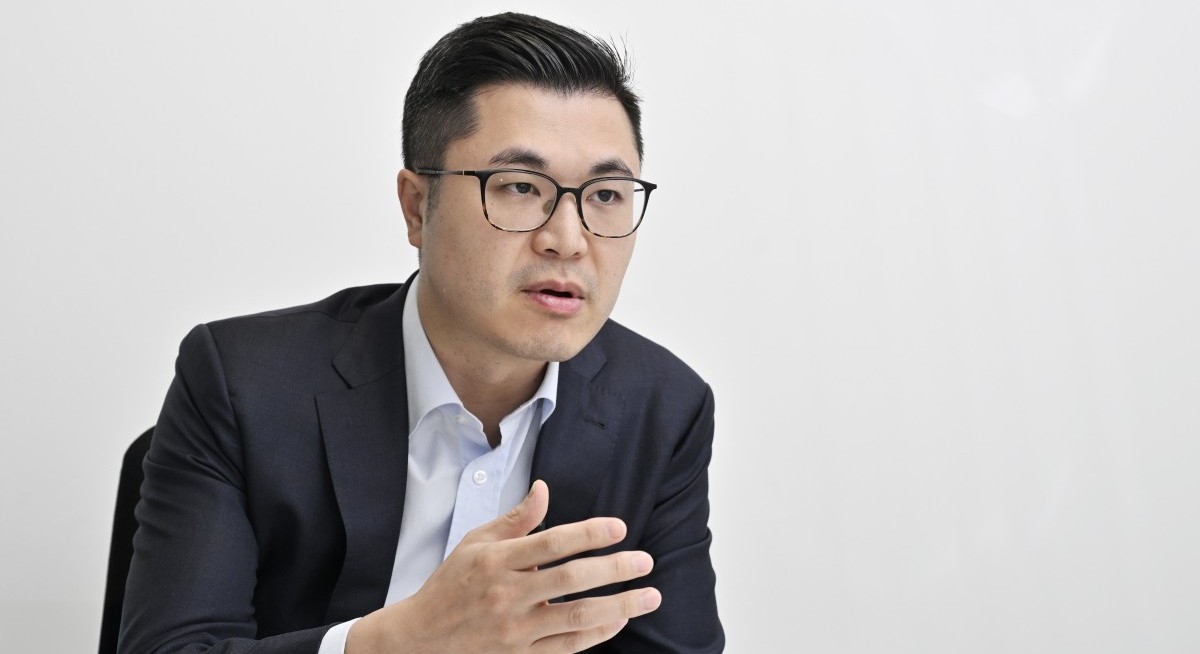


Heitman, a global real estate investment management firm with US$48 billion ($61.09 billion) in assets under management as of end 2025, first entered the Australian self-storage market in 2011. It subsequently entered the Japan, Singapore and Hong Kong self-storage markets, in that order.
Heitman has since “successfully exited” from self-storage assets in all markets except Hong Kong — where it maintains a portfolio of “urban-focused” self-storage assets that are located “close to residential clusters”, says Fu, who is based there.
Speaking to City & Country on a recent visit to Singapore, Fu says storage rents in Hong Kong are among the highest in the world. “We will, at some stage, look to recycle capital [and] exit, but at the current time, it is still within our business plans and holding period.”
S’pore’s self-storage sector ‘has matured’
See also: Sats’ rally to above pre-war levels prompts divergent views
In Singapore, Heitman built up what Fu calls an “owner-operated self-storage portfolio” named Mandarin Self Storage with joint venture partner Angus Miller up to 2023. Heitman exited the joint venture in 2022, selling some 600,000 sq ft of gross floor area across five assets for an estimated $230 million.
“Eight, nine years ago… we were early entrants into this space, and at that time, I think there were attractive yield premiums," says Fu, who previously worked at Dutch pension investor APG Asset Management and DBS Asia Capital. “Over time, the sector has matured, and returns are now at fairly different levels… I think demand is still healthy, but supply absolutely is increasing.”
Heitman’s modus operandi is seen through the “Singapore example”, says Fu. By “aggregating” smaller assets, working with the authorities and “leasing up” to a larger, stabilised portfolio that typically commands more of a portfolio premium, the investor can sell the portfolio to larger institutions, he adds.
See also: SGX enjoys higher target prices again with volume surge
StorHub, Extra Space Asia jostle
Competition is heating up for self-storage assets here. Warburg Pincus acquired StorHub from CapitaLand in 2019 for some $179.5 million, marking the formation of its Asia-Pacific self-storage platform.
Three years later, CapitaLand Investment (CLI) acquired another self-storage operator in a joint venture with APG Asset Management. CLI placed an initial equity investment of $570 million for the acquisition of Extra Space Asia (ESA) with the option to increase the investment to $1.14 billion.
In October 2025, the CLI-managed ESA announced investments of nearly $100 million in its first build-to-suit flagship development in Singapore, along with acquiring three freehold self-storage facilities in Tokyo, Japan.
ESA was awarded an industrial site at Kaki Bukit Avenue 5 by JTC Corporation in September 2025 after it submitted the sole bid of $31.39 million. The 74,309 sq ft site, with a 33-year lease, marks the first industrial government land sale by JTC designated for self-storage use.
There, ESA is developing a 185,000 sq ft facility — Singapore’s first self-storage facility set to achieve Green Mark Super Low Energy Building certification from the Building and Construction Authority (BCA).
Slated for completion by 2028, ESA’s Singapore portfolio will grow to 13 properties islandwide with over 1.5 million sq ft of gross floor area. Prior to the Kaki Bukit site, ESA last purchased two industrial assets located at Tai Seng and Commonwealth for approximately $100 million in February 2024. Both properties have since been converted into self-storage facilities.
In comparison, StorHub has 18 locations across the island.
Managing director and head of ESA Tim Alpe said his team aims to grow ESA’s portfolio to $2 billion by 2028. City & Country understands the $2 billion target is more than double the current portfolio size.
ESA was founded in 2007. Patricia Goh, CEO of Southeast Asia investment and head of logistics and self-storage at CLI, says self-storage is a key investment theme in CLI’s private funds strategy. “We have deployed more than $500 million in equity to grow ESA’s portfolio from 70 to more than 100 facilities, totalling 3 million sq ft, solidifying its position as one of Asia’s foremost self-storage operators.




