


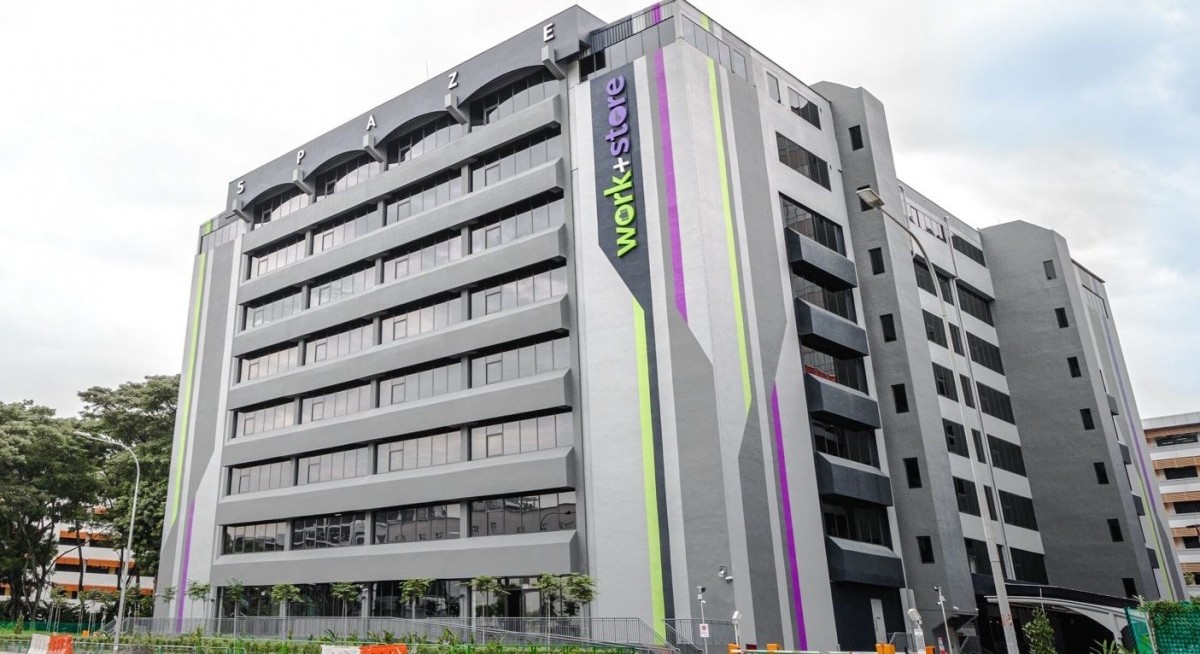


Since 2019, StorHub has achieved 16-fold growth in properties, 14-fold growth in asset value, 10-fold growth in net lettable area and eightfold growth in its customer base.
Dense cities, smaller living spaces and a growing middle class are creating structural demand that presents a multi-decade growth opportunity ahead, says Raju Ruparelia, CEO of StorHub Group. "Our focus is on key urban markets where demand is strongest, supply most constrained and the opportunity to build a lasting regional platform most significant."
Work+Store’s scale is more similar to Hong Kong-founded StoreFriendly, which expanded into Singapore in 2011 and has seven locations here. The local business was sold in 2015, with the company retaining the name. The original StoreFriendly launched a joint venture with Blackstone in 2021, which has acquired five en bloc buildings in Hong Kong worth over HK$2.5 billion as of December 2023.
In 2022, CapitaLand Investment (CLI) acquired another self-storage operator in a joint venture with APG Asset Management. CLI placed an initial equity investment of $570 million for the acquisition of Extra Space Asia (ESA) with the option to increase the investment to $1.14 billion.
See also: After selling five self-storage assets here to StorHub, Heitman eyes Hong Kong market
In October 2025, the CLI-managed ESA announced investments of nearly $100 million in its first build-to-suit flagship development in Singapore, along with acquiring three freehold self-storage facilities in Tokyo, Japan.
ESA was awarded an industrial site at Kaki Bukit Avenue 5 by JTC Corporation in September 2025 after it submitted the sole bid of $31.39 million. The 74,309 sq ft site, with a 33-year lease, marks the first industrial government land sale by JTC designated for self-storage use.
There, ESA is developing a 185,000 sq ft facility — Singapore’s first self-storage facility set to achieve Green Mark Super Low Energy Building certification from the Building and Construction Authority (BCA).
See also: Keeping liquid assets safe at the Singapore Wine Vault
Slated for completion by 2028, ESA’s Singapore portfolio will grow to 13 properties islandwide with over 1.5 million sq ft of gross floor area. Prior to the Kaki Bukit site, ESA last purchased two industrial assets located at Tai Seng and Commonwealth for approximately $100 million in February 2024. Both properties have since been converted into self-storage facilities.
Managing director and head of ESA Tim Alpe said his team aims to grow ESA’s portfolio to $2 billion by 2028. City & Country understands the $2 billion target is more than double the current portfolio size.
ESA was founded in 2007. Patricia Goh, CEO of Southeast Asia and global head of logistics and self-storage at CLI, says self-storage is a key investment theme in CLI’s private funds strategy. “We have deployed more than $500 million in equity to grow ESA’s portfolio from 70 to more than 100 facilities, totalling 3 million sq ft, solidifying its position as one of Asia’s foremost self-storage operators.”
Wine storage is an equally competitive segment — if not more so. Brands like Winebond, Toll Group, Winebanc and Singapore Wine Vault offer services like optimised temperature controls (12°C for fine wines and 20°C and 24°C for commercial wines), customs clearance and wine tasting events.
These names serve not just wine aficionados but merchants who serve and distribute wine, as well as moneyed collectors who frequent auctions. Given the value of the wines entrusted in their care, users also expect insurance coverage for storage and transport.
Winebanc is part of the StorHub Group. Singapore Wine Vault, featured in The Edge Singapore in September 2025, operates out of a 750,000 sq ft facility at 6 Fishery Port Road, capable of storing up to 10 million bottles. It is wholly owned by Hong Kong-listed integrated logistics giant CWT International.
Read the main cover story:




