




Some 13 years on, in 2021’s post-pandemic phase, CapitaLand split its development and real asset management (RAM) businesses. By then, Ascott had already pivoted to an asset-light lodging platform.
Today, more than 90% of Ascott’s portfolio units are operated under asset-light arrangements, with long-term contracts “stretching 10 to 20 years”, according to an earlier May 2025 report by The Edge Singapore. It is also on track to “exceed its $500 million fee target” amid new signings and when its pipeline project turns operational, says Ascott in an earlier February announcement.
So when CapitaLand Investment (CLI) was formed in 2021, analysts and market watchers were sceptical about one particular inclusion in CLI’s portfolio: The Ascott.
CLI has positioned Ascott as a lodging management platform that is increasingly asset-light and earns recurring fee income from management contracts and franchise agreements worldwide. CLI has also set a clear target for Ascott: lodging management fee-related earnings (FRE) of $500 million by 2028, up from $343 million in FY2024.
See also: Muslim tourists set to drive US$310 mil in annual spend by 2030
With relatively low operating expenses and lean headcount compared to asset-heavy hospitality groups, FRE’s margins are expected to be high. In this sense, Ascott increasingly resembles global peers such as Marriott International, Hyatt Hotels and Hilton Worldwide, all of which function on an asset-light model and thrive on fee income rather than ownership.
This pivot and growth have also reignited a familiar debate: Is Ascott ready for a separate listing? The question was previously explored in a May 2025 commentary by The Edge Singapore’s executive editor Goola Warden.
Speaking to The Edge Singapore then, CLI group CEO Lee Chee Koon did not rule it out. “At some point, when it grows to a certain scale, we can look at a potential, separate listing for Ascott,” he said.
Analysts remain divided. Some argue that Ascott fits neatly with CLI’s fee-income model and should stay in-house; while others believe a separate listing — with CLI retaining majority control of say, 51% — makes “perfect sense”. JP Morgan has assigned a 15x EV/EBITDA multiple to CLI’s lodging management FRE last year — relatively lower than peers such as Accor, Hilton Worldwide, Hyatt and Marriott.
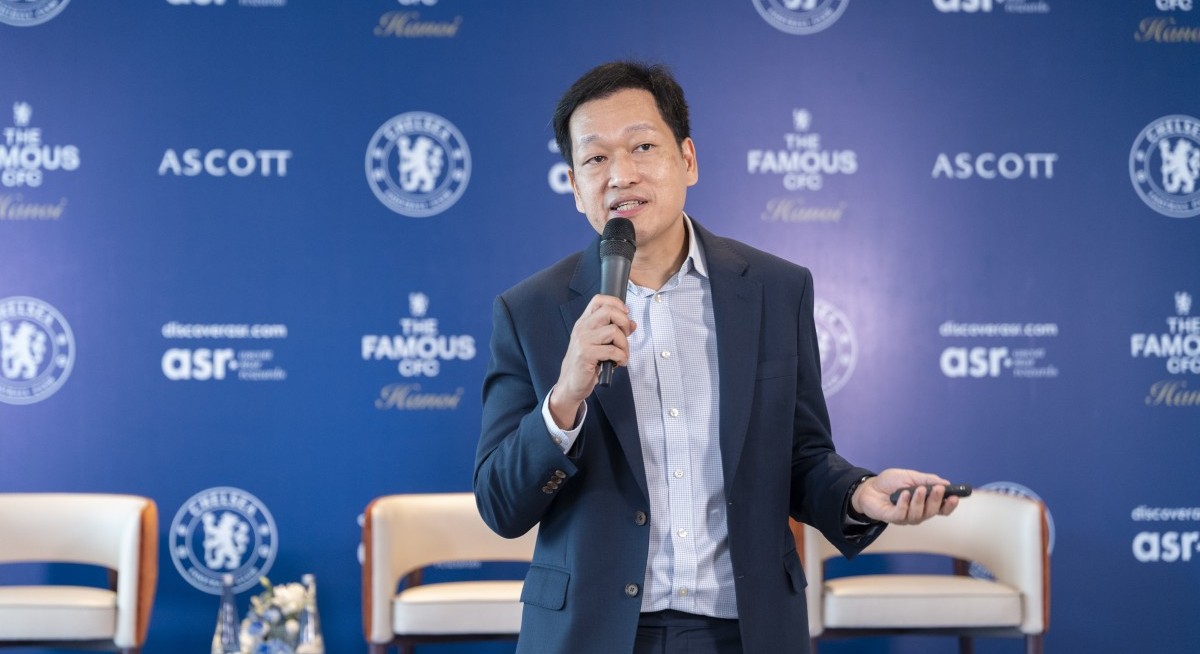
Is an IPO still viable for Ascott? Responding to City & Country at a recent media briefing in Hanoi, Goh strikes a measured tone: “It’s a difficult question for me to answer, because it’s an answer my shareholder needs to [give]. So, I can’t tell my parents what to do. But I think we’ll stick to the same script. It’s possible, and I think we will do it at the point [when] it makes sense. So again, it is really a shareholder’s consideration.”
For now, Ascott remains firmly within CLI. But as the wholly owned lodging management subsidiary of CLI scales, the chatter over independence — and the prospect of a separate listing — will only grow louder.




