




This has been the strategy of choice for hospitality behemoths like Marriott International — the subject of City & Country’s cover story in Issue 1232 dated March 23. Nasdaq-listed Marriott became the world’s largest hotel group in 2016 after acquiring competitor Starwood Hotels & Resorts Worldwide. Within the region of Asia Pacific excluding China, Marriott now operates more than 730 properties across 27 brands in 22 countries, with 400 more in the development pipeline.
See also: Marriott’s Apec ambitions
Going “asset-light” is also the current strategy of local names like The Ascott, which contributes fee income to CapitaLand Investment, and Banyan Group. The latter, which fronted City & Country in Issue 1226 dated Feb 9, rebranded from Banyan Tree Holdings at the start of 2024 to reflect its multi-brand portfolio. After going “asset-light”, Banyan Group has doubled its property count to 100 compared to the pre-pandemic years.
See also: Banyan Tree returns home with Mandai resort
See also: Arthur Kiong on defining Singapore-inspired hospitality
Some premier brands, like Kempinski Hotels, have chosen to do the opposite. Earlier this month, Europe’s oldest luxury hospitality group announced its first acquisition in over 50 years, picking up the 101-room Augustine Hotel, Prague, which is housed in an 800-year-old monastery. This shift towards an “asset-heavy approach” to its global portfolio comes under CEO Barbara Muckermann, appointed in May 2024 as the first woman to lead the group. Kempinski hopes full ownership will allow it “to control the guest experience from beginning to end”.
These well-known names make headlines the world over. Flying relatively under the radar, however, are smaller, regional players in the hospitality industry. They, too, want in on the “asset-light” action.
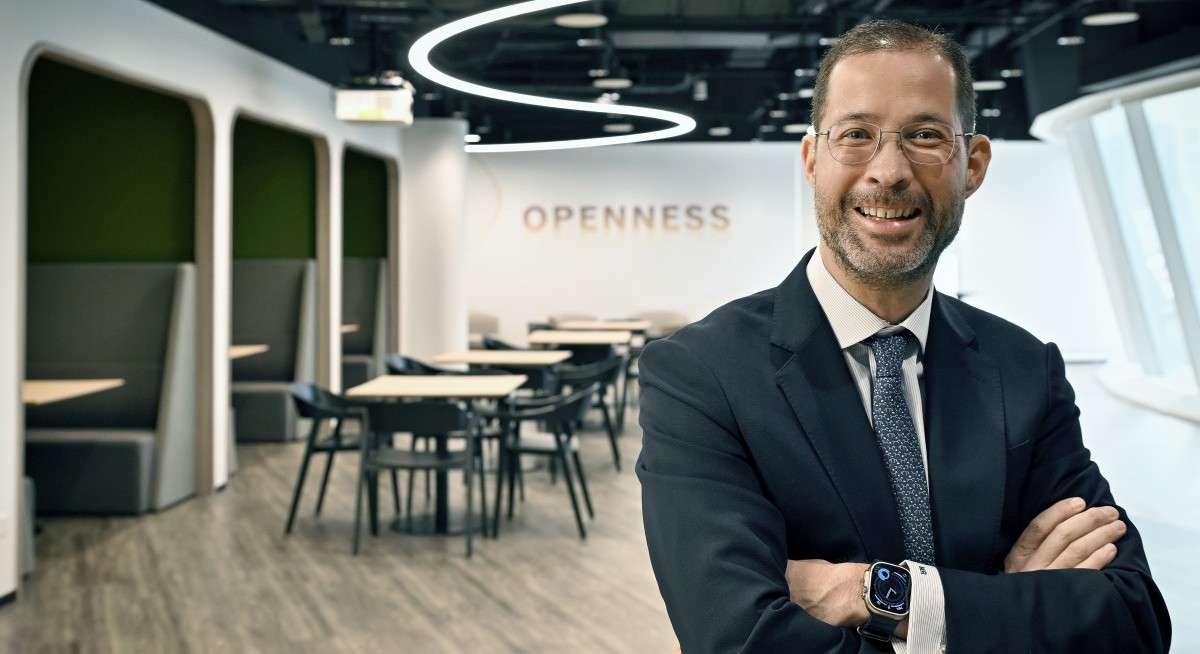
“If I’m honest, it’s not easy for a medium-sized hotel management company to scale up because a lot of the bigger developers will look for the major hotel management companies,” says Mark Rohner, managing director of Far East Hospitality (FEH). “So, we’ve got to find our niche; what is it that we are strong at?”
See also: DBS thinks ‘lodging powerhouse’ Far East Orchard could divest $1.1 bil in non-core assets
Rohner believes FEH is “very strong” in the mid-tier segment. “Just under half of our room count is in [the] mid-tier [segment]; I think that’s our core. We started with the mid-tier, then we moved into [the] upscale [segment]. Ultimately, we moved into luxury as well, with The Clan Hotel and also with The Barracks Hotel Sentosa.”

FEH currently manages 31 properties across Singapore, Malaysia and Japan. Another 79 properties are managed by Toga Far East, the 50:50 joint venture between FEH and Australia’s Toga Group launched in 2013. FEH itself is a 70:30 joint venture between Mainboard-listed Far East Orchard and The Straits Trading Company. FEH manages hotels and serviced residences under various brands, such as Oasia, Village, Rendezvous, Quincy, Adina and Vibe.
FEH offers hotel owners “a more hands-on approach to management” than larger peers, says Rohner.
He adds: “Larger hotel management companies are almost prioritising franchise as a mode of growth [and] less on the hotel management side. It’s more about system delivery and loyalty programmes.”
Admittedly, these are areas FEH could develop in the coming years, says Rohner. “We definitely will not reach the level of Marriott Bonvoy or IHG Rewards; that’s just not realistic, right? But there are other ways for us to build up our value proposition for owners and also to have a loyalty solution for them.”
According to FEH’s website, its free Insiders membership programme offers “extra discounts of up to 12% off”, and there is no point system or membership tiers.
This could change under Rohner, who took over from his predecessor Arthur Kiong on Jan 1. Kiong, who stepped down after 14 years with FEH, remains in a consultative role until April 30.
Rohner says FEH is “considering” changes to its Insiders programme. “There are various options that we have — we are considering providing customers with a loyalty solution where they can earn points and redeem [them].”
Loyalty programmes are a big driver for business, adds Rohner. “If you look at some of the hotel management companies, over 50% of their businesses have a loyalty account attached to it… We need to come up with a loyalty solution. It’s very urgent because right now, the battles are really being drawn and fought on loyalty.”

Building capabilities and scale
Building FEH’s “capabilities”, such as updating its loyalty programme, is one of two focus areas for Rohner. His other focus over the next five years is to grow FEH’s scale. “We are currently at around 7,000 rooms, and in our five-year plan, we want to get to 10,000 rooms by 2030.” These figures exclude rooms under Toga Far East.
Going “asset-light” is the theme of Far East Orchard’s FEOR30, unveiled in November 2025. For FEH, the target is to reach 25,000 rooms by 2030, inclusive of rooms under Toga Far East.
“It’s a bit of a ‘Catch-22’; you need scale to build capability, but you need capability to build scale. So, we’re kind of trying to do both at the same time.”
Finding that “sweet spot” for FEH is also dependent on the market. In Japan, for example, FEH operates five Far East Village Hotels, located in Osaka, Tokyo and Yokohama. The “simple, mid-tier” hotels are focused on room stock, with no breakfast, on-site restaurants or “huge meeting facilities”, adds Rohner.

Owners of such hotels are mostly Singapore-based institutional investors or mid-cap private equity funds. “[They] see the value of a well-run management company that is not a major [name], because they can be quite rigid in terms of how they do business with owners. That’s another angle that we leverage; I would say we are more entrepreneurial, we can adapt to the needs of our counterparty better.”
Closer to home, FEH has yet to enter Vietnam, a tourism hotspot and the current darling of hotel chains. Asean’s fastest-growing tourism market recorded 21.2 million international arrivals last year, becoming the third-most-visited destination in Southeast Asia.
“We haven’t secured anything in Vietnam yet, but we have discussions ongoing,” says Rohner. “The type of assets that you go after for a place like Vietnam is more likely greenfield projects and resort developments, which we would then use the Oasia brand to enter.”
Taking the reins
Rohner joined FEH as COO in July 2024 with over 25 years of experience in the hospitality industry, including time spent at Patience Capital, Shangri-La Group and GIC.
His predecessor, our cover star for Issue 1223 dated Jan 19, is renowned for his marketing expertise and passion for Singapore’s tourism industry.

Compared to the years under Kiong, how might FEH differ with Rohner at the helm?
See also: Arthur Kiong on defining Singapore-inspired hospitality
“We have a bunch of very strong brands, so we’ll keep developing those brands,” says Rohner. “Where I’ve seen opportunities is maybe developing what those brands stand for — developing the operational playbooks and refreshing some of our brand guides.”
A brand’s strength goes beyond its logo and name, he adds. “What does the brand stand for? That’s the part that we are looking to develop a bit more, fleshing out what it means to be in an Oasia, Quincy, Rendezvous or Village.”
The latter, in particular, could welcome a new location in Singapore’s financial district, potentially marking its sixth hotel islandwide.
The family-oriented Village Hotel Sentosa, perhaps the brand’s most well-known location here, opened in April 2019 as a showcase of sorts. “When we speak to developers, we can say, ‘Go look at Village Sentosa’. What we are missing at the moment is a Village prototype for the city — a CBD Village Hotel. We are trying to see if there’s an opportunity to do something there.”

Apart from branding, Rohner considers himself “a little bit more returns-focused and financially driven in my analysis”. “I’m trying to instil a sense of critical thinking, questioning the status quo and also courage to try new things and daring to fail, to bring us all to the next phase of growth.”
Across the region
In his interview with City & Country last December, Kiong highlighted Vietnam, Indonesia and Thailand as pockets of opportunity for FEH.
Rohner agrees, calling these three “priority markets” that FEH has spent “considerable time to define”. “Vietnam is probably the fastest-growing market at the moment. It’s really going gangbusters, and there’s also a supply issue… Revenue per available room easily grew 20% last year.”

He adds: “We can’t realistically grow in all markets at the same time, because we are quite a small set-up. Right now, we are exploring several markets, but if we suddenly get a lot of traction in Vietnam, we may focus a bit more on Vietnam as opposed to the others, but the other two are also very interesting.”
In April 2024, FEH’s parent, Far East Organization, launched Lumi Hanoi, a joint venture with CapitaLand Development and Mitsubishi Estate.
Located in the west of Hanoi, the mega-development sold 99% of 3,950 units by October that year.
In June 2025, Far East Organization broke ground on The Fullton Edition, a luxury low-rise residential development in Hung Yen Province, east of Hanoi, in another joint venture with CapitaLand Development. The project was 91% sold at its launch in October 2025.
“From that point of view, there is already a beachhead, we are already doing things in Vietnam, and we’re looking to see how we can leverage [this] going forward,” says Rohner.
Meanwhile, Thailand is a “very mature hospitality market” and Rohner believes “if you’re a regional hospitality group, you have to be in Bangkok and you would want to be in Phuket [and] Koh Samui”.
Thailand welcomed close to 33 million international arrivals in 2025, down 7.23% y-o-y. “But the long-term fundamentals, I think, remain very strong,” says Rohner.
Indonesia, with the largest population in Southeast Asia, is “definitely a market that we want to penetrate”, says Rohner.
“But there are not that many cities in Indonesia that we would want to be in; it’s really Jakarta, Surabaya [and] Bali. Of late, you also see other islands like Lombok, Flores and Labuan Bajo coming [up], because Bali is becoming a bit saturated.”
One other market that FEH “opportunistically has to consider” is Malaysia, says Rohner. Despite the proximity to Singapore, FEH has just one property there — the Oasia Suites Kuala Lumpur.
“Penang, Malacca and even Johor Bahru — Malaysia is one [market] that we haven’t singled out as a core [focus], but it just comes automatically.”
Photos: Far East Hospitality, Albert Chua/The Edge Singapore
See also: DBS thinks ‘lodging powerhouse’ Far East Orchard could divest $1.1 bil in non-core assets
For more property trends and breaking news, visit City & Country’s microsite at theedgesingapore.com/cityandcountry




