


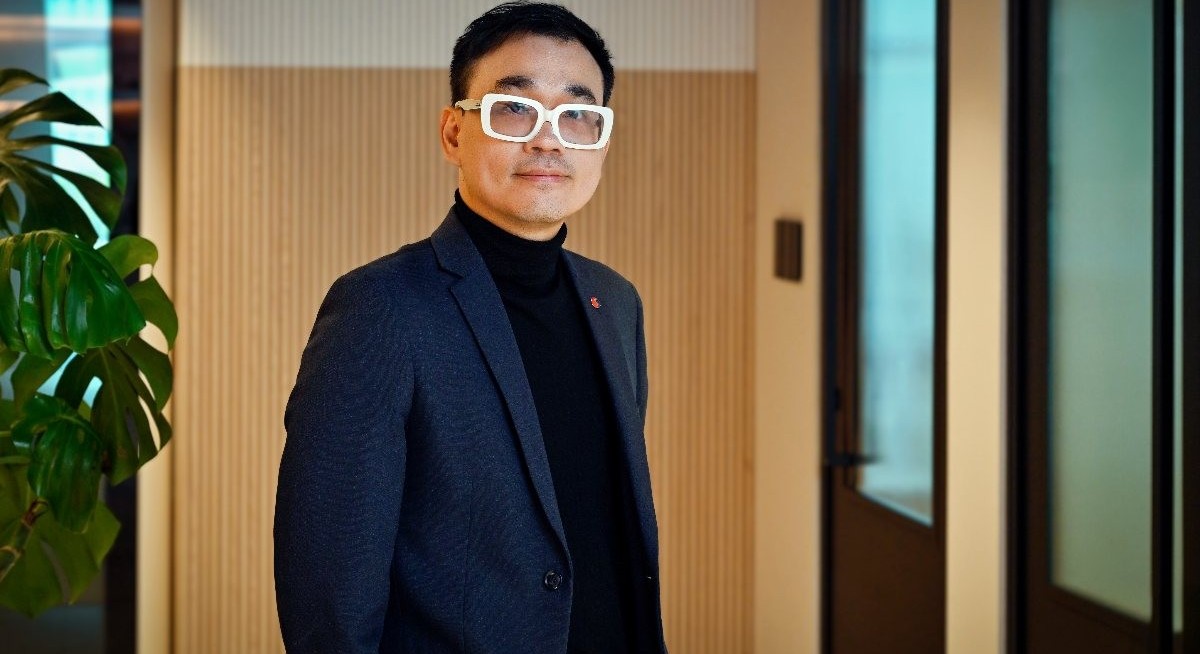


Stubbornly high oil prices are likely to drag on consumer spending and corporate margins in the medium term, says Toh in his March 16 report.
“The conflict around the Strait of Hormuz, which carries roughly 20% of global oil supply, has triggered a meaningful supply shock, with oil prices surging above US$100 ($128) and volatility rising sharply as disruptions persist,” he adds in response to queries from The Edge Singapore.
“While markets appear to be pricing in a relatively short conflict, the reality is far more uncertain, and any prolongation could materially impact inflation, margins and growth,” Toh adds.
“This disconnect partly explains the current market complacency. US equities are still trading only modestly below all-time highs even as underlying volatility remains elevated and headline-driven,” he continues.
See also: Local firms powering Singapore’s strong green revenues
As at March 18, US counters rose for the second day in a row despite a further spike in oil prices and tensions with Iran.
The conflict has also brought into focus what Toh had earlier identified as a key risk to his base case: a re-acceleration in inflation, which would make it harder for the US Fed to reduce interest rates.
“[The] US may have cut interest rates for quite a fair bit the last year, but US businesses and consumers are more dependent on the long end [of the yield] curve,” he says. “If you look at the mortgage rate, the third-year or 15-year mortgage rate is still at about 5% to 6%, which is extremely high.”
See also: ‘Generational’ investment opportunity in green economy: LSEG
He adds that the impact may be felt if the US is unable to reduce its rates, or worse, is forced to raise rates due to inflation.
The analyst also flagged that the full impact of the US tariffs has yet to be fully priced in by markets, with some corporates front-loading their inventory to offset the effects. “We don’t really know how much that will affect in terms of the margin, in terms of inflation levels,” he notes. If growth turned out to be worse than expected, Toh says he would then turn “a bit more cautious”.
Asia bull case still ‘intact’
Despite the darkening macro backdrop, Toh remains bullish on Asian equities. However, he recommends investors stay “nimble”, “actively adjust their positions and adopt a barbell strategy that balances long-term structural growth exposure in areas like AI and semiconductors with defensives, cash-generative names and selective energy hedges” until there is clearer visibility.
Since the outbreak of the conflict, Asian markets have seen weakness amid broad de-risking sentiment and increasingly uneven performance. Energy-importing markets such as Japan and South Korea have corrected. In contrast, Asean markets such as Malaysia and Thailand have shown “relative resilience” due to their commodity exposure.
Within Asean, Toh is positive on Malaysia, citing valuations and reforms under Prime Minister Anwar Ibrahim. That said, he notes that political succession risks remain a background concern given that Anwar is “not young anymore”.
Singapore, in Toh’s view, is also still “defensive”, although the country is “not immune” to higher rates and rising energy costs.
For more stories about where money flows, click here for Capital Section
The analyst is also “quite positive” on Singaporean equities overall, citing the government’s Equity Market Development Programme (EQDP). He adds that the country also appeals as a diversification destination, particularly for Malaysian retail investors in the last two to three years.
The Singapore market, which has a reputation for stability and dividend yields, is not a bad thing compared to the arguably sexier markets of the US and Hong Kong. To Toh, Singapore equities provide a base for investors, as they have “very low volatility” and serve as a “dividend income play”.
Malaysian investors are heavily concentrated in ringgit through their Employees Provident Fund (EPF), property and income, so diversifying overseas makes sense. Singapore is a natural first step, given their strong familiarity with the Singapore dollar (SGD) and well-known Singapore-listed companies.
Toh also notes that Singapore companies, such as DBS Group Holdings and ComfortDelGro, are no longer purely domestic champions, but regional players.
REITs, too, provide a “strong base” for investors. While share prices have taken a beating due to high interest rates, Toh believes many of these REIT portfolios will gain value.
“I don’t think that a lot of the assets are in any danger of a write down,” he says. “So there is a lot of long-term yield that is built in. So I think that, especially for retail investors, you need to look a bit more instead of chasing after all the good news in the near term.”
Vietnam remains a long-term structural favourite within Asean. However, the analyst recommends that investors gain exposure through exchange-traded funds (ETFs) rather than individual stocks, given limited corporate disclosure.
“Information is one thing that we are lacking in Vietnam. You’re not sure how good the company is, so it’s very hard to be selective about investing in it. But as a broad base, we think investors should have their eyes on Vietnam.”
Elsewhere, Toh sees Thailand as a more tactical play given its attractive valuations but ongoing political uncertainty.
Indonesia will be “good” in the long term, although Toh warns that the market warrants monitoring as the country’s current government is “not as strong” in terms of grassroots support. The Philippines is also “very uncertain”, Toh adds.
North Asian equities
Toh also maintains his constructive view on Chinese and Hong Kong equities, where his house carries an upside target of around 15% for the Hang Seng Index for the year.
The Chinese government’s policy support, including its commitment to a GDP growth of about 5%, and a shift in domestic investor behaviour away from property towards equities, are key pillars of this view.
He also points to China’s 15-year industrial plan, which emphasises three priorities: building modern infrastructure, developing advanced technology without relying on Western parties and driving domestic consumption growth.
The “DeepSeek movement” was also key in shifting global investor sentiment, with China becoming a market that “cannot be ignored” rather than one viewed as “uninvestable” before.
Liquidity is another factor to watch, given that many Chinese have shifted from investing in property to the stock market due to a lack of initiatives.
ETFs over stock-picking for retail
For retail investors navigating current uncertainty, Toh’s broad advice is to favour ETFs over individual stock picking, particularly for those without the time or resources to monitor markets actively. “The most foolish thing for someone to do is to put their money just into savings or deposits,” he says.
His three high-conviction ETF picks for the year are the CGS Fullgoal Vietnam 30 Sector Cap ETF, for exposure to Vietnam’s structural growth story via its largest listed companies; the CGS Fullgoal CSI 1000 ETF, which provides access to Chinese mid-cap players aligned with the country’s domestic upgrading and industrial transformation agenda; and the iShares MSCI South Korea ETF, which offers broad exposure to the technology and semiconductor sectors benefitting from the AI capex cycle.
To Toh, investing in ETFs should be kept simple, with costs kept as low as possible. Instead of buying ETFs to position for themes, investors should use ETFs to gain exposure to countries. Investors looking for thematic trends should instead focus on individual companies within the sector. “For example, if you wanted to go into the AI space, just look for the winners in it.”
For AI, Toh views the risks of shorting stocks as higher because the capex phase is still in its early stages. However, he believes investment growth will likely moderate compared with the previous year.
AI theme still intact
On themes, Toh remains constructive on AI, which has brought about a “massive surge” in demand for computing power, with graphics processing units (GPUs) from companies such as Nvidia powering the latest generation of AI models.
Earlier in the year, the analyst noted that South Korea, in particular, will be one of the “key beneficiaries” of the AI upcycle. “All the capex (capital expenditure) spending is not a one-year thing. It’s a multi-year spending. So we do think that a lot of the semiconductor players will benefit from that,” he said.
He adds that the sector’s capex phase is still in its early stages, although it may slow compared to the significant growth seen the year before.
Following the adoption of AI, the next step would be to monetise these tools.
One of the key beneficiaries of this trend is Microsoft, given its deep presence in the business-to-business (B2B) segment. “[Microsoft is] probably the first that [is] able to monetise [AI] due to the cloud,” says Toh, pointing to the growing adoption of Microsoft’s AI Copilot platform as a key indicator to watch.
When choosing companies, the analyst views their ability to translate user growth into revenue as the critical signpost for whether this broader AI investment thesis holds. “I probably look at how much [companies] gain traction as a sign.”




