


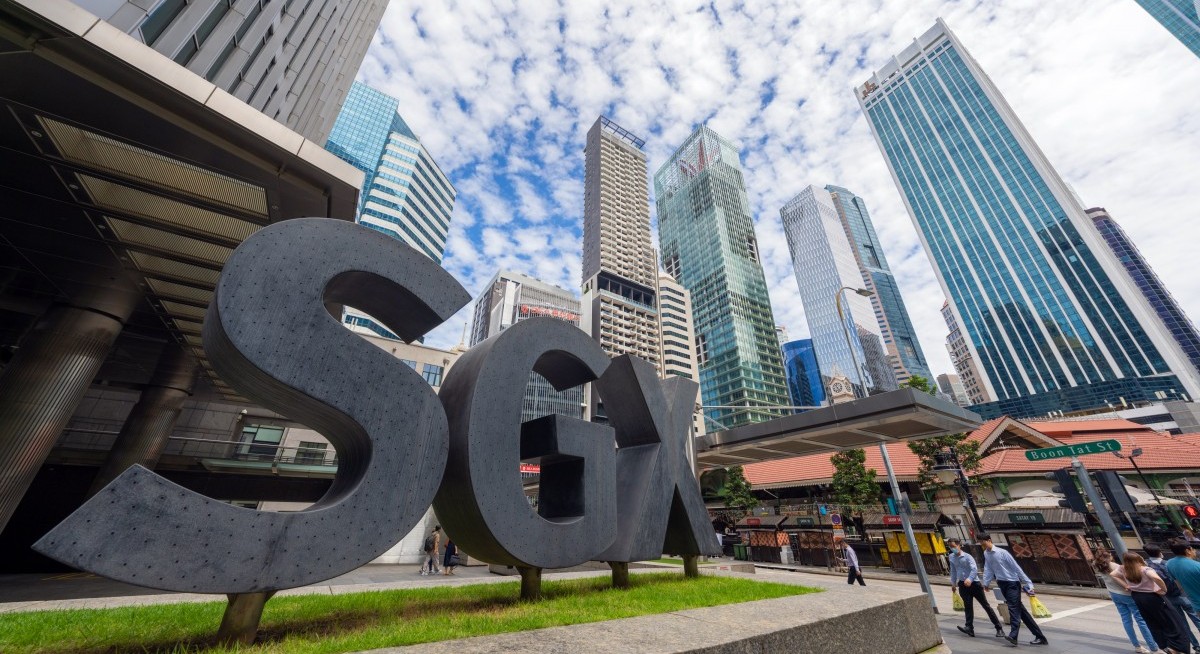


In his view, the ambition is to create the right conditions for more technology and growth companies to list in Singapore, whether via primary listings or secondaries, so that investors do not have to go offshore for exposure to home-grown champions.
The big hurdle he views is the “supply side”, which he believes needs “fixing”. “We need more tech and growth names to be listed in Singapore — primary or secondary. This is a long game and the pay-off may not come anytime soon, but we should use the momentum of the demand side reforms to create the path for supply side transformation,” adds Sethuraman.
The current investor reality, however, remains US-heavy. Sethuraman says Saxo’s client activity reflects how Singapore-based investors use US markets not only to access American companies, but also to express global themes through US-listed instruments. “The average Singaporean resident is heavily invested in the US market, 70% of our clients are invested in US stocks,” he says, adding that 34% of clients are also invested in US-domiciled exchange-traded funds (ETFs).
He argues this is partly because the US market offers the deepest ecosystem for mega-cap technology and broad sector access, even as the US economy’s share of global output declines over time.
See also: We are not at the peak of the AI cycle: Eastspring
For Singapore investors, that preference can also be practical. For instance, thematic exposure to China, India, or global technology can be obtained through US-listed ETFs, which offer liquidity and product breadth that are still hard to replicate elsewhere.
That backdrop matters as markets continue to debate whether AI and big tech are in a bubble. Sethuraman’s base case is that the underlying build-out is more substantive than previous episodes, such as the late-1990s dotcom bubble.
“Unlike the past heady technological breakthroughs, this one is quite different in that sense that the investments are real, the demand is real, and the earnings are real, at least among the big tech companies,” he says.
See also: World Cup: Not just a major sporting spectacle, but also a growing investing theme
“The question is how sustainable these earnings are if the projected productivity growth doesn’t materialise. That’s when the cookie will crumble. For now, we expect this year to be the year of reckoning, in which the initial enthusiasm will be curbed by greater scrutiny of capital spending. In short, companies with healthy balance sheets will outperform those that benefited from easy capital in the AI hype phase,” he adds.
Typically, when a market reaches a certain level of saturation, consolidation among players becomes a natural phenomenon. “I think consolidation is going to be gradual as we are still in the expansion phase,” says Sethuraman, adding that instead, he is expecting a gradual repricing in valuations that narrows market leadership. For investors, he advises resisting the urge to chase the “next big thing” without fundamentals.
Saxo’s outlook also places diversification back at the centre of portfolio construction, with more investors considering alternatives amid geopolitical fragmentation, high public debt burdens in major economies and the risk that inflation proves sticky. Sethuraman sees gold retaining a role as a stabiliser against equity volatility. As a hedge against the risk of fiat devaluation, he is cautious in areas where leverage is rising alongside ambitious assumptions about AI infrastructure.
In particular, he flags that if AI expectations disappoint, the pressure could show up fastest in credit, where highly leveraged data-centre investments may struggle to meet the market’s “sky-high expectations”. He is more constructive on commodities tied to underinvestment and rising demand for materials, especially as power, grid capacity and industrial inputs become critical constraints for AI deployment.
In fixed income, Sethuraman expects select exposure to remain useful as a hedge, but with a strong preference for short duration given ongoing inflation risks from debt dynamics, trade disruption and commodity underinvestment.
For Singapore-based investors who are heavily exposed to US assets, he also addresses currency concerns by pointing to the natural hedges embedded in global revenue streams of mega-cap technology companies. While he sees a need to hedge against the US dollar for “dedicated bets”, he notes that global MNCs have a form of natural hedging, since these companies already have revenues coming in from all over the world, offering “natural currency hedging” on their own revenues.
For Singapore markets, Sethuraman believes that reforms can support rerating and improve investor engagement, yet a sustained shift requires building the supply of compelling growth listings. If that happens, he expects Singapore to be better placed to capture regional fund flows that have been gradually tilting towards Asia, while still acknowledging that US markets remain the core allocation for many investors due to depth, liquidity and the concentration of global technology leaders.




