


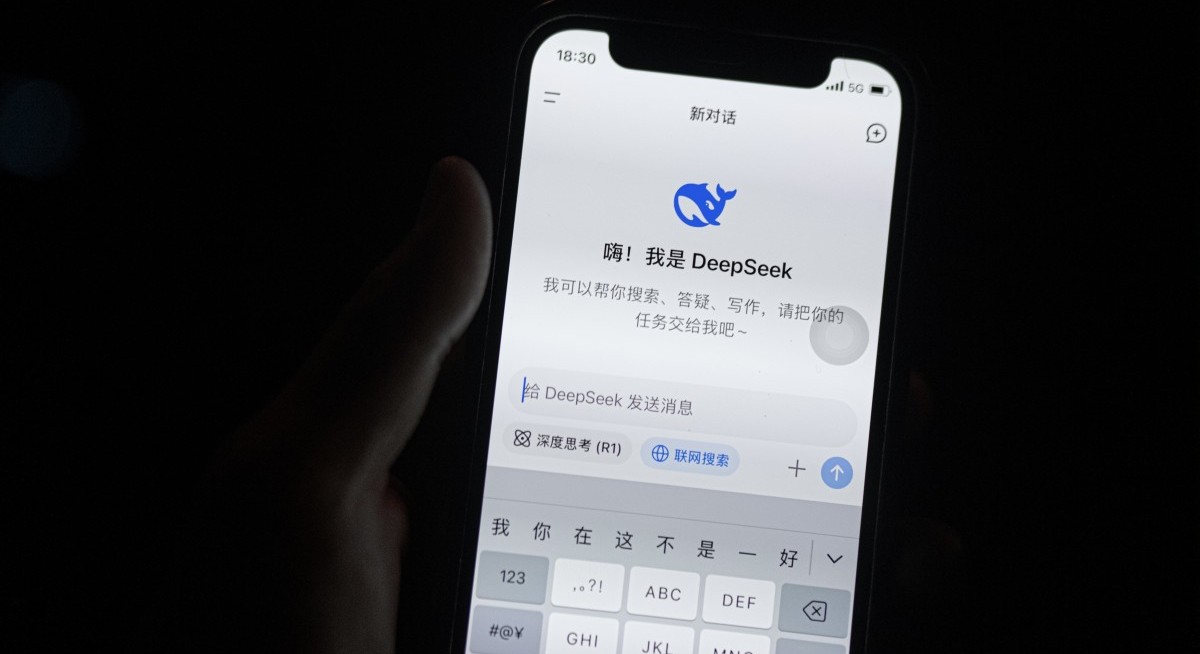


DeepSeek’s sudden rise raised concerns that US dominance over semiconductors and AI was fading and that China’s ascendance was all but certain. The fact that DeepSeek’s models were cheaper yet still just as high-performing suggested that fewer, not more, chips would be needed. This, if true, will have dealt a severe blow to the fortunes of major chip players like Nvidia.
Nvidia was relatively sanguine when asked about DeepSeek’s threat to its chip business. The company said in a statement at the time that DeepSeek is an “excellent AI advancement” and praised its use of test-time scaling training. Instead of retraining a model with more data to improve its performance, test-time scaling does it by adjusting how a model processes information. Companies like DeepSeek will still need to secure “significant numbers of Nvidia graphic processing units (GPUs) and high-performance networking” for their work, it adds.
It turns out that Nvidia wasn’t off the mark with its assessment. The company quickly bounced back from the sell-off and recorded a 39.65% gain over the year. AI companies such as Alphabet and Meta recorded impressive gains of 65.80% and 13.74%, respectively. To paraphrase Mark Twain, it looks like the reports of China overtaking the US in the AI race are greatly exaggerated.
First DeepSeek, now AI IPOs
See also: Local firms powering Singapore’s strong green revenues
Strangely, the DeepSeek cautionary tale has failed to dent investor appetite or confidence in China’s AI industry. Since December 2025, half a dozen Chinese chipmakers and AI companies have made their trading debuts in Shanghai and Hong Kong. All six companies saw a “pop” in their stock price on their first day of trading.
Chinese chipmakers such as Moore Threads Technology (468.78%), MetaX Integrated Circuits (568.83%), Shanghai Biren Technology (82.14%) and Shanghai Iluvator CoreX Semiconductor (31.53%) recorded impressive gains. Likewise, for AI companies Zhipu AI (3.27%) and MiniMax Group (42.67%), which have gone public ahead of their Western peers OpenAI and Anthropic.
“The scale of first-day pops mostly reflects how strongly the market is ‘pricing the policy direction.’ Investors are treating the AI and semis stack as a strategic priority and are rewarding anything that looks like domestic capacity-building,” says Juilice Zhou, an investment analyst at Eastspring Investments.
See also: ‘Generational’ investment opportunity in green economy: LSEG
The emergence of these players can be seen as part of China’s march toward self-sufficiency in AI and chips. Since 2014, China has invested over RMB686 billion in its semiconductor industry through the “Big Fund”, a state-backed investment fund. That goal has only become more crucial in recent years as both the Biden and Trump administrations have sought to kneecap China by levying export restrictions on semiconductors and the equipment used to manufacture them.
IPOs are just the beginning
While investors may see opportunity in these counters, analysts say it is too early to tell whether a strong IPO performance guarantees long-term success. “While it’s true IPO performance is a measure of sentiment, share price movements don’t affect how much money firms raise in an IPO,” says Phelix Lee, a senior equity analyst at Morningstar.
Lee told The Edge Singapore that any gains in these newly listed companies will only matter after the share lock-up period for pre-IPO investors expires. That will only happen after at least 12 months have passed since a company’s listing. From there, companies can decide whether to raise more capital or expand their talent pool by offering share-based compensation schemes. As of Feb 3, all six stocks are still trading above their offer prices.
“IPOs are a two-edged sword. On the good side, it helps companies raise capital, retain talent, and help stakeholders perform supplier audits,” Lee says. “However, the bad side is that it is more difficult to keep R&D under wraps, higher geopolitical risks and a greater need to balance shareholder and national interests.”
It’s not about growth at all costs
Even as the Chinese Communist Party (CCP) prizes growth, the country’s tech companies must tread carefully to avoid drawing the authorities’ ire. That was exactly what happened between 2020 and 2023, when the CCP unleashed a sweeping crackdown on tech giants such as Alibaba and Tencent.
For more stories about where money flows, click here for Capital Section
The impact of the crackdown on markets did not seem to worry the CCP, which appeared more focused on reining in the influence these tech giants wielded over society. According to Refinitiv, the crackdown wiped out more than US$1 trillion in market capitalisation for Alibaba Group, Tencent, Meituan, Baidu and JD.com.
Analysts, however, say China’s AI boom is likely to persist. CGS International’s head of research and chief macro strategist, Angela Cheng, says the country’s AI-related capital expenditure (capex) growth will stay resilient.
“Compared with the extraordinary capex growth of US tech giants, [their] Chinese counterparts have maintained a more restrained spending pace,” says Cheng. “This constrained yet steady investment helps sustain growth and mitigate overcapacity risks from unbridled spending.”
There has been an arguable détente between the authorities and the tech industry in China. In February 2025, China’s President Xi Jinping met with Chinese tech titans, including DeepSeek CEO Liang Wenfeng and Alibaba Group founder Jack Ma, at a closed-door symposium.
Notably, Cheng says the US export restrictions on China will help mitigate the risk of an AI speculative bubble taking hold. “In China, the growth path is seen as more controlled due to import restrictions fostering domestic demand and a vast internal market, suggesting a lower risk of a speculative bubble.”
Enter ChangXin Memory Technologies
One of the more eagerly anticipated China chip listings yet to hit the market is ChangXin Memory Technologies (CXMT), a domestic memory chip maker. CXMT holds approximately 5% of the dynamic random-access memory (DRAM) market, which is used in computers and mobile devices to temporarily store data. The DRAM market is dominated by Micron, Samsung and SK Hynix, who hold a combined market share of over 90%.
CGS International’s Cheng says the influx of Chinese chip IPOs should not result in market saturation. This is because there is sufficient onshore and offshore liquidity to support these listings. “Looking ahead, southbound inflows are expected to remain supported by households’ asset allocation demand amid a low-yield environment and a relatively attractive risk-reward profile in the HK market.”
In addition, the Hong Kong market has seen increased participation from global investors, says Cheng. She adds that the size and proportion of investments from foreign cornerstone investors into Hong Kong’s IPO market have reached a five-year high.
Founded in 2016, CXMT is looking to raise over US$4 billion as part of a planned IPO in Shanghai this year. According to the Research Institute for Democracy, Society, and Emerging Technology (DSET), CXMT turbocharged its memory research and production capabilities by acquiring patents from insolvent DRAM companies and poaching engineers from competitors.
The Taiwanese government-backed think tank says CXMT purchased thousands of patents from Qimonda, a now-insolvent German DRAM company that was spun off from Infineon Technologies. Aside from state funding, CXMT counts major Chinese tech players such as Alibaba, Xiaomi, and Tencent among its investors.
Long way to go for China
Investors need to recognise that while China’s efforts in AI and semiconductors are yielding promising results, achieving full self-sufficiency remains an uphill battle.
This applies even to CXMT, whose operating revenue grew at a 71% compound annual growth rate from 2022 to 2024, reaching more than RMB24.18 billion.
Jing Jie Yu, an equity analyst at Morningstar, says CXMT has narrowed the technology gap with other memory leaders to roughly three to four years, down from nine years. Yu expects the gap to narrow further given CXMT’s rapid pace of innovation and positive developments in its product roadmap.
“However, we believe that Samsung and SK Hynix will continue to maintain their edge in leading HBM (high-bandwidth memory) chips used primarily in AI data centres even over the next five years, given the higher complexity in HBM manufacturing and the increasingly advanced equipment required for future product generations that China will likely not have access to,” he adds.
CGS International analyst Kyunga Lee shares Yu’s view. Lee says the current market environment, where demand for AI-driven memory is outstripping supply, is structurally favourable for incumbents like the South Korean memory giants. Samsung and SK Hynix are already shipping their chips, which means they can lock in customers and secure pricing leverage.
“By contrast, even with IPO-funded capex, Chinese players such as CXMT face additional hurdles in process maturity, packaging integration, and global qualification, limiting their near-term impact on leading-edge AI memory markets.”
Serving only domestic customers also has its downsides, Lee adds. Samsung and SK Hynix can leverage their work with US, European and Asian hyperscalers to fine-tune and scale up their product offerings. In contrast, Chinese memory vendors like CXMT will have far fewer learning opportunities because they are isolated from global hyperscalers.
“The key challenge China faces is that it can’t manufacture much AI chips,” says Chris Miller, the author of Chip War: The Fight for the World’s Most Critical Technology. “The best estimates suggest that China will manufacture perhaps 3% of what the US and Taiwan will produce. That is a tiny number for the world’s second-largest economy.”




