




The Smartkarma Singapore Value-Up All-Cap Index eased 2.5% in November, with small and mid-caps experiencing a pullback. Still, year-to-date returns remain a robust 46.3%, underscoring the durability of governance-driven re-rating even as macro headwinds broaden. Large caps demonstrated defensive strength, driven by ongoing value-creation initiatives across financials and real estate.
Sector pulse: Rotation without re-rating
Consumer-facing sectors showed resilience, with staples and healthcare holding their line, while industrials and real estate corrected following months of outsized outperformance. Industrials still remain the year to date standout with a 23.9% total return, but November’s moderation signals investors are focusing more on how well firms follow-through over broader growth narratives.
What stands out is not sector volatility but valuation discipline: investors are rewarding predictable governance and capital deployment over thematic momentum.
See also: With no ‘sell in May’, SGX enjoys higher target prices on ‘strong’ May
Who walked the talk
Wee Hur Holdings: Portfolio consolidation to sharpen capital efficiency
Wee Hur announced the divestment of its 80%-owned Adelaide property, a 708-bed student accommodation asset at 188 Grenfell Street, for $14.2 million. The deal crystallises an estimated $4.7 million gain.
See also: DBS lays out case for DFI Retail to move ahead with Hong Kong supermarket consolidation
Post-transaction, Wee Hur will reduce its direct interest in the asset from 80% to 20%, rolling its exposure into Wee Hur PBSA Fund IIIA (WHF3A), consistent with its strategy to consolidate PBSA assets within a managed fund structure. The move derisks the project, tightens capital allocation, and positions the fund as the primary growth vehicle.
Why it matters: Capital-light exposure and risk dispersion are becoming baselines for property developers. Wee Hur’s pivot reinforces a market reality: structure matters as much as scale when investors assess long-dated development pipelines.
Frasers Centrepoint Trust: Full ownership unlocks strategic control
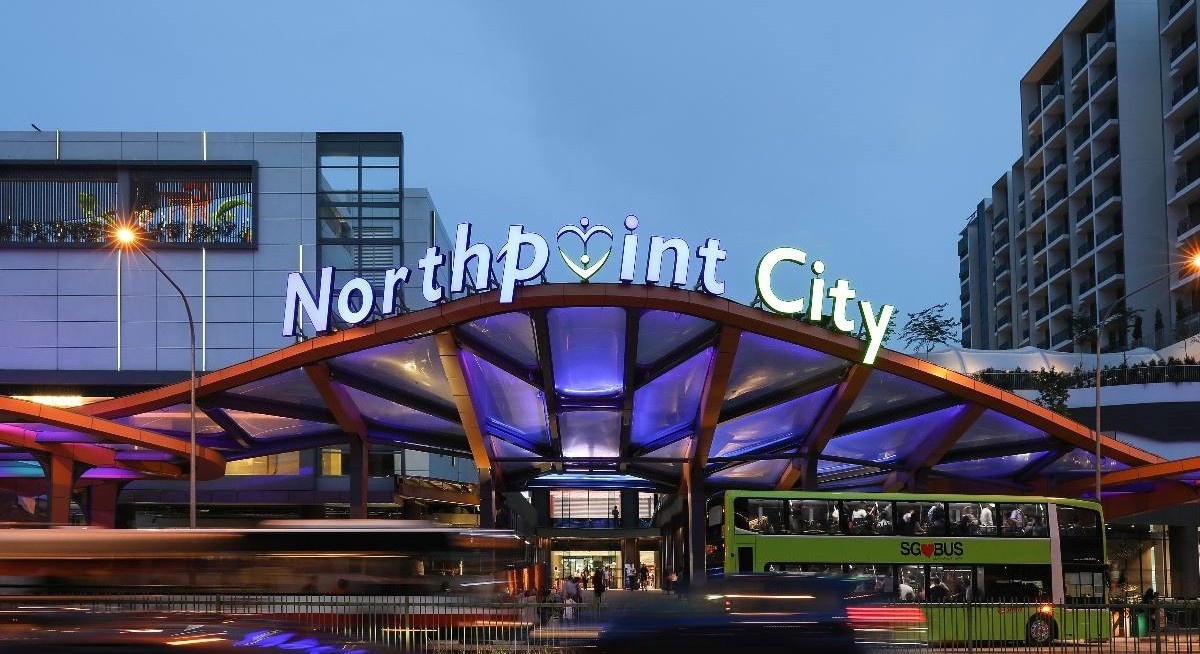
Frasers Centrepoint Trust (FCT) completed its 100% acquisition of North Gem Trust and its trustee-manager, securing full ownership of Northpoint City South Wing, valued at $1.1 billion. The purchase consolidates a key suburban retail asset under a single platform, strengthening FCT’s strategic footprint in heartland malls, a category that has the potential to deliver stable footfall and cash yields.
Why it matters: For retail REITs, disciplined reinvestment into assets with proven throughput is a core driver of valuation uplift. FCT’s decision to direct capital into a high-density, necessity-led suburban mall signals a commitment to durable yield.
AIMS APAC REIT: Deploying proceeds with surgical discipline
AIMS APAC REIT completed the acquisition of 2 Aljunied Avenue 1, drawing on an earlier $100 million equity fundraising. Proceeds were utilised in funding the acquisition, supporting targeted asset enhancement initiatives (AEIs), and strengthening the balance sheet through measured debt reduction.
For more stories about where money flows, click here for Capital Section
Why it matters: For S-REITs, disciplined capital recycling is the new competitive differentiator. Predictability around how capital is deployed and why is a crucial factor driving valuation and investor confidence.
Global Investments: Leaning into buybacks as a capital efficiency lever
Global Investments (GIL) repurchased $4.5 million of shares at an average price of 12.6 cents, adding to a year defined by elevated on-market repurchases across Singapore corporates.
The company emerged as one of the highest buyback-intensity names among Singapore’s SMIDs, and has leaned into market undervaluation with conviction, using repurchases as a deliberate capital-efficiency tool rather than a defensive gesture. The approach has coincided with a 13.8% year to date price return.
Why it matters: Singapore’s buyback momentum is no longer episodic; it is structural. GIL’s stance reflects an operating philosophy centred on shareholder alignment and disciplined capital deployment, attributes increasingly rewarded as the value-up cycle deepens.
From episodic wins to structural change
The market’s recent pullback does little to dent the underlying trajectory. With 46.3% year to date gains, the Smartkarma Singapore Value-Up All-Cap Index continues to outperform, reinforcing the thesis that companies embracing restructuring, divestments, and capital discipline are structurally rerating.
Share repurchases have emerged as the standout corporate action of 2025. For the first ten months of the year, nearly 80 primary-listed companies executed on-market buybacks totalling $1.9 billion, up roughly 90% from the same period in 2024. This signals a market-wide recalibration toward capital efficiency, valuation discipline, and shareholder alignment.
Singapore’s market infrastructure is also positioning for a structurally different horizon. MAS’ latest measures, from the SGX–Nasdaq dual-listing bridge targeted for mid-2026 to the $30 million “Value Unlock” Package, point to a marketplace that is widening its capital funnels while tightening its governance spine.
As these initiatives compound, supported by corporates demonstrating capital-allocation maturity, the value-up cycle stands to evolve from a rerating story into a governance-led market regime that redefines how Singapore attracts listings, retains capital, and commands investor confidence in the years ahead.
The message is unmistakable: For Singapore Inc, value-up is codifying into operating DNA, not fading as a policy-led narrative.

Smartkarma is a Singapore-based investment intelligence platform that connects global investors with independent research, data, and analytics. It is at the forefront of developing benchmarks and digital-IR solutions to support Singapore’s value-up reforms




