




From FY2021 to FY2025, Food Empire’s revenue has grown at a compound annual growth rate (CAGR) of 15.9%, and has done so through sanctions, foreign exchange (forex) shocks, as well as a global cost cycle, all while entering the premium soluble coffee market via MacCoffee Gold, he adds.
“MacCoffee Gold extends a proven 3-in-1 franchise into premium black soluble coffee — a higher-ASP (average selling price), higher-margin, higher-multiple pool,” says Murtaza, who sees the brand as a “discrete catalyst” the consensus is not pricing in.
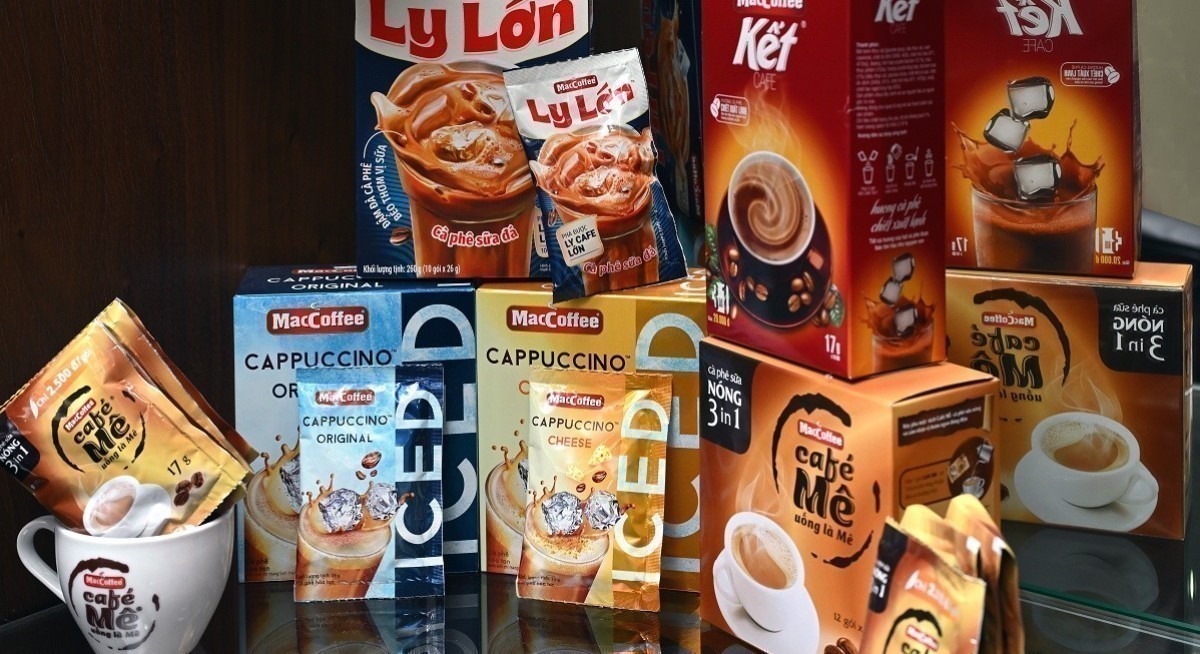
“This is not a cold start: MacCoffee is one of the top 3-in-1 brands in Russia and Central Asia, Café Phố holds [a] 50% share of Vietnam iced coffee, and the US$80 million ($103.5 million) Vietnam freeze-dried plant lands in 2028,” he adds.
Given this alone, the analyst has estimated a US$58 million step-up in Food Empire’s Southeast Asian business in 2028 alone, or 35% y-o-y higher. In his view, India provides the near-term manufacturing validation layer through Indus Coffee.
See also: KGI's Chong starts China Sunsine at 'outperform' with $1.145 price target
In addition, Food Empire still has legs to grow thanks to its strategy of selling affordable instant coffee into under-penetrated emerging markets (EMs) where the category still compounds.
With market-share gains, local execution and capacity-led step changes, the analyst has forecasted a revenue CAGR of 12.3% from FY2026 to FY2030.
More importantly, the group’s full vertical integration and local manufacturing for local sales in countries like Russia, Kazakhstan, Vietnam, Malaysia delivers stable margins through cycles and acts as a natural hedge for forex.
See also: Chee of DBS maintains 'buy' on DFI Retail following acquisition of HK advertising platform
At its last-closed share price of $2.53 as at July 6, Food Empire trades at a P/E multiple of 17.2 times for FY2026 and 14.7 times for FY2027. This is compared to an ex-India peer group of a median multiple of 15.3 times and 3QFY2026 multiple of 23.8 times, despite the SGX listco’s superior fundamentals.
Other positives: Food Empire’s return on equity (ROE) and return on invested capital (ROIC) stands above the peer median; it is net cash versus 33% of peer debt-to-equity (D/E); and has a dividend yield of 4.9%.
The analyst’s target price is based on an FY2026 forward P/E multiple of 23.8 times. He estimates Food Empire’s revenue and adjusted net profit to come in at US$655 million and US$69 million respectively for FY2026 and revenue and adjusted net profit to reach US$737 million and US$81 million respectively in FY2027.
Shares in Food Empire closed flat at $2.53 on July 6.




