


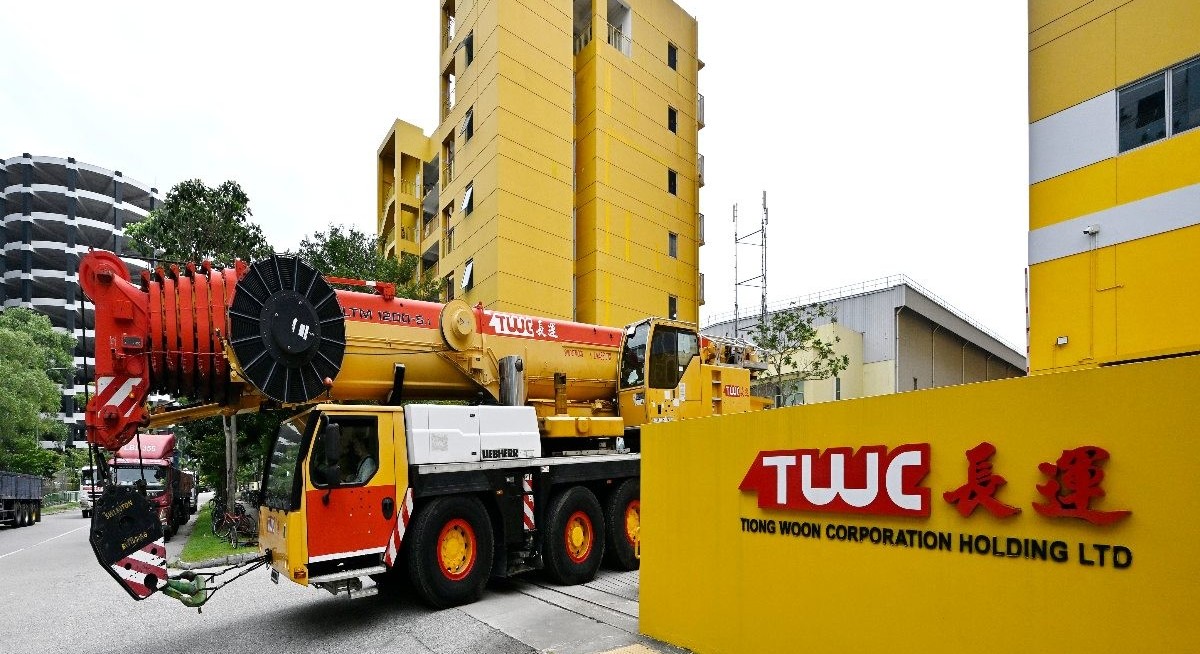


Tiong Woon is also seen as a late beneficiary of the construction boom, data centre (DC) and oil and gas (O&G) builds. The majority of heavy lift and hauling services pertain to above-ground or superstructure work, which occurs after foundation/substructure work is largely completed, notes Ong.
In Singapore, construction of mega projects such as Changi Airport’s Terminal 5 and Marina Bay Sands’ new integrated resort will run from 2025 till mid-2030. These projects are currently undergoing substructure works, with superstructure works likely to commence from 2027 onwards.
As contracts for the superstructure work for these two mega projects have not been tendered and awarded, Ong believes Tiong Woon is likely to have a share in the pie, with the company’s revenue increasing and peaking in FY2028.
Tiong Woon currently has a fleet of 579 cranes, 359 haulage assets, seven tugboats and nine barges. It also has its own jetty located at its Pandan Crescent headquarters, allowing it to mobilise its cranes to capture overseas opportunities quickly.
See also: JP Morgan reiterates overweight for CLI as it ramps up listed and unlisted FUM
The group, through its haulage fleet, provides transportation services of cranes and counterweights to and from various project sites. At the same time, Tiong Woon’s engineering know-how (mechanical and auxiliary engineering capabilities) enables it to offer project-specific lift plans, positioning the group as a one-stop heavy lift solutions provider.
Ong also believes the group’s track record of DC, semiconductor, petrochemical and O&G projects “positions it as a strong contender” for projects where safety and execution are critical to success.
As at Jan 16, Tiong Woon’s shares closed 5.78% higher at 91.5 cents or 17.31% up year to date. Yet, Ong believes there’s still upside. The analyst has posited a target price of $1.23, representing an upside of 34.4% and based on an FY2027 EV/Ebitda estimate of four times. The target price estimate also represents a 28% discount to Tiong Woon’s global peers given its smaller scale.




