


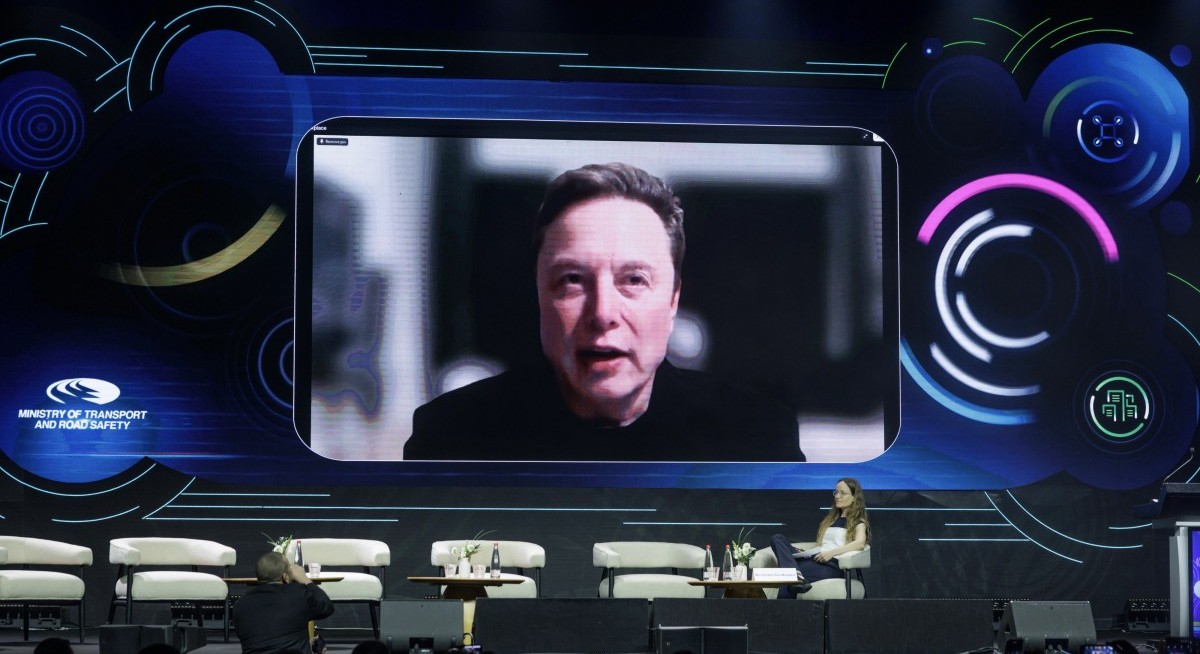


The IPO of SpaceX, likely the largest ever, with a valuation of up to US$2 trillion ($2.6 trillion), is backed by grand pronouncements that stretch most imaginations. “We believe we are still in the early days of AI transforming enterprises, with AI-powered enterprise applications poised to shape the digital economy,” reads the company’s filing.
Translated into dollar terms, SpaceX says it has a total addressable market worth US$28.5 trillion, equivalent to almost 90% of the US GDP. And, as indicated in its prospectus, creating trillion-dollar market opportunities is but one element of its “repeatable business model”.
SpaceX’s Starlink unit generated earnings of US$1.2 billion in the last quarter but remains overall in the red, with a loss of US$4.9 billion in 2025 as indicated in its prospectus. It also incurred losses of more than US$1 billion a month now after merging with the capex-intensive xAI in January.
With no earnings and thus no P/E ratio to provide the usual guidepost, SpaceX is viewed by breathless investors as trading at a price-to-sales ratio of 80–100 times, potentially based on last year’s revenue. In contrast, Tesla, also controlled by Musk, trades at 16 times revenue.
See also: SpaceX lowers IPO valuation target to at least US$1.8 tril — Bloomberg
In contrast, DBS Group Holdings, which made $2.93 billion in the most recent 1QFY23026, is valued at $138 billion. Its FY2025 revenue of $22.9 billion is not far off from SpaceX’s US$18.7 billion.
Of course, we are comparing apples to oranges. I regret not taking a bite of a SpaceX pre-IPO round or secondaries when private-market folks showed them to me earlier this year.
Despite such lofty valuations, SpaceX will likely be an instant pop on IPO, followed by an additional kicker when it is expected to be added to the Nasdaq 100 index, thereby forcing tracker funds, pension pots and stock portfolios to pile in as well.
See also: Musk could earn US$760 bil from SpaceX pay packages
One has to believe in AI businesses driven by data centres in space, powered directly by solar energy, not troubled by communities back on planet earth who may protest being located too closely to the expanding data centre footprint and its negative externalities. The future of mining asteroids, supporting interplanetary missions and all other galactic things that may bring galaxies far away closer is mind-boggling.
So is the capital being raised by Musk: potentially US$75 billion and up from the investing public to fund his imagination. For context, this amount will be triple the US$21.8 billion raised by Alibaba Group Holding in its 2014 US fundraise. SpaceX will also break the US$29.4 billion record set by Saudi Aramco, although it is not private-sector innovation but a partial privatisation by a state-owned entity.
And being in the Wild West of markets where investors chasing dreams can vote themselves to slavery willingly, without corporate governance, Musk will be “unsackable” with 85% of effective voting rights from his special class of shares. For the millions of believers of this trillion-dollar story, that is probably what they want.
By Jupiter
As the launch of SpaceX’s IPO draws attention and sucks up capital all over, others seeking public market listings are watching and waiting for the other two to come before the summer. On May 18, OpenAI won the lawsuit brought by Musk, with a unanimous verdict on a technicality that Musk waited too long to file his lawsuit, leaving all claims he had essentially expired. OpenAI’s own valuation has spiked as its business model shifted from common-good intentions to profit-seeking. In April 2023, it was valued at US$28 billion. By March 2025, it was US$500 billion and this year it was US$852 billion.
Perhaps the court case was a Musk distraction. As it is, OpenAI faces enough challenges, burning through and losing up to US$44 billion by 2028, with US$14 billion in 2026 alone. It has a hoped-for path to profitability by 2029 or 2030. However, there is some nervousness in the private markets as it meanders toward its IPO. If one were prepared to ride the forecast story, it hopes to deliver US$40 billion in positive cash flow by then.
The jury is still out on whether it can achieve its hoped-for $1.2 trillion IPO valuation in September. Having missed the SpaceX galaxy shot, I will also sit out this one.
Sink your teeth into in-depth insights from our contributors, and dive into financial and economic trends
Venus unveiling
Despite the showdown with the US Government about not allowing Anthropic’s AI to be used for mass surveillance of US citizens or for lethal autonomous weapons without human oversight in March, after the fighting with Iran started, and the ongoing lawsuit, it appears to be further on its path to profitability.
Its 2Q2026 revenue is projected to reach US$10.9 billion, driven by gains in the enterprise market share and a 70% win rate with new corporate buyers. It already projects its first-ever operating profit of US$559 million this quarter. While it is targeting an IPO this October behind OpenAI, which has already filed a confidential S-1, clearer financial reporting and a more well-understood enterprise-first business model have multiplied its valuation in a short period of time.
Current negotiations reportedly involve a US$30 billion pre-IPO raise, with a post-money valuation above US$900 billion, ahead of OpenAI’s US$852 billion. This is a large bump from February’s Series G, which valued it at US$380 billion. The issue is that even if I am interested, Claude cannot direct me to buy it now in anticipation of a likely stellar IPO.
Back on Neptune
It is routine for us in Singapore to compare ourselves to the best. And that is how we got here in one 60-year cycle since independence. It is also routine for us to self-flagellate and be critical, sometimes to an overly harsh extent. Not every milestone is the PSLE and the PSLE is not everything in one’s lifetime either.
JustCo made its trading debut on May 22, closing the day at 77.5 cents, a drop of more than 17.5% from its offer price of 94 cents. This underwhelming debut, 15 years in the making, prompted the usual bout of questions.
Can the Singapore market, so the story goes, support IPOs beyond REITs, which we have ample demand for? To be sure, some Catalist microcaps have done better of late, following the rollout of our long-overdue stock market initiatives, which have boosted confidence.
It has been more mixed for recent Mainboard issues such as UltraGreen.ai, which initially struggled, then rallied, and has since ebbed back to new lows. Info-Tech Systems has braved a bit of undertow and surfaced with more followers and proven performance, but it is still a smaller company than JustCo.
There has also been rising liquidity and valuations, along with a long series of successful placements, fuelling secondary capital raising in the small- and mid-cap segments, making our small-cap market more exciting of late. However, these are companies that have been proven, albeit forgotten for some time in many cases, but are now seeing value unlocked, especially as they undertake corporate actions.
Our Straits Times Index is at an all-time high, and indeed, the Singapore market has outperformed the US in the last five years, led by our big caps. As alluded to, comparisons with the US are often apples, oranges and pears. So it is the story for IPOs.
Given the size of the market and the depth of investors, our lament about Mainboard IPOs not being as well received cannot be compared to the giant planets in the US, which routinely hoover up global capital, especially when global equity indices are 60% weighted toward the US for portfolio managers to track.
It is also foolish to jump to a conclusion that our companies should list on the Nasdaq. There have been too many cases of small fish — defined as those with a market cap below $5 billion — entering that ocean, getting lost and neglected, and being delisted thereafter.
It is, however, true that the deployment of the Equity Market Development Programme funds has only just started at several institutions. While it is meant to help crowd in more capital to recharge the ecosystem, it ultimately needs a wider distribution of fund managers and investors participating in equity markets seeking growth. That is still early in the making.
And more importantly, a few other ingredients are necessary. First, a culture that supports growth companies locally, which has been rediscovered a bit for some existing small- and mid-cap stocks.
Credit to JustCo, whose IPO valuation, whilst lower than its unicorn valuation in its 2020 heydays, had reinvented itself and built resilience to recharge for growth. Investors here could look more toward our own shores for companies valued for growth metrics and models like EV/Ebitda, rather than P/E and dividend yields, especially for fast-growing companies.
If the main investors did not sell vendor shares, and the founders’ family office also picked up additional shares at the IPO offering, I read this as a sign of confidence, not weakness in the company, and I am therefore now a shareholder in JustCo. The company still has to deliver on its business promise and communicate effectively to attract more shareholders beyond the good names on its cornerstone book and the anchor original shareholders of Frasers Property and GIC.
Next, even beyond the catalytic EQDP funds to initiate, as this column had pointed out before, there is a need for greater certainty about regular new inflows.
Mobilising a small percentage of a stable and recurring pool of professionally-managed domestic savings from public insurers and public pension funds, which are then injected annually into a broader market and widening the pool beyond EQDP participants, would give primary IPO investors a greater belief that their diligence and support will have follow-on capital in the secondary market.
Unlike other markets from Japan to Australia, we have yet to institutionalise this in Singapore. It is a shame, as we have significant pools of domestic savings that should help our entrepreneurs succeed in the capital markets, which are key to employment and job creation.
We can look to the Nasdaq-SGX bridge, where reports indicate that Singapore-headquartered DayOne Data Centers, an international data centre leader riding the AI theme and growing rapidly, may pursue a listing with a valuation of US$20 billion. It will certainly be a planetary alignment if these growth companies, with the halo of Nasdaq, can entice our own investors to support local on this bridge.
Can we also find our own North Star for the smaller companies that choose to stay home?
Chew Sutat retired from Singapore Exchange after 14 years as a member of its executive management team. During his watch, the exchange transformed from an Asian gateway into a global multi-asset exchange, and he was awarded FOW’s lifetime achievement award




