




The sector is forecast to grow from US$100 billion in annual service revenues today to over US$400 billion within the next decade, and to US$1 trillion by 2045. Space communications is expected to grow from US$15 billion today to US$150 billion within the next decade. Low earth orbit communications capacity is likely to grow by over 100 times, as satellites capture 10% of global communications markets by 2035.
The largest IPO in history
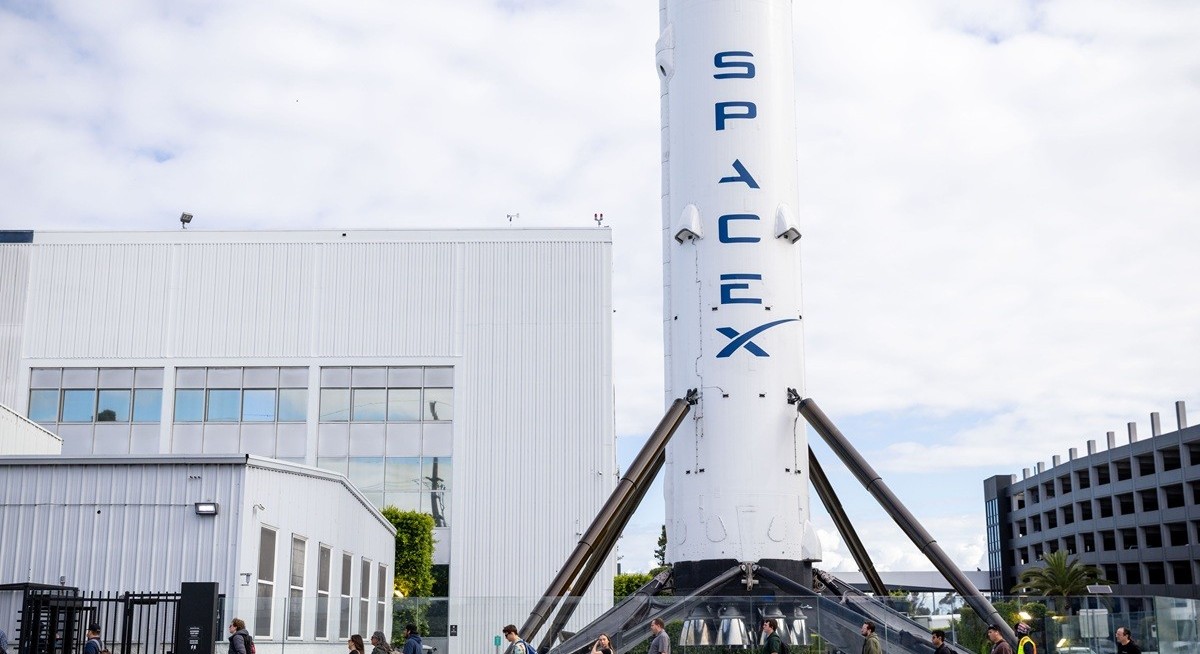
Leading the charge is Starlink, a SpaceX subsidiary. Last year, it sent over 2,300 satellites into low earth orbit. There are currently 10,300 Starlink satellites orbiting the earth.
Four years ago, there were none. Musk has a medium-term goal of 42,000 satellites and a long-term goal of a million satellites, mostly to serve as orbital data centres. SpaceX president Gwynne Shotwell recently said that the Starlink constellation will likely stabilise at 15,000 to 20,000 satellites over the next few years.
SpaceX’s space business had adjusted ebitda of nearly US$6.5 billion on revenue of about US$18.5 billion in 2025.Morningstar forecasts SpaceX to grow revenue by 30% to over US$24 billion this year. Nearly 70% of 2026 revenue will come from Starlink, which controls 67% of all satellites currently in orbit. Much of the rest will come from selling rocket launch services to governments and companies as well as US$1 billion from its recently acquired artificial intelligence (AI) start-up xAI, which also owns X, formerly Twitter. SpaceX would have lost US$5 billion if it owned xAI last year.
Investors buying SpaceX shares in the IPO are effectively financing xAI’s pipe dreams to get a piece of a fast-growing space communications firm. xAI last year spent US$13 billion on capital expenditure — mostly chips and data centres — 50% more than SpaceX’s core space and satellite unit that generates 80% of its revenues. Other expenses include US$6.6 billion on depreciation of chips, rockets and satellites, plus US$2 billion each on interest expenses and stock-based compensation.
See also: BlackRock-backed AIP, KKR said to court Stack's Asian data centres
A US$2 trillion valuation for a firm raking in US$24 billion in annual sales works out to be around 83 times price-to-sales. Morningstar calls that price tag “expensive but not irrational”. It all adds up as long as SpaceX can commercialise its super-heavy reusable rocket Starship on or near its proposed timeline, the research firm argued in a recent note. In September 2020, data-cloud firm Snowflake launched its IPO at US$120 per share, raising US$3.4 billion. That IPO was priced at a whopping 105 times price-to-sales or 45% above SpaceX’s proposed IPO. In comparison, AI chip behemoth Nvidia currently trades at 19 times price-to-sales and social media giant Meta Platforms at 7.4 times price-to-sales. Defence contractors such as Lockheed Martin, RTX and General Dynamics trade at between two and three times price-to-sales. SpaceX is selling itself as an operator of a tech platform, more like Google or Meta Platform, rather than a run-of-the-mill aerospace contractor.
Snowflake’s star-studded listing included the world’s best-known value investor Warren Buffett’s Berkshire Hathaway. Buffett famously had never invested in IPOs of unprofitable tech firms, yet he made an exception for the software upstart. Berkshire sold its Snowflake stake in 2024 and Buffett, 95, retired at the end of 2025.
SpaceX’s upcoming IPO will be by far the largest in history. Oil giant Saudi Aramco raised just a third as much, or US$25.6 billion, in its own public offering in 2019, while Chinese e-commerce giant Alibaba Group Holding raised US$25 billion in its 2014 IPO. The space firm’s listing would even be bigger than the failed IPO of Ant Group, Alibaba’s fintech affiliate that was in the midst of raising US$34.5 billion in November 2020 for a Hong Kong-Shanghai dual listing when Beijing regulators yanked the plug 36 hours before trading was set to begin. At a US$2 trillion valuation, SpaceX would be the world’s sixth largest firm by market value, ahead of chip juggernaut Taiwan Semiconductor Manufacturing Co (TSMC), currently valued at US$1.93 trillion.
See also: EU to escalate Meta probe into addictive design that hooks kids
Ahead of its parent’s IPO, Starlink has been boosting its subscriber base by offering teaser rate offers on its satellite broadband service. In the US, residential users can now subscribe to Starlink’s service for just US$49 for four months and thereafter pay US$70 a month for 100Mbps (megabits per second) speed or US$110 a month for 200Mbps speed. Starlink has offered similar plans across Europe as part of an aggressive customer acquisition strategy to unlock incremental growth in saturated markets. Its new Gen3 satellites promise to deliver 500Mbps speed broadband to nearly 200 million clients globally. As satellite broadband speeds improve and prices are slashed further, Starlink hopes to attract people who get their broadband access bundled with cable TV subscriptions. Increasingly, viewers around the world are cutting the cord and turning to streaming services like Netflix, Amazon Prime and Disney.
SpaceX is suddenly facing new challengers in the sky. Among the biggest is Amazon, whose founder Bezos has long been competing with Musk through his privately held space firm, Blue Origin Enterprises. Bezos’ listed flagship recently rebranded Project Kuiper, its space venture, as Amazon Leo, a consumer and enterprise broadband service which is expected to launch in the US, the UK, Canada, Germany and France later this year with a constellation of 3,200 low earth orbit satellites.
Blue Origin also has its own satellite “megaconstellation” named TeraWave, aimed at the enterprise, government and data centre market, promising speeds of up to six terabits per second. Amazon, for its part, on April 14 acquired Globalstar, a satellite telecoms group, for US$11.57 billion to more effectively compete with Starlink. Globalstar is 20% owned by Apple, which uses 67% of the satellite firm’s capacity. Apple paid US$400 million for its stake and invested additional US$1.1 billion in infrastructure for the firm. Apple also signed a new deal to use Amazon Leo satellite services for its iPhones.
Then there is China, which is aggressively developing its own constellation to deliver satellite connectivity. Beijing has identified two separate constellations — Qianfan (SpaceSail) and a national network Guowang — to challenge Starlink for space supremacy. So far, Qianfan has only managed to put 126 satellites in orbit compared with Starlink’s 10,200. Qianfan expects to put 648 satellites in orbit in its first phase to provide global coverage and then grow the constellation into a 15,000-satellite network by 2030.
All about storytelling
How does a rocket firm CEO convince the world that his company isn’t just worth US$2 trillion but a lot more, so that shareholders stick around for the ride? Forget SpaceX’s financial ratios — storytelling carries greater weight in stock markets because human perception and future expectations matter more. Companies with compelling narratives almost always command premium valuations because the stories they tell help investors make sense of uncertain futures.
Tesla wasn’t just valued as a car firm but sold as a story about transforming transport and energy, just as Amazon in its early days pitched itself as revolutionising retail rather than just selling books online. Musk basically sold a vision of sustainable energy, driverless cars and a future where Tesla is the dominant producer of humanoid robots rather than just EVs.
Musk’s “mission to accelerate sustainable energy” narrative attracted passionate retail investors who saw themselves as part of a movement, not just shareholders.
Sink your teeth into in-depth insights from our contributors, and dive into financial and economic trends
For years, Amazon reported minimal or negative earnings while the stock soared because Bezos convinced investors that short-term losses were investments in future dominance. The narrative evolved from “the everything store” to “infrastructure provider for the internet” (AWS) to “we’re building the future of commerce and cloud computing”. Bezos skillfully told a story about building for the long term and prioritising growth over profits.
How did Musk become a charismatic modern-day Pied Piper with 236 million followers on X, more than any other person on earth? First, Musk is an incredibly effective salesman because he sells a mission rather than a product. “We’re going to make humanity multi-planetary” isn’t a product pitch — it’s a civilisational calling. People buy into the “why” long before they buy the EV, rocket or humanoid robot.
He is also very specific about exactly when he will deliver his vision. In 2018, he said “one million Tesla Robotaxis next year”. And he has repeatedly promised that millions of humanoid robots will be living and working with us by the end of next year. And, oh, the colonisation of Mars isn’t something that might happen in your grandchildren’s lifetime; Musk has been very clear about “2029 crewed landing, reusable Starship”. He talks constantly about his personal hardships — his near bankruptcy, sleeping on Tesla’s factory floor — as well as his past failures. It’s a classic hero’s journey: sacrifice, doubt and eventual triumph. The key is urgency, scale and personal stakes. Put all those things together and you will see that SpaceX is not just a business story but actually feels like history unfolding in real time. That’s why investors are hooked on his storyline and cheering him on.
Unlike other storytellers, Musk has a track record of delivering on many of his audacious promises. Think reusable rockets that many said were impossible, or making EVs desirable when most pundits said car owners would never give up their petrol-based vehicles. Whenever he makes daring claims, fans concede that while “he misses deadlines, he has delivered on so many other impossible things.” Vague dreams don’t fly; bold, concrete ones do. As for those missed Robotaxi deadlines or inability to colonise Mars so far, fans recall his hits rather than a few spectacular misses.
However, too many IPOs this year after a long dry spell may rain on Musk’s parade, along with the upcoming listings of OpenAI, which is set to raise US$50 billion at a US$1 trillion valuation, and Anthropic, which reportedly wants to raise up to US$40 billion at a US$700 billion valuation. That’s US$165 billion from just three IPOs. In 2024, US$75.3 billion was raised from 347 listings. High and rising stock issuance through IPOs and rights issues is a classic warning sign that a market bubble is near its peak and may be about to burst as it signals that firms are aggressively tapping into investor enthusiasm to raise capital at overvalued prices. Excessive supply of new paper can exceed investors’ appetite for buying, leading to a fall in stock prices.
Whether the SpaceX IPO leads to market indigestion or a bubble burst, it will be a severe setback for AI and tech story stocks. Here’s the thing: legendary storytellers and Pied Pipers have a habit of just playing on. Musk is hoping fans and the market will eventually dance to his tune.
Assif Shameen is a technology and business writer based in North America




