




Amid all the Trump tweeting on Truth Social, which was causing market mayhem, I entered the country on April 2, paying the US$100 ($127.37) per day tourist tax to try to learn what this unique country, which beats to the GNH (Gross National Happiness) drum, and not GNP (Gross National Product) that the rest of the world dances to — whether capitalist or communist — as we are broadly focused on measuring output and maximising economic growth.
Maximising “well-being” was a concept that straddled my academic majors of philosophy, politics and economics, so I was curious to see it in practice. Without seeing it in action, one could not help but be a tad sceptical about the metric, whether it was just an opiate to distract from the lack of economic development or material poverty. Far from it, as it turned out.
Pilgrims’ progress
Valley towns of Paro and Thimphu, Bhutan’s capital city, are linked by a modern highway requiring just 90 minutes’ drive time. But to experience the country in its elements, I signed up for the Druk Path Trek, which is the ancient trading route linking these two cities.
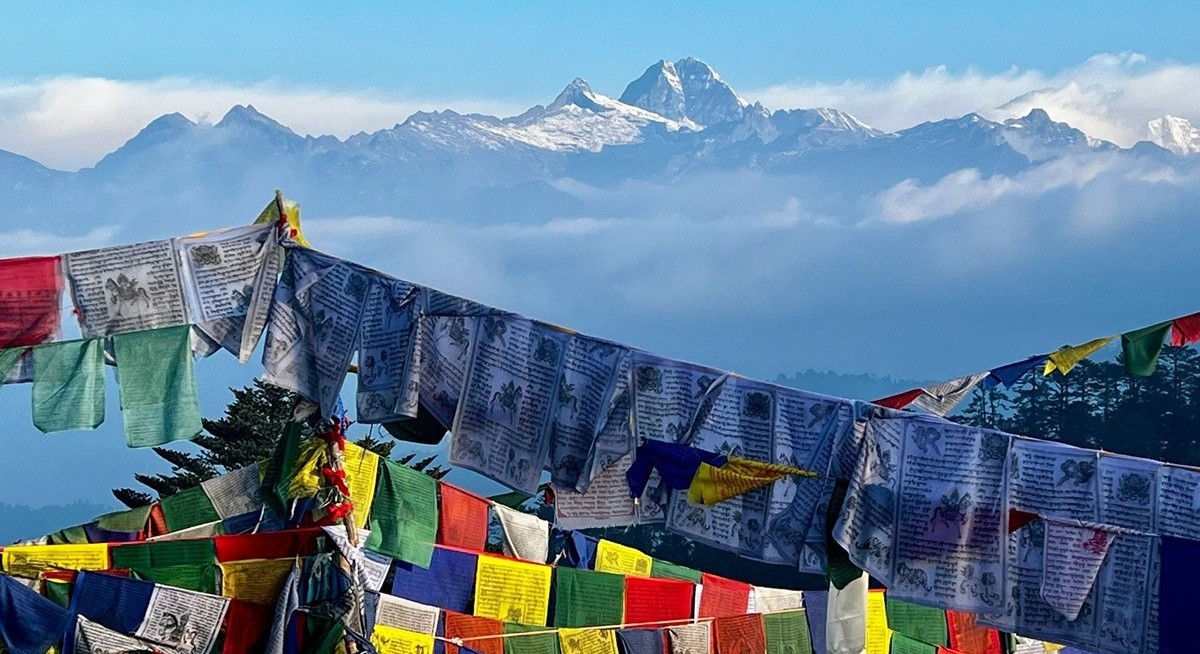
The hike, lasting several days, took us through mystical peaks of the Himalayas, Buddhist temples, fortress-monasteries, alpine forests, lakes and yak pastures. The trek was a way to immerse myself in nature and detox digitally from the persistent negative energy of being tethered to depressing news globally.
See also: Asian stocks drop as traders await ceasefire news
A warm-up acclimatisation trek on our second day took us up to 3,100m and back down to Paro to the spectacular Paro Taktsang, or Tiger’s Nest Monastery, which is nestled on a steep cliff. Legend has it that the second Buddha, Guru Rinpoche, flew here on the back of a tigress.
Most folks do this on the second-last day of their trips to Bhutan, after adjusting to the altitude above 2,000m — a point I better appreciate after the mild challenge to my lungs and knees. I know I should have trained harder, but we had mountains to climb ahead. Sometimes in trading, who dares wins.
The next day, we trekked straight up to another historic monastery, the Jela Dzong, which sits at an altitude of 3,480m. On a clear morning after, we took in spectacular sunrise views of some of Bhutan’s Himalayan peaks. Unfortunately, we lost two of our party members who turned back sensibly with some signs of mountain sickness. Just like on a bad trade, it’s better to cut losses early; it was a good call. A fair amount of sightseeing, wellness activities and shopping were to be found back in the city. Capital can be saved for another opportunity.
See also: Stock rally builds on US-Iran plan, dollar weakens
Our spring trek exceeded expectations. We lunched in the company of highland yaks at 4,000m. Some nights were clear, albeit cold, when we could see constellations with the naked eye. Nature was never far, with yellow-billed long tail blue magpies coming up close in the lower Alpine forests where we had our meals. They mimic the sounds of other birds to warn them away so they could pick after our crumbs. Kind of like spoof trading in the markets — an illegal activity!
On our trail, however, we did not see any of the elusive tigers — 131 of them, according to a 2023 survey. Even if we did, I would not have gone up to take a selfie. On the day after we arrived in Thimphu, however, one was spotted near a monastery.
More than half the country has been designated as a protected reserve, given how it is recognised as an essential part of Bhutan’s GNH. Decades of work have been put in, with sponsorship from the Bhutanese royals and support from the likes of the World Wide Fund for Nature. Even so, the contention and tussle for space between wildlife and communities remains a tough balancing act.
Tourism is the second-largest contributor to the country’s economy. The US$100 daily tourist tax helps fund free education for the people, and as one of our compatriots would find out, this tax helps fund medical care for locals and tourists alike. For treatments not available locally, families are offered heavily subsidised overseas options at a nominal cost.
How is this sustainable, one wonders, as everywhere we went, from kids to older villagers spoke English, which is taught in schools alongside native Dzongkha. Can GNH be economically viable? Is having everyone equally poor (a communist outcome versus capitalist greed spurring us forward) a good well-being outcome?
Paradise lost or regained?
On day four, from the Jimilang Tsho or Sand Ox Lake at 3,900m, we reached the simmering Simkota Lake at 4,100m after an eight-hour trek. Along the way, we did not see the snow leopard, but chanced upon sambar deer, barking deer, blue sheep and the unique takin — similar to a musk ox.
The diversity and unpredictability of nature manifests on us again. Right after we made camp, an unexpected blizzard hit, and it was a whiteout in no time. Roaring 30-knot winds knocked down two tents, but thankfully not ours — perhaps we were too heavy.
Sink your teeth into in-depth insights from our contributors, and dive into financial and economic trends
Armed with no more than a fleece, some thermals, a scarf, and a furry hat with ear muffs, we couldn’t help but wonder if we should have taken the helivac out earlier in the day to pick up a friend who fell sick and had to be evacuated. While he was warm in a hospital down in Thimphu, we huddled around a fire in minus 10 degrees Celsius and managed to ride out the storm.
Throughout the 10-day trip, our guides and crew, and indeed everyone we encountered, did not behave like commercially-minded salesmen, even if they should. From service staff running the hospitality establishments to ordinary folks in the villages, we could sense real care, especially for our compatriots who got into trouble. While we were on our trek, they were always ready to lend a helping hand or offer some warm ginger tea. Incredibly, to help mark the few April birthdays in our group, a cake was steamed amid the blizzard for our supper.
Award-winning photographer Stephan Gladieu sums it up well in Bhutan: Portrait of a Kingdom: “To speak of the Bhutanese people’s kindness seems almost offensive, considering how profoundly their welcome was imbued with respect, generosity, listening and solicitude.”
Full of surprises
For a country which only joined the United Nations in 1971 and first opened its borders to tourists in 1974 in a thoughtful way for “high value, low volume” tourism, the country’s careful modernisation and development through successive kings of the Wangchuk dynasty ensured its voluntary and smooth transition from an absolute monarchy to a constitutional democratic monarchy in 2008.
The King and royal family are obviously revered. Photos of them adorn public buildings and private homes as they are loved and not feared in the North Korean way. In prioritising well-being, the society remains in high trust, even with the challenges of smartphones. Two young child monks, presumably under the influence of TikTok videos, were glued to their devices instead of manning the counter displaying religious blessings in the fortress of Paro.
Bhutanese society values knowledge, industry, labour and nature and is underpinned by collective communitarian practices from the daily religious rituals. It is encapsulated by the Ministry of Tourism, providing income to out-of-work guides to clean up litter from the trails during the pandemic.
More importantly, volunteer brigades join annually each spring en masse to clear the land in a sustainable way for the visionary Gelephu Mindfulness City (GMC).
On the day we left, the Bhutanese royals led the commencement of the sixth year of the activity, and volunteers from all walks of life, CEOs to villagers, joined in with a collective spirit, and not merely for performative photo opportunities.
Covering 2,600 sq km along the Indian border, the GMC will act as a hub for economic development, wellness and innovation, bridging Southeast Asia and South Asia through sustainable, mindful urban design. Blending the GNH framework with modern technology, data centres are being developed for sustainable crypto mining and other digital businesses, with strong Singapore links on the board and in management. These will run on renewable hydro energy, Bhutan’s largest industry, which generates revenue through exports to India, rather than more polluting manufacturing industries. The environment, including biodiversity corridors for wildlife, is considered alongside the planned building of 108 stupas in keeping with spirituality, for eco and wellness tourism.
Bhutan is very rich in GNH, but it is also not poor by conventional measures. GDP per capita, based on purchasing power parity, is expected to be US$19,000-US$20,000 in the middle-income range in 2026. This ranks around Vietnam and Indonesia, although its population of just 800,000 is far smaller. Its total fertility rate has declined from 5.0 in 1993 to 1.46, below the 2.1 replacement rate, with life expectancy leaping since modernisation, to just below the global average of 73.7 years, which presents future challenges.
I left lighter in spirit, not so from freezing in the high mountains, but with a deeper perspective. There is another way apart from singular focused metrics on economic growth and trying to put a price on everything like oil, that could create a triple bottom line for people, profit and planet.
After all, the Dalai Lama has warned that people often sacrifice their health to earn money, only to spend that money trying to recover their health, while worrying so much about the future that they fail to enjoy the present.
For true happiness, the value of it is indeed priceless.
Chew Sutat retired from Singapore Exchange after 14 years as a member of its executive management team. During his watch, the exchange transformed from an Asian gateway into a global multi-asset exchange, and he was awarded FOW’s lifetime achievement award.




