


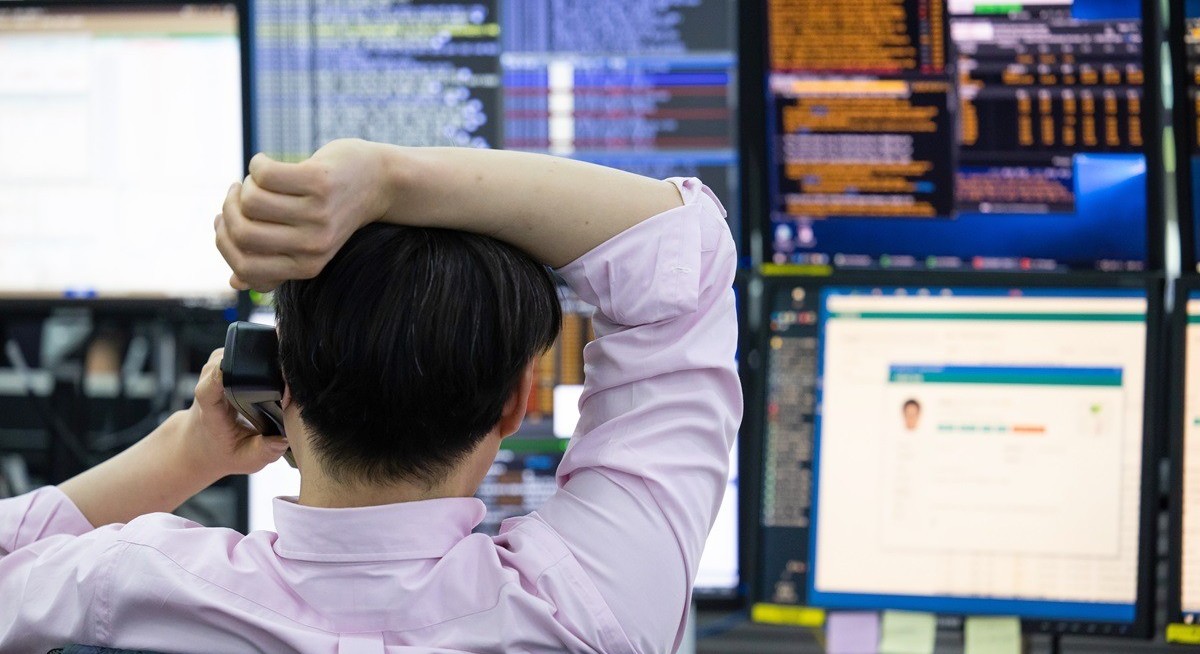


(April 15): Asian stocks rose and oil edged lower on Wednesday as optimism over renewed US-Iran talks to defuse Middle East tensions buoyed sentiment.
The MSCI Asia-Pacific Index gained 1.2%, with roughly three stocks advancing for every decliner. South Korea led gains, with its benchmark — the world’s second-best performer — jumping 3.1%. China’s CSI 300 Index erased losses following the Iran conflict, becoming the latest regional gauge to recover. On Tuesday, the S&P 500 climbed close to its late-January peak.
Brent crude fell for a second day to US$94.50 ($120.23) a barrel as President Donald Trump told Fox News that he sees the war as close to ending. Treasuries held their gains as lower oil prices eased inflationary pressures, while the Bloomberg gauge of the dollar was little changed after seven days of losses.
Market sentiment has improved on expectations that easing in Middle East tensions after more than a month of hostilities will help moderate oil prices and inflation, while supporting economic growth. The US and Iran are seeking a second round of talks in the coming days, as tensions in the Strait of Hormuz deepen the global energy crisis ahead of next week’s ceasefire expiry.
“Markets are turning up the risk appetite as US-Iran talk resumes,” said Anna Wu, a cross-asset strategist at Van Eck Associates Corp. “The sustainability of this risk-on rally may still need testing, given the volatile nature of peace talks.

See also: The Thunder Dragon beats to a sustainable drum
Trump said talks could resume “over the next two days” in Pakistan, the New York Post reported, building on a marathon yet inconclusive session in Islamabad on Saturday night. Even so, the US pressed ahead with a naval blockade of the Strait of Hormuz to curb the Islamic Republic’s oil exports, as the battle for control of the strategic waterway intensifies.
Asian markets, among the hardest hit by the Iran war, are also starting to recoup war-related losses, signalling investors are growing more confident that tensions in the Middle East will ease. Taiwan and Singapore equities have erased their declines, while other markets are closing in on their pre-war levels. The yuan has also gained for eight straight days up to Tuesday.
“It’s been a volatile period for investors, and markets continue to test their patience,” said Josh Gilbert, a market analyst at eToro Ltd. “What’s clear is that investors have become more resilient over the past few weeks and are becoming more accustomed to navigating these environments rather than simply reacting to them.”
See also: Asian stocks drop as traders await ceasefire news
Elsewhere, gold fluctuated around US$4,845 an ounce. Treasuries held their gains with the yield on the benchmark 10-year staying at 4.25%. Crude oil dropped as the International Energy Agency estimated that the war will wipe out global oil demand growth for the first time since the 2020 pandemic.
The International Monetary Fund also downgraded its global growth projection for the year because of the war in the Middle East and included the possibility of a downturn if the conflict drags on and energy infrastructure is severely damaged.
Traders are also focused on first-quarter earnings at a time when the war in the Middle East is weighing on the outlook for the economy. JPMorgan Chase & Co shares slipped despite a record quarterly trading revenue haul. Citigroup Inc rose after reporting its highest quarterly return in five years on tangible common equity.
BlackRock Inc took in a net US$130 billion of client cash in the first quarter, with investor money continuing to pour in despite volatility in the public and private markets and protracted uncertainty over the war in Iran. Shares rose 3%.
Meanwhile, US wholesale prices rose by less than expected in March, despite a surge in energy costs tied to the Iran war, data from the Bureau of Labor Statistics showed. The data follow figures last week that showed US consumer prices surged in March because of skyrocketing gasoline prices, even as underlying inflation came in below estimates.
“Companies continue to show remarkable resilience in the face of supply chain, tariff, and now energy challenges,” said Scott Helfstein, the head of investment strategy at Global X ETFs. “This should be reassuring for investors.”
Stocks
To stay ahead of Singapore and the region’s corporate and economic trends, click here for Latest Section
- S&P 500 futures were little changed as of 10.51am Tokyo time on Wednesday
- Japan’s Topix rose 0.6%
- Australia’s S&P/ASX 200 rose 0.2%
- Hong Kong’s Hang Seng rose 1.1%
- The Shanghai Composite rose 0.5%
- Euro Stoxx 50 futures were unchanged
Currencies
- The Bloomberg Dollar Spot Index was little changed
- The euro was little changed at US$1.1791
- The Japanese yen was little changed at 158.92 per dollar
- The offshore yuan was little changed at 6.8137 per dollar
Cryptocurrencies
- Bitcoin rose 0.9% to US$74,772.46
- Ether rose 1.1% to US$2,341.67
Bonds
- The yield on 10-year Treasuries was little changed at 4.25%
- Japan’s 10-year yield was unchanged at 2.410%
- Australia’s 10-year yield declined three basis points to 4.92%
Commodities
- West Texas Intermediate crude fell 0.6% to US$90.71 a barrel
- Spot gold was little changed
Uploaded by Tham Yek Lee




