




Today’s Middle East conflict continues, with no clear end in sight. Still, a careful examination of the underlying forces reveals the broad outlines of what is to come. While we think Birol is not wrong in his characterisation of the crisis, we conclude that the world economy is unlikely to suffer the significant decline in economic dynamism we saw after 1973. Nevertheless, there will be meaningful structural changes in the balance of geopolitical power, the drivers of economic growth and competitiveness, and energy markets, not all of them negative, and some of them quite constructive. The overall impact may not be so bad for our region after all.
How the war ends will shape the mindsets of corporate leaders and policymakers
It is difficult to say how the conflict will evolve in the coming weeks. But one thing is clear — both the US and Iran need a break from the war, and therefore, there will be a settlement of some sort in the coming month or so.
To protect his political position, US President Trump needs to bring energy prices down and to extricate the US from a potential military quagmire. These factors are shredding his political standing to the point that the midterm congressional elections in early November could leave him a lame duck, or even lead to impeachment by a hostile Congress. The US has little appetite for a return to full-scale war. Just look at how Trump backed off from plans to forcibly reopen the Strait of Hormuz as soon as the Iranians fired at US Navy ships.
For its part, the Iranian regime is keenly in need of a respite. It needs to rebuild its shattered economy, work out a new political understanding with the Iranian people before they start protesting again and improve relations with its neighbours who are smarting from Iranian drone and missile attacks on them. Once Iran’s leaders feel confident that they will not be attacked again, they will also back away from resuming the war.
See also: US, Iran wrangle over terms of deal to end war and reopen Hormuz Strait
The third protagonist, Israel, does not have the same interest and could be a spoiler, but it depends on the US, where public opinion is turning against it. The Israeli government will probably have to go along with any deal that Trump eventually negotiates with Iran.
Since neither side is ready to give up its most cherished goals, the most likely outcome is a stopgap deal that ends the fighting but leaves intractable issues such as Iran’s nuclear and missile programmes or its support for regional proxies to be resolved later. Occasional flare-ups are therefore likely, but they are likely to remain episodic.
Where will this leave the corporate leaders and policy makers who will shape the post-war landscape? The answer is that the jarring effect of the war has, in important ways, rewired the minds of those who run the world.
See also: Nato nations bracing for Trump to pull more troops from Europe — Bloomberg
Political leaders will draw some compelling lessons from the crisis. The world is a far more dangerous place now, so political and economic resilience is vital. That means building more buffers to enable each country to rebound reasonably well from shocks. Reserves must be built up — of food, energy, critical defence equipment and fiscal resources, for example. Where one obtains these critical items from must also be more varied. A country’s security must rest on stronger foundations than merely the guarantee of a single power. That requires a more powerful indigenous military capacity, including a decent defence industry, coupled with military cooperation agreements with multiple partners.
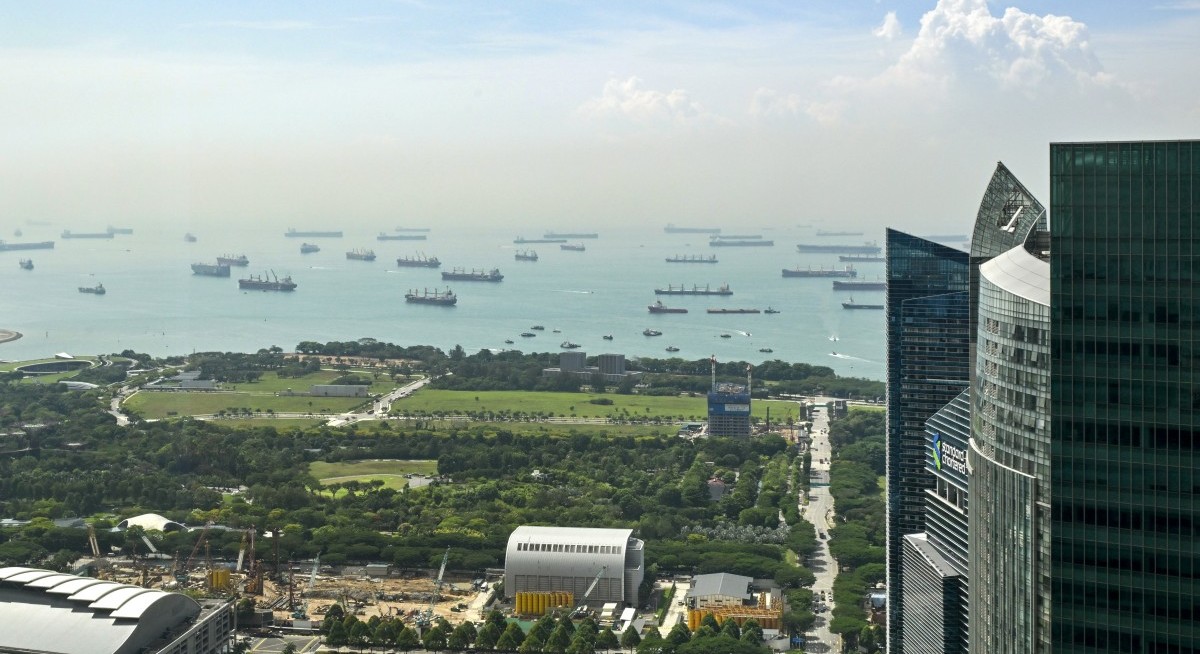
Iran’s ability to weaponise its control over the Strait of Hormuz will make big powers more interested in other chokepoints around the world. For example, Indonesia, Malaysia and Singapore will have to consider what this means for the Strait of Malacca — new arrangements may be needed to reassure nations that see the strait as critical. Otherwise, we will see major powers interfering in the management of the Strait of Malacca.
Similarly, corporate leaders will need to rethink strategies. The past few years have persuaded corporate strategists that maximising efficiency is not enough. The recent conflict and companies’ willingness to sacrifice short-term profits to achieve greater diversity in sourcing critical inputs have reinforced this view. The country allocation of capital can no longer focus as much as before on rates of return on capital, but also on geopolitical risks and whether the resulting distribution of production is sufficiently diversified. With political leaders now preoccupied with national security, there will likely be greater state involvement in the economy, such as industrial policies to build indigenous manufacturing capacity. Corporate leaders will have to learn how to adapt to a changed policy environment.
As the war ends, ongoing pre-war challenges will be in focus again
Before working out the likely post-war landscape, we also need to recognise that the problems that were simmering before the war but have been momentarily sidelined are likely to erupt again once the war ends:
Geopolitical contestation will continue, but with a change of tone. Trump goes into his summit meeting with Chinese President Xi Jinping as a diminished figure. He will probably want an agreement that stabilises relations with China. On its part, Xi seeks more predictable, less volatile ties with the US so that Beijing can focus on its own domestic economic challenges. A broad understanding of trade and the establishment of channels for negotiations on contentious security issues are likely. However, the longer-term big-power competition will continue, since their interests diverge (for example, over US presence in the Western Pacific). But that improvement in US-China relations will not guarantee a safer world for Asia. A weaker America, whose voters are fed up with foreign entanglements, could be less committed to protecting its allies. America’s rivals, such as China and Russia, will have more room to push their agendas more aggressively, which could worry their neighbours.
The trade war is likely to resume. The Trump administration is already threatening to impose high tariffs on vehicles on the European Union. It has also hit out at Vietnam for alleged intellectual property infringements. The US Trade Representative is working on many cases under Sections 301 and 301b, which will result in high tariffs being imposed on many countries in this region in the coming months. Moreover, China’s surging exports and expanding trade surpluses will become more contentious and could give protectionism another boost.
Stresses have been evident in financial markets, from occasional ructions in developed-country bond markets to issues in private credit and concerns about overextended valuations in tech companies, which are underpinned by a near-mania in AI-related capital spending. The risk of financial market turbulence cannot be lightly dismissed. For example, the war in Iran has made the US fiscal position even worse than it already was, and that could stir the bond market at some point.
Sink your teeth into in-depth insights from our contributors, and dive into financial and economic trends
On a more positive note, technological innovation will accelerate. Not just because of the game-changing nature of AI, important as it is. Progress is being made in many other areas of technology that will also be transformative — in renewable energy, biomedical equipment, pharmaceuticals and therapies, and materials science, for example. China’s increasing leadership in many of these areas will spur the US, Europe and Japan to double up on R&D spending. Supercharged expectations of promising rates of return on investment will drive up capital spending — creating wealth for shareholders of successful innovating companies and supporting economic growth, even amid short-term market gyrations.
How will all this reshape the global economy?
First, expect a change in the dynamics of great-power relations: The US remains indispensable to many countries, such as Japan, Taiwan and the Persian Gulf kingdoms, and it is still the champion at turning innovations into successful companies. But its geopolitical position has been weakened by its failed military adventurism and its allies have less trust in it than before. We are likely to see a vigorous effort to reduce reliance on the US by creating new alliances and building up domestic military capacities.
Second, a reallocation of capital is likely:
More resources are likely to be devoted to defence spending, R&D, building indigenous industrial capacity and investing in buffers such as much larger inventories of food, energy and critical components. The energy transition away from fossil fuels will accelerate with greater government funding. This is likely to strain the fiscal positions of Western nations, whose public debts are already uncomfortably high. As explained above, a shakeout is possible in financial markets, one which will force countries, including the US, to get their fiscal houses in order.
Foreign investment is increasingly set to favour politically neutral or safer places. Supply chain reconfiguration will gain more traction.
Third, a new, more subdued form of globalisation is likely to take shape:
Despite America’s turn towards protectionism, the rest of the world remains committed to a high degree of openness to trade and investment. Countries will now be more willing to push back against American protectionism by expanding their own trade ties. For example, the European Union (EU) will increasingly collaborate with the Comprehensive and Progressive Trans-Pacific Partnership. There is likely to be a proliferation of new trade agreements, with even countries like India, once sceptical of free trade, becoming more willing to open up.
However, this will be tempered by inward policies. An example is the EU’s Industrial Accelerator Act, which aims to rebuild its manufacturing competitiveness. There will, for example, be stricter pre-conditions for approving foreign investors, such as pledges to transfer technology and conduct R&D in Europe. Many other countries are likely to follow a similar path.
What are the implications for Southeast Asia?
It is going to be a more turbulent world, but it is not all bad news. Southeast Asia will benefit from expanded opportunities arising from supply chain reconfiguration and higher capital spending driven by technological progress. If Europe and Asia collaborate more through enhanced trade agreements, then our trade-oriented region will gain as well.
But a harsher world will mean that countries have less room for error — whether in fiscal and monetary policies, economic development strategies, or the treatment of investors, whether domestic or foreign. Southeast Asia is well-positioned to leverage the opportunities that will arise in the emerging world order — but only if it gets the basics right.
Manu Bhaskaran, CEO, Centennial Asia Advisors




