


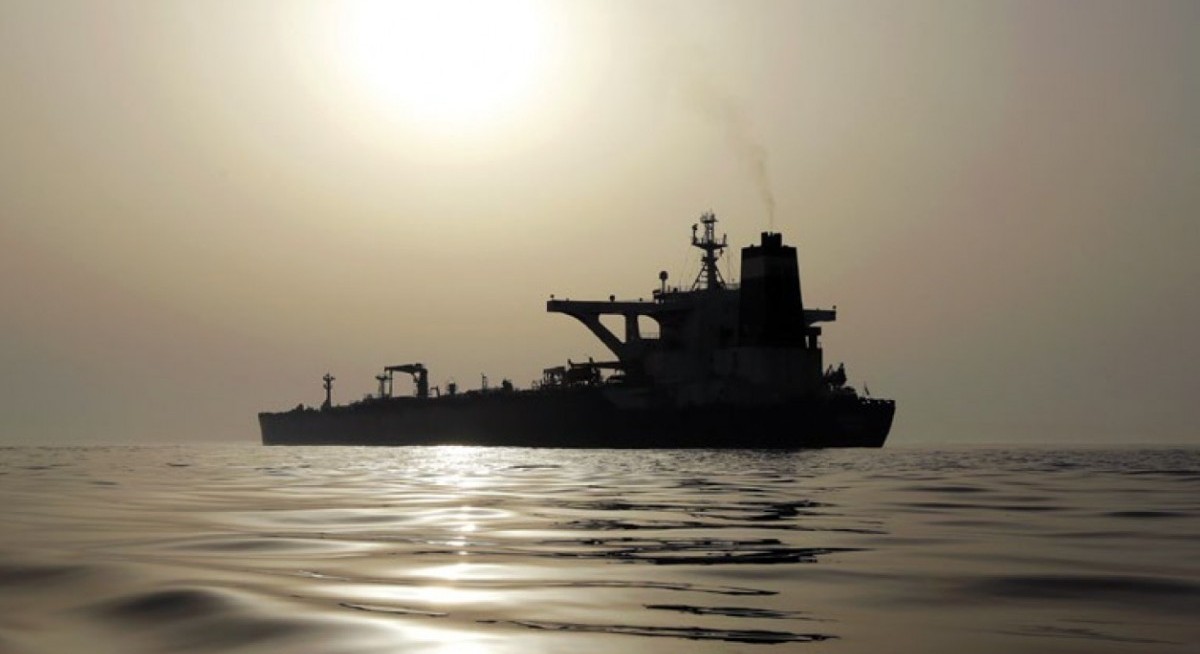


Oil and gas prices have surged as tankers are unwilling or unable to transit the strait. US President Donald Trump has said that the US will provide insurance guarantees to vessels travelling through the Gulf to help ensure the flow of energy and, “if necessary,” the US Navy will escort tankers. Prolonged disruption to exports out of the region threatens to unleash a wave of global inflation.

Why it matters
With Iran to its north and the United Arab Emirates (UAE) and Oman to its south, the Strait of Hormuz connects the Persian Gulf to the Indian Ocean. It’s almost 100 miles (160km) long and 21 miles wide at its narrowest point. The shipping lanes in each direction are just two miles wide.
See also: Iran president to visit Pakistan following historic deal with US
The strait is an essential passage for the oil market, handling about a quarter of the world’s seaborne oil trade. Saudi Arabia, Iraq, Iran, Kuwait, Bahrain, Qatar and the UAE all ship crude through Hormuz and the majority of their cargoes go to Asia. If tanker flows aren’t restored quickly, oil prices could exceed US$100 ($127) a barrel, according to Wood Mackenzie. Brent crude, the international benchmark, was above US$80 as of March 4.
Gulf countries are also home to refineries that produce large volumes of diesel, naphtha — used to make plastics and gasoline — and other petroleum products that are exported globally via the strait.
The waterway is crucial for the liquefied natural gas market, too. Around a fifth of the world’s supply of LNG — mostly from Qatar — passed through this channel last year. Asian countries also buy most of the superchilled fuel shipped from the Middle East.
See also: Oil waiver offers lifeline to Iran as talks with US proceed

Beyond energy, the Strait of Hormuz is a choke point for exports of aluminium and agricultural products, including sugar and fertiliser.
Can Iran block the Strait of Hormuz?
Under the United Nations Convention on the Law of the Sea, countries can exercise sovereignty up to 12 nautical miles (22km) from their coastline — a smaller distance than the narrowest point of the Strait of Hormuz. They must allow “innocent passage” of foreign vessels through these territorial waters and must not impede “innocent” or “transit passage” through straits used for international navigation. While Iran signed this treaty in 1982, it hasn’t been ratified by the nation’s parliament.
The Iranian government has said during previous periods of heightened geopolitical tension that it has the ability to impose a naval blockade. It has never followed through on threats to completely shut off access to the strait — a move that would likely be met with a strong response from Western navies patrolling the area, in particular the US.
Iran has shown that it can cause disarray with threats alone. It also has other options that don’t require a single one of its warships to leave port. These range from lower-impact harassing of ships with small, fast patrol boats to more extreme alternatives, such as attacking tankers with missiles and drones, so it becomes too dangerous for commercial vessels to venture through the strait. The shallow depth of the waterway means Iran can also lay sea mines, although the resulting risk to its own ships may make such a move less likely.
Modern-day vessels are vulnerable to the jamming of global positioning system signals — a tactic that’s increasingly being used by state and non-state actors around the world to disrupt navigation. Thousands of ships suffered disruption in and around the Strait of Hormuz during the Iran-Israel conflict last June.
Sink your teeth into in-depth insights from our contributors, and dive into financial and economic trends
Can Trump restore shipping through the Strait of Hormuz?
Trump posted on his Truth Social platform on March 3 that he’d ordered the US International Development Finance Corporation to provide political risk insurance to vessels “at a very reasonable price.”
The DFC’s typical function is to partner with the private sector to mobilise capital for projects in developing countries. It’s unclear what premium the DFC will offer and how this will compare with what private insurers are quoting. Even if the rates are competitive, insurance may not be enough to convince shipowners to risk the loss of life, cargo and vessels as the conflict continues.
Trump also said that the US Navy could escort ships through the Strait of Hormuz, if needed, “as soon as possible.” While tanker escorts may provide more confidence for shippers to make the journey, it remains to be seen whether this protection would only include vessels that are tied to US interests or those that are US-owned or US-flagged. There’s also a question of whether there are enough American naval assets in the region to be able to escort vessels while continuing to strike Iran.
Immediate relief for Hormuz shipping is unlikely. “The announcement may help to reassure traders, but escorting and insuring will take some time to implement,” said Bob McNally, president of consultant Rapidan Energy Group and a White House adviser during the administration of President George W. Bush. He added that the US will “first want to suppress Iran’s ability to mine and attack ships with anti-ship cruise missiles and drones.”
The US has escorted commercial vessels through the region in the past. During the 1980-88 Iran-Iraq war, strikes on oil facilities escalated to both sides attacking merchant ships in the Persian Gulf, in what came to be known as the Tanker War. The US Navy resorted to escorting Kuwaiti tankers carrying Iraqi oil through the Gulf, reflagging them under the US banner.
How much can oil producers bypass the Strait of Hormuz?
Kuwait, Qatar and Bahrain have no other sea route for their exports. The majority of Iran’s oil shipments are sent out of Kharg Island in the northern Persian Gulf.
Iran’s Jask oil terminal, located at the eastern end of the Strait of Hormuz but outside the Persian Gulf, has only loaded four tankers since officially opening in 2021.
Saudi Arabia, which exports the most oil through the waterway, can divert shipments by using a 746-mile pipeline that runs across the kingdom to a terminal on the Red Sea, where the oil can be loaded onto vessels for onward transport. The East-West Pipeline is only able to carry five million barrels of crude a day — not enough to cover all of the country’s overseas sales.
The Red Sea is also far from risk-free, as the Iran-backed Houthis in Yemen have threatened to resume attacks on vessels in the area.
The UAE can likewise bypass the Strait of Hormuz to a certain degree by leaning on a pipeline that runs from its oil fields to a port along the Gulf of Oman. The Habshan–Fujairah pipeline has the capacity to move 1.5 million barrels of crude a day.
Iraq has a pipeline that runs from its semi-autonomous Kurdistan region to the port of Ceyhan in Turkey. But it has suspended exports via this route as a precautionary measure, according to people with direct knowledge of the situation, as Middle Eastern energy infrastructure is caught in the crosshairs of the Iran conflict.
The pipeline can only carry oil pumped from fields in the north of Iraq, so nearly all of the country’s crude exports are shipped via the Strait of Hormuz anyway. — Bloomberg Quicktake




