




Orbital valuations for growth companies are commonplace. Traditional P/E ratios often lose relevance because earnings are small, volatile, or reinvested. Instead of just price-to-sales, some researchers prefer the PEG (price/earnings-to-growth ratio), which comprises the P/E ratio divided by EPS growth, or EV/revenue multiples and EV/Ebitda, where EV stands for enterprise value, the sum of market capitalisation plus net debt.
Meticulous analysts often use discounted cash flow (DCF) models to estimate net present value. Some investors may use frameworks such as the “Rule of 40” to capture both growth and profitability. This involves adding the growth rate to the profit margin. If this figure is equal to or above 40%, the company balances growth and profitability well. For the Rule of 40, the company needs to be profitable.
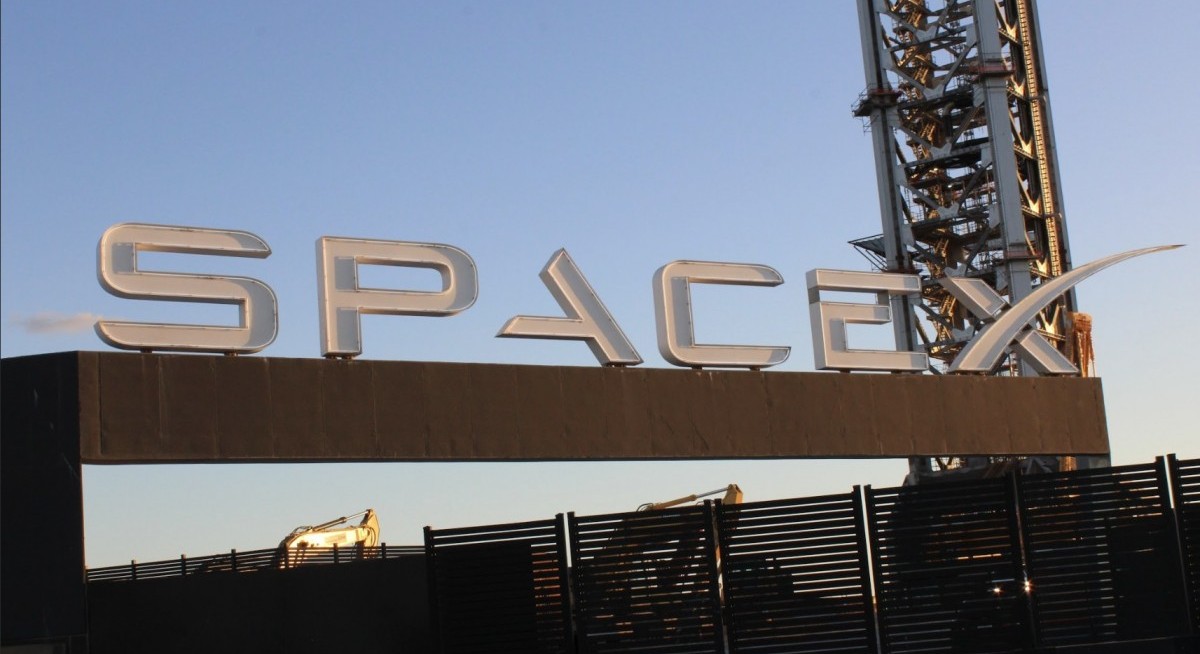
Michael Strobaek, global chief investment officer at Bank Lombard Odier, has highlighted that loss-making, cash-guzzling companies such as SpaceX, Anthropic and OpenAI — previously funded by private markets — are now heading towards public listings this year.
“Until now, private markets from venture capital to sovereign wealth funds have provided these firms with funding on the basis of their tech leadership, capabilities and strategic value. That has postponed questions about profitability,” says Strobaek.
See also: Should CSE Global’s lead independent director have stayed?
The public markets will use a different set of metrics. Surely equity investors would want to look at valuation, real valuation. “The IPOs will see focus shift from storytelling to spreadsheets as we move from narrative-driven private market valuations towards public price discovery. The listings will provide public investors with the tools to measure revenues, leverage, free cash flow, and customer concentration risks. In the process, we will learn which business models generate consistent returns, who is building economies of scale, and where value is being created,” adds Strobaek.
He echoes what many value investors believe. SpaceX, Anthropic and OpenAI are capital-intensive and infrastructure-heavy. They are also not yet profitable.
“Record stock issuance by loss-making companies at punchy valuations is a concern, especially as at least one major stock index bends rules to accommodate them, triggering buying by passive investment funds,” notes Strobaek.
See also: Does NTA mean anything?
If these cash-guzzling companies make their way to the Nasdaq 100, index funds will have to buy them, leaving investors, including retail investors, vulnerable to higher risks should markets tumble.
Historically, elevated IPO activity has tended to coincide with peaks in equity markets. Strobaek wonders whether these firms are now selling into the top of an AI-driven bubble.
According to Nicolas Owens, equity analyst at Morningstar, and Suryansh Sharma, equity director at Morningstar, SpaceX’s true valuation is US$780 billion, around 48% below its latest private market valuation of US$1.5 trillion, and 56% below the IPO valuation of US$1.77 trillion.
Owens and Sharma have used a discounted cash flow model to value SpaceX’s space and connectivity business and assessed the value of a range of potential outcomes for the AI segment (mainly Grok). This process places space and connectivity (including Starlink) at US$611 billion, with an additional US$170 billion for AI, which is how the much-quoted US$780 billion valuation for SpaceX is achieved.
It is no surprise that Owens and Sharma find that SpaceX is significantly overvalued at its IPO market capitalisation.
According to the Morningstar duo, SpaceX’s “core businesses underpin a narrow economic moat”. SpaceX’s core launch and satellite communications segments benefit from significant cost advantages driven by continued research and development and economies of scale.
On the other hand, uncertainty around the AI segment is a dampener and presents downside risk.
Sink your teeth into in-depth insights from our contributors, and dive into financial and economic trends
“While SpaceX has invested heavily in AI infrastructure and orbital computing, Morningstar views outcomes as highly uncertain, with scenarios ranging from meaningful upside to material value destruction,” Owens and Sharma say in their report.
A small initial float boosted by interest from Goldman Sachs, Morgan Stanley, Bank of America, Citigroup and JPMorgan Chase, and an inclusion in the Nasdaq 100 Index just 15 trading days after the IPO will probably send SpaceX’s debut share price into orbit.
But will it eventually experience a splashdown like Flight 12, remain in orbit, or head to the moon like Artemis II? We will soon find out.




