


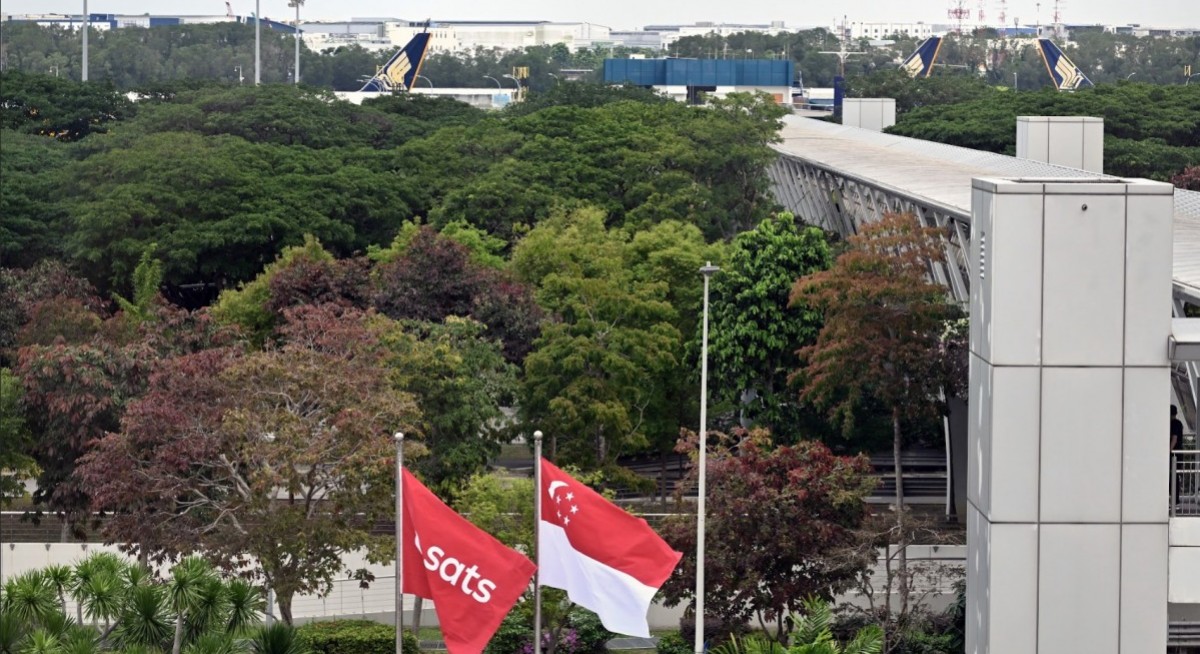


However, a UBS report says, while maintaining its buy call, it has lowered its 12-month price target to $4.10 from $4.35 as it is expecting a 2%-14% decline in earnings per share (EPS) in FY2027-FY2029. Sats has a March year-end.
The NTA of a company is based on balance sheet items comprising total assets less total liabilities less intangibles. This metric was important in the 20th and the early part of the 21st century, as it indicated the amount investors would theoretically be able to receive on liquidation.
Intangibles may comprise intellectual property, licensing and goodwill. Goodwill is the premium a company pays when acquiring another company. It represents the excess purchase price of a company over the fair market value of its identifiable physical and intangible assets.
Under International Financial Reporting Standards (IFRS), goodwill is generally recognised as a capitalised unidentifiable intangible asset on a company’s balance sheet from the acquisition of another company’s net identifiable assets. But each year, a test must be undertaken to determine if its value has been “impaired”. If so, the goodwill amount should be written down accordingly. An example of this was the writedown of $1.02 billion by DBS in July 2010 for the acquisition of Dao Heng Bank.
See also: Should CSE Global’s lead independent director have stayed?
In 2022, Sats announced the acquisition of Worldwide Flight Services (WFS) for an enterprise value of EUR2.25 billion ($3.1 billion at the time). WFS then had an NTA of negative $1.25 billion. No surprise then that Sats’ pro forma NTA per share immediately after acquiring WFS was negative 13.7 cents. Sats does not report its NTA or NTA per share. But it can be derived from balance sheet items. As an aside, Sats’ FY2026 financial statement says it recovered EUR6.2 million from the disposal of Edinburgh-based WFS Ground Solutions on April 1, 2025.
Based on Sats’ FY2025 annual report, goodwill accounted for $2.4 billion or 70% of FY2025’s $3.4 billion of intangibles. Other intangibles comprised customer relationships ($731 million), trademarks ($203.8 million), software ($38.7 million) and licences ($89.4 million). Shareholders’ funds approximated $2.7 billion. Customer relationships “relate to the economic benefits that are expected to derive from business dealings with existing customers. These are acquired as part of the acquisition of subsidiaries.”
Sats’ NTA in FY2025 was approximately negative $700 million. However, if cash flow-based intangibles are added back, the assumed NTA would be around minus $370 million. If customer relationships are cash flow-based intangible assets, Sats’s FY2025 NTA would be $300 million.
See also: Can Sats sustain growth amid global supply chain disruption?
On the positive front, Sats’s FY2026 results presentation points out that it has lowered its gross debt-to-equity ratio to 1.4 times as at March 31, compared to 1.5 times as at March 31, 2025. Sats has also set targets. By FY2029, it aims for an ROE of 15% and a net profit margin of 5%. Indeed, Sats’s net profit margin has risen from 1.4% in FY2024 to 4.5% as of the end of FY2026. Its diluted historic EPS is 18.8 cents.
Despite the seemingly fading importance of NTA, the metric provides a conservative measure of true physical backing. Because intangible assets cannot easily be sold off during a crisis, NTA reveals whether a company can cover its debts in a worst-case liquidation scenario. Secondly, lenders use NTA to determine default risk. Companies with higher tangible assets have more collateral available to secure loans and financing.
NTA per share is often used to compare valuation to the market’s NTA and helps investors gauge whether a stock is overvalued or undervalued.
Acquirers often rely on NTA to calculate a reliable floor value for a target company, avoiding the inflated valuations that come with goodwill. As a case in point, Sats, in its Chapter 10 filing in 2022, reported the NTA of WFS, which it subsequently acquired.




