


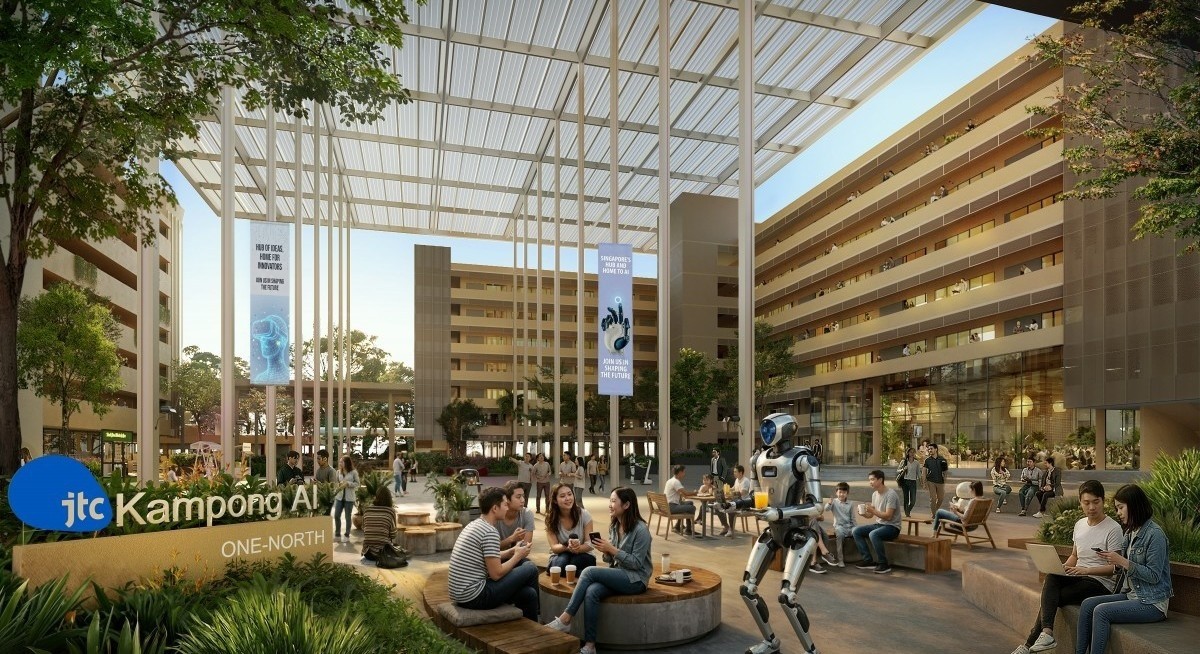


It is a compelling vision, but also one the city-state has told before. A decade ago, the city-state cast itself as Southeast Asia’s fintech capital. In many respects, it succeeded. Payments firms, digital banks and crypto exchanges chose it as their regional base. The regulatory regime, stewarded by the Monetary Authority of Singapore (MAS), was widely seen as pragmatic and accessible. Licensing processes were clear. Sandboxes were real. Capital was abundant.
Yet the outcome was subtler than the rhetoric. The nation’s best-known technology firms, Nasdaq-listed Grab and NYSE-listed Sea, are diversified platform companies with financial arms layered onto existing businesses. Neither was conceived as a fintech pure play. Payments, lending and digital banking have become important revenue streams, but they remain extensions of mobility, e-commerce and gaming franchises rather than standalone financial infrastructure champions. Beyond them, the fintech-native companies that the country nurtured — such as Aspire, Nium, Endowus and YouTrip — are well-funded but remain privately held.
Rather than producing a fully self-contained fintech ecosystem, Singapore established itself as a fintech hub — a place where global companies could anchor their Asian operations and where innovation was supervised without being stifled.
This distinction matters for Kampong AI. The fintech push benefited from a clear edge: MAS was faster and more pragmatic than many global regulators at the time, so companies came to Singapore to get things done. AI does not offer the same edge. Its governance frameworks are internationally respected, but they do not create the kind of pull that a regulatory sandbox once did for a fintech — especially payments — start-up launching across Southeast Asia.
See also: STI’s reserve list is more interesting than the STI itself
The talent problem is also harder. Building serious AI capability requires a concentration of researchers, data scientists and engineers who typically cluster around vast domestic markets and leading universities. The live-work design of Kampong AI is a direct acknowledgement of this. If we want global AI talent to relocate here, the lifestyle proposition has to be as compelling as the business one. Whether 200 apartments can truly persuade top researchers to choose Singapore over California or London remains unclear.
This brings us to the question: what exactly is Singapore trying to become in the AI economy? Gan has made clear that the city-state does not plan to compete with the US or China in building foundation models like those behind ChatGPT. Instead, it aims to serve as a proving ground where AI systems are tested and integrated into real-world workflows. The new AI Missions framework reflects this focus, targeting manufacturing, financial services, healthcare and connectivity to show that the technology works in practice.
While that is a coherent strategy, it is also a more modest one than the Kampong AI name implies. Being a deployment hub means the nation’s AI future depends substantially on what the big model labs — such as OpenAI, Google DeepMind and Anthropic — decide to build. It becomes the laboratory for application rather than invention.
See also: New Temasek must be more than old wine in new bottles
This mirrors its fintech experience, where the strength lies in being a trusted base rather than the source of core technology. If firms can prove their AI systems in complex, regulated settings here, that credibility travels.
Kampong AI assumes that in the next phase of AI, influence will come not only from building the largest models but from embedding them effectively. The ambition is narrower than the branding suggests, but it may be the more achievable path.




