




“Most of our public transport contracts are long-term, with fuel price indexation to offset global oil price volatility. In addition, we have long-established mitigation measures in place, including hedging strategies to manage fuel-related risks,” says Cheng Siak Kian, managing director and group CEO, in response to queries from The Edge Singapore.
Instead, the group appears to remain focused more on longer-term shifts in mobility.
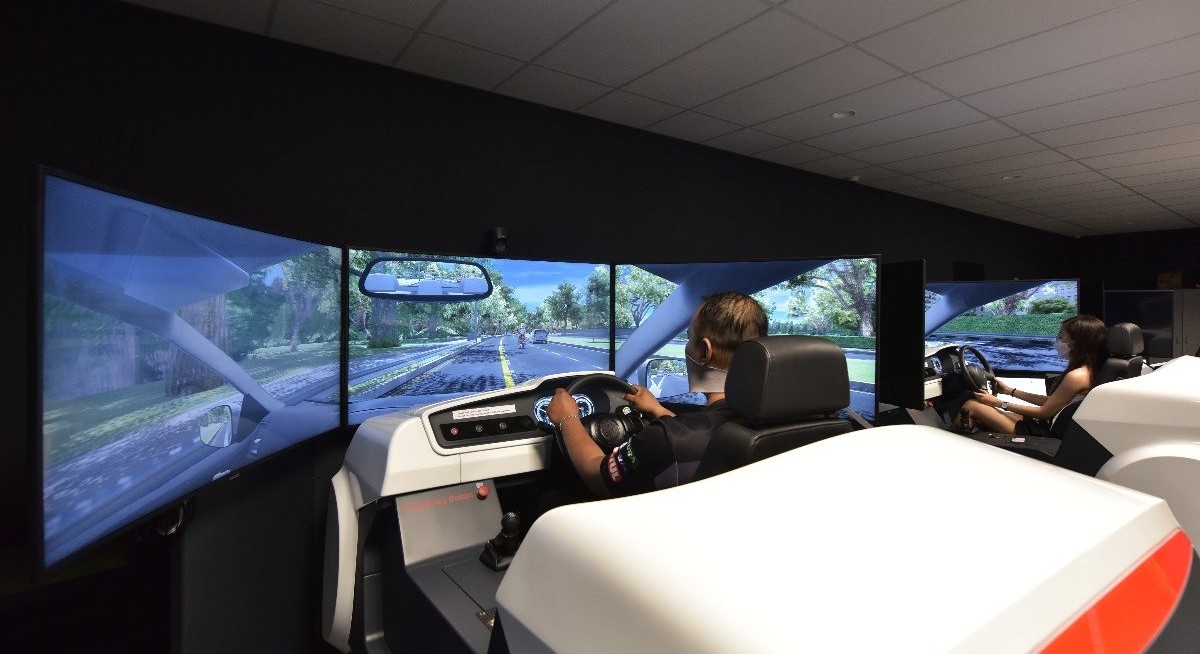
On March 11, CDG announced that it will invest over $200 million to “modernise and expand” driving education in Singapore. The investment will include the development and operation of the Next-Generation Driving Centre (NGDC), which will replace the Bukit Batok Driving Centre (BBDC) by 2030. The NGDC will be CDG’s flagship multi-storey facility in western Singapore.
At first glance, the investment may seem counterintuitive. Autonomous vehicles (AVs) are said to be the future, raising questions about how long human drivers will remain central to mobility. Singapore’s certificate of entitlement (COE) prices have also remained elevated.
See also: STI’s reserve list is more interesting than the STI itself
Yet, demand for driving lessons appears to remain resilient. According to a September 2024 report by CNA, driving school lessons in Singapore are fully booked for months, with students reportedly paying for bots to secure limited slots.
For CDG, the investment could strengthen its position in the local driving ecosystem. The group currently operates the ComfortDelGro Driving Centre in Ubi, while BBDC is owned by a consortium that includes Japanese carmaker Honda and distributor Kah Motor. Replacing BBDC with the NGDC would effectively give CDG a larger foothold in the sector.
At the same time, CDG isn’t writing off its investments in AVs. In March 2022, the group pledged $30 million to establish an Autonomous Vehicle Centre of Excellence (AV CoE) to build up its capabilities in operating and maintaining AVs. In March 2025, the group launched a two-year robotaxi programme with AV company Pony.ai in Guangzhou following a memorandum of understanding (MOU) signed in August 2024.
See also: New Temasek must be more than old wine in new bottles
“The development of autonomous vehicle technology is crucial in future-proofing the transport industry. With continuing driver shortages a global issue, we are exploring innovative solutions to ensure mobility remains accessible and efficient,” said Cheng at the time. “Autonomous technology can complement the human driver workforce.”
While investors may question CDG’s rationale, the group’s investments suggest it is preparing for multiple possibilities.
AVs remain at a nascent stage. Even in markets where trials are underway, large-scale commercial development is still uncertain. Closer to home, one of CDG’s self-driving test vehicles reportedly collided with a road divider during trials in Punggol in January, a reminder that the technology still faces operational and regulatory hurdles.
Against that backdrop, CDG’s decision to double down may be less about resisting change than recognising the pace at which transport systems evolve.
The group has already spent decades preparing for shifts. It looked abroad as early as the late 1990s and early 2000s, long before many local companies pivoted overseas. That strategy has since become a key pillar of growth; in 2024 alone, the group made three major acquisitions — CMAC Group in February, A2B Australia in April and Addison Lee in November.
By FY2025 ended Dec 31, 2025, the group announced that it made a record revenue of $5.06 billion, with 55.35% of total topline from overseas sources; its overseas revenue already went past 50% in 1HFY2025. Full-year patmi rose by 9.4% y-o-y to $230.3 million.
For now, the reality remains: driverless vehicles may ply the roads in greater numbers in the years to come, but they will be sharing the roads with humans who are behind the wheels by choice. And CDG is betting there is enough of such demand.




