


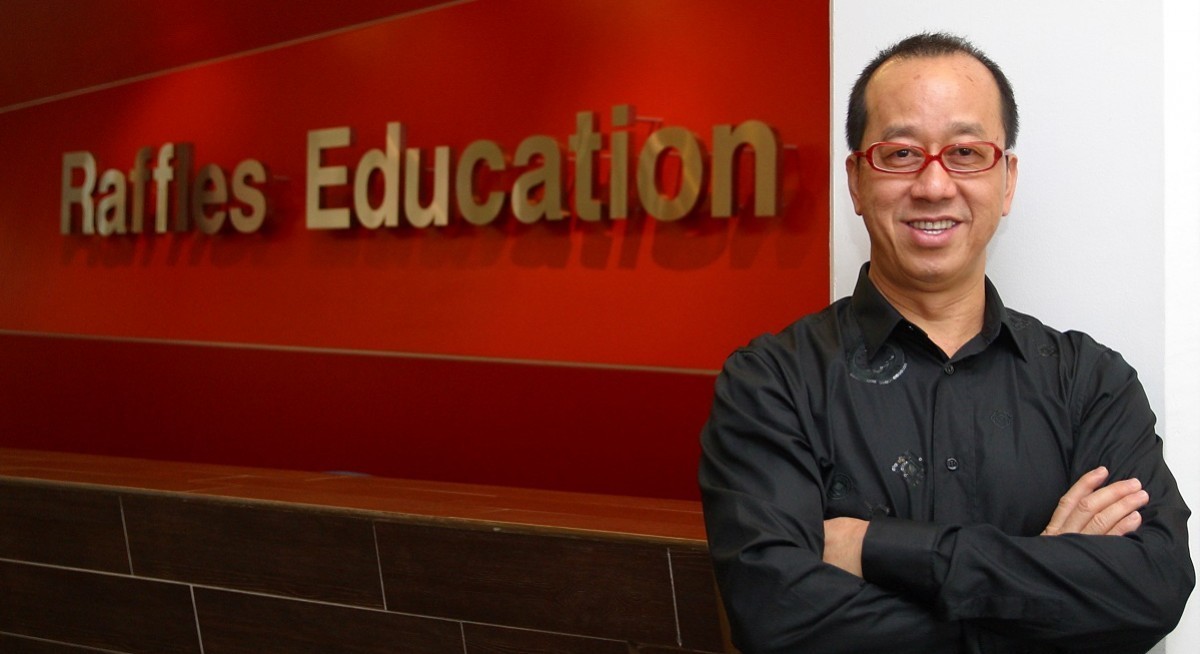


The company was founded by CEO Chew Hua Seng and listed in January 2002. Chew astutely played up the company’s niche as a private school operator, in line with the government’s economic thrust then to make Singapore an education hub.
Raffles Education offers a colourful variety of courses including design and fashion. Besides Singapore, it expanded into markets including China and India, wowing investors with the growth story of riding on Asians’ willingness to pay for a good education.
However, the company’s student enrollment trend changed, and Raffles Education was seen to have taken on a bigger debt load than what other shareholders are comfortable with; a long-running feud between Chew and previous major shareholder and tycoon Oei Hong Leong spooked other investors to stay clear of this company.
For years, Raffles Education has been holding on to its portfolio of properties, but is also weighed down by a heavy debt load of more than $200 million in borrowings as of last June.
See also: STI’s reserve list is more interesting than the STI itself
Faced with nudging pressure to deleverage, Raffles Education had since 2021 tried to sell its key Singapore property, 51 Merchant Road. A sale was finally done last December, when the company agreed to let it go for $121.8 million, below its market valuation of $152.7 million — and a far cry from the initial asking price of $200 million, according to earlier reports.
Nonetheless, this deal will still let Raffles Education recognise net proceeds of $121.3 million, plus a gain on disposal of some $53 million, given that the property is carried on its books at $68.3 million. The transacted price is equal to around 11% of its NAV.
Around the same time, Chew converted a bond that is maturing worth nearly $12 million into shares, which has the effect of easing the company’s debt burden. The company also announced last November the sale of one of its schools in Hefei, China, for $76 million.
See also: New Temasek must be more than old wine in new bottles
For investors, these developments seemingly signalled a second look at the company’s shares. Since the sale of 51 Merchant Road, the counter has gained nearly 30%, extending the gain of more than 200% in the past six months.
Interestingly, the stock has attracted formal coverage from an analyst: KGI Securities’ Chen Guangzhi, which was issued on Dec 15, with an “outperform” call and target price of 34 cents. For previously unloved counters, it is typical for brokerages to first test the waters with an unrated note before giving a formal recommendation.
Chen observed that the company’s core education segment is “normalising with strong unit economics”, but that the draw is greater from the “attractive asset-value arbitrage” from its undervalued real estate portfolio.
Chen estimates that Raffles Education’s real estate portfolio alone is worth its entire market value. This implies that investors will be able to get the core education business and remaining land bank for free — offering a wide margin of safety.
On Jan 16, just over a month after Chen’s report, the company announced it has raised $5.5 million by selling around 44.7 million treasury shares at 12.7 cents each. The investors include Areca Capital, Asdew Acquisitions, Azure Capital, ICH Synergrowth Fund, Lion Global Investors, Maybank Asset Management Singapore, as well as prominent business leaders Roland Ng San Tiong of crane company Tat Hong and Bobby Lim Chye Huat of Tai Sin Electric.
Even more interesting news is on the horizon. On Jan 29, Raffles Education announced that its China subsidiary, Langfang Hezhong Education Consulting Co, responded on Jan 27 to a notice from the local government to repossess the company’s land in Langfang City, Hebei Province, which is carried on its books at around $113 million. Raffles Education’s Jan 29 SGX filing did not indicate when the notice was received.
Should investors now see Raffles Education as a property play instead? Perhaps the company could start to lay out concrete plans on how it is going to grow and expand its education business in the long term. Or perhaps a change in the company’s name could better reflect its current business activities.




