




From the perspective of market participants, the rationale behind these buybacks is not difficult to decipher: they are intended to support Genting Singapore’s share price, which has fallen 11% over the past month to 60.5 cents as of June 9. That is only marginally above its March 2020 low of 58 cents, reached when markets plunged amid pandemic-driven panic.
The decline followed a weak set of results for 1QFY2026 ended March 31, with earnings falling 55% y-o-y to $65.2 million. In its earnings commentary, Genting Singapore attributed the softer performance to weaker travel demand stemming from the conflict in the Middle East.
For the quarter, revenue from its gaming segment fell 8% y-o-y to $403.4 million — a reminder that Lady Luck can be fickle. Revenue from the non-gaming segment, meanwhile, rose 8% to nearly $204.1 million. Even so, some market observers were left disappointed, as the group’s extensive refurbishments were expected to generate stronger momentum in its retail and F&B businesses.
Following the results, analysts have cut their target prices for Genting Singapore. Chee Zheng Feng of DBS Group Research, calling it “a disappointing” set of results, downgraded the counter to “hold” and lowered his target price from 85 cents to 67 cents. Tay Wee Kuang of CGS International also turned more cautious, maintaining his “hold” rating while cutting his target price from 76 cents to 67 cents.
See also: Time to blast off with SpaceX? Or stay grounded?
In contrast, Marina Bay Sands (MBS), the other integrated resort, delivered another record quarter, with earnings rising 30.2% to US$788 million ($1.01 billion) in the same period. The divergence highlights a clear gap in performance between the two operators.
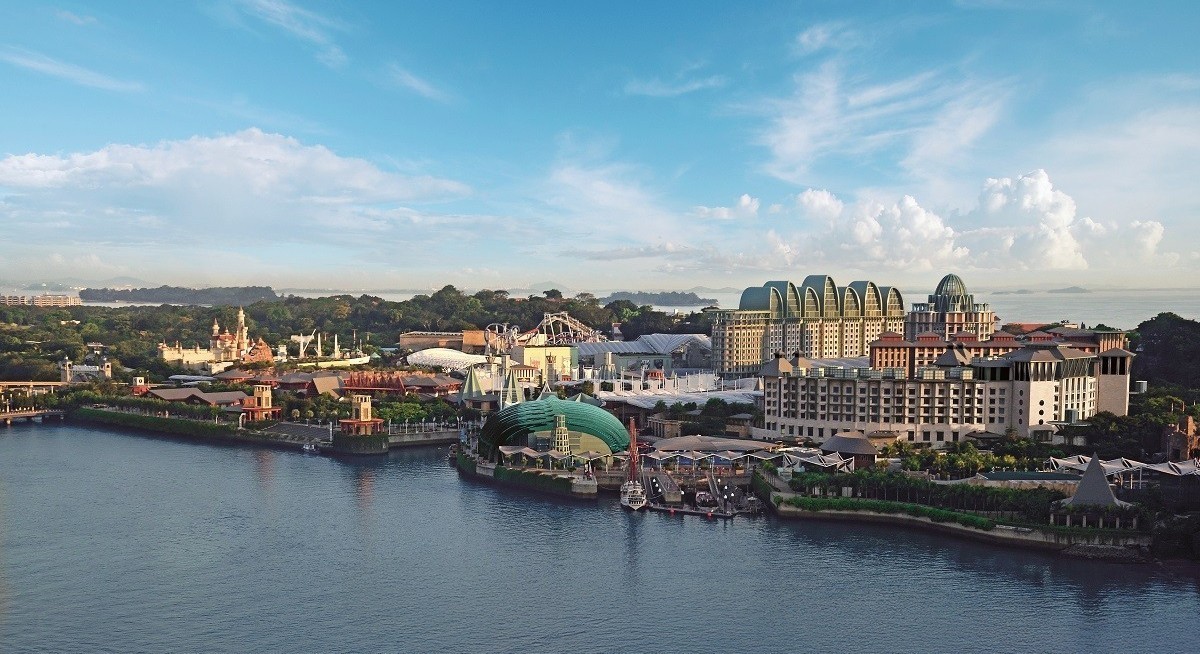
At the company’s recent AGM, shareholders raised questions over the sharp contrast in performance. Executive chairman and acting CEO Lim Kok Thay acknowledged that Resorts World Sentosa’s (RWS) location presents inherent challenges, requiring higher levels of investment compared with an integrated resort in a CBD setting such as MBS.
Still, Lim believes that some of these challenges are being progressively addressed through the ongoing RWS 2.0 development, which is targeted for completion in 2030.
See also: Should CSE Global’s lead independent director have stayed?
Against these headwinds for Genting Singapore, the management team could consider increasing dividend payouts to bolster investor confidence and reward shareholders for their patience through the current uncertainty.
Based on FY2025’s dividend payout of 4 cents and with a share price of 60.5 cents, this translates to a dividend yield of 6.6%. Based on the current 12.07 billion outstanding shares, with every 1 cent increase in dividend payout, this will cost Genting Singapore just $120.7 million, accounting for 3.7% of its total $3.2 billion cash hoard and could increase its dividend yield by 1.6 percentage points.
The company does need to set aside significant resources to fund the ongoing RWS 2.0 refurbishment. At the same time, Genting Singapore could consider deploying part of its cash hoard into systems that enhance operational efficiency and potentially lift its near-term earnings profile.
There is a silver lining ahead, however. With the upcoming Greater Southern Waterfront transformation, Sentosa and Genting Singapore are set to emerge as key pillars of the rejuvenated precinct, much like Canary Wharf in London or Shanghai’s West Bund. If Genting Singapore can sustain investor interest through more generous payouts in the meantime, the longer-term upside should eventually materialise.




