


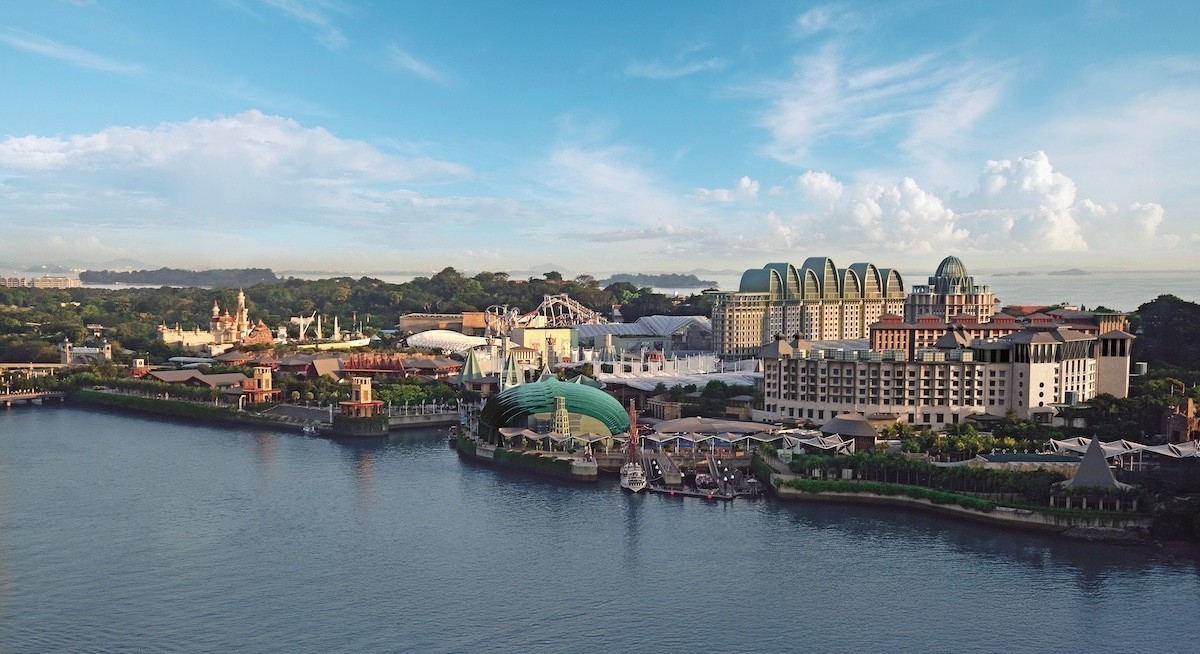


On May 12, the resort operator reported that revenue for the first quarter of the year was down 3% y-o-y to $608 million, led by lower gaming revenue, while non-gaming revenue, which typically accounted for a smaller proportion of the total, was up.
Genting Singapore attributes the softer gaming volume partly to lower VIP visitations, which, in turn, was due to tighter credit extended by the casino.
Coupled with higher costs, Genting Singapore's earnings for the quarter was down 55%.
"We believe the activations and renovations at RWS have yet to resonate sufficiently with its customer base to offset its locational disadvantage," says Chee in his May 13 note, referring to the better-sited rival Marina Bay Sands.
See also: Citing defensive yield, Beansprout initiates coverage on United Hampshire US REIT
"In our view, a comprehensive rethink of its operational strategy and asset enhancement initiatives may be required to restore the company to its historical profitability levels," he adds.
The difference appears more stark given how the overall industry grew at a robust level of 46% y-o-y in 1QFY2026.
Chee expects the remainder of this year to be "challenging" amid headwinds from softer tourist inflows due to rapidly rising airfares.
See also: Maybank lowers STI target to 5,500 points following market EPS downgrades
"With VIP volumes likely to remain weak and operating costs elevated, we expect a meaningful loss of operating leverage, and estimate that FY26F adjusted EBITDA margin could compress to around 30% from 33% in FY2025," he adds.
Chee has cut his FY2026 ebitda forecast by 23% and the following FY2027's by 24% to reflect challenging operating environment and loss of operational leverage.
His lower target price of 67 cents is based on 7.3x forward EV/FY26F EBITDA, in line with the company’s 5-year average.
"Given the limited visibility on an operational turnaround and the reduced likelihood of a major capital return plan, we believe it is more appropriate to apply our valuation multiple to the lower revised FY2026 ebidta, rather than using a blended ebitda approach," says Chee.
eparately, Tay Wee Kuang of CGS International has turned more cautious on this counter, as he lowered his target price from 76 cents to 67 cents, while keeping his "hold" call.
"Despite the introduction of new attractions such as Minion Land in Universal Studios Singapore, The Weave, The Singapore Oceanarium, and The Laurus Hotel, Genting Singapore's non-gaming revenue grow by only 8.3% y-o-y in 1QFY2026, which was insufficient to mitigate the decline in gaming revenue," he notes.
Tay suggests that rival Marina Bay Sands has gained a stronger upper hand in what he calls a ‘winner-take-most’ situation, thanks to the former's location in the city centre, amid other attractions,
positions it as a better captive location for tourists.
For more stories about where money flows, click here for Capital Section
To reflect Genting Singapore's loss of gaming market share and ongoing margin pressure, he has cut his FY2026 adjusted edbitda estimates by 15.4%, FY2027 and FY2028's by 12.3%.
As such, Tay has derived the lower target price of 67 cents based on 7.5 times FY2027 EV/edbitda, which is 0.5 times below 4-year post-Covid-19 mean.
On the plus side, he sees support from the guidance of a dividend of 4 cents per share, which implies a yield of 5.8%.
For Tay, upside risks include gaming market share gain translating into accelerated recovery in gaming revenue and margin improvement. On the other hand, downside risks include slower-than-expected recovery in gaming market share, lower ROI for marketing expenses for non-gaming revenue.




