


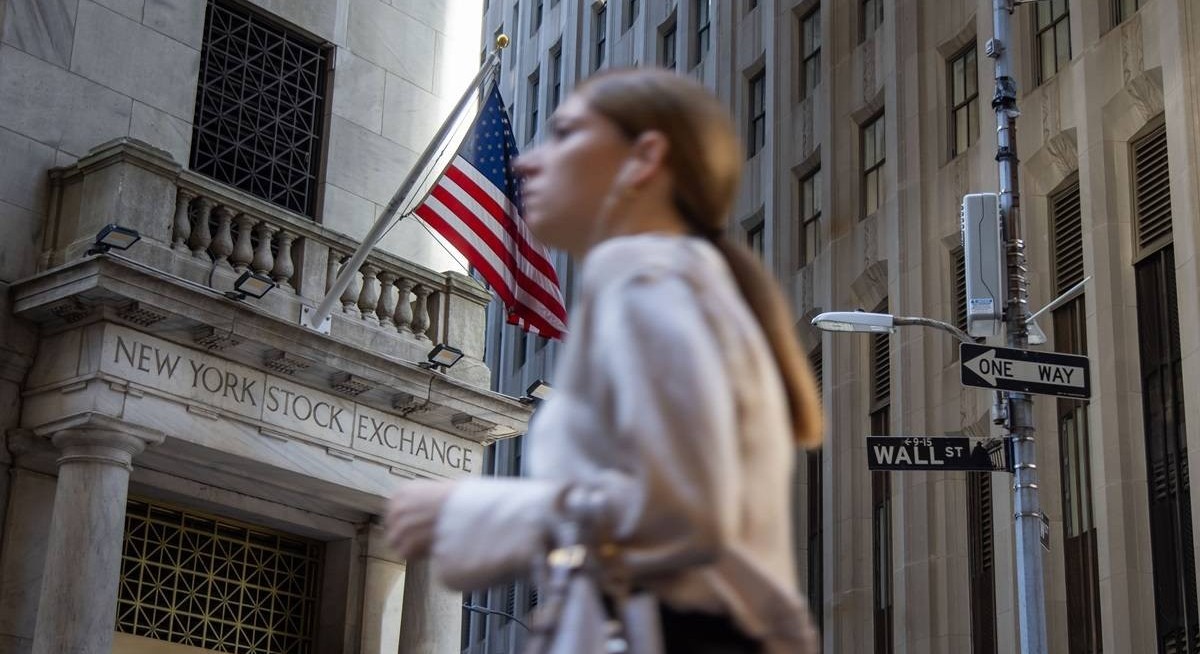


(June 8): US stocks bounced back on Monday from the worst rout this year, as a sell-off in technology stocks eased and traders assessed flaring tensions in the Middle East, which supported oil prices and energy shares.
The S&P 500 Index jumped 0.7% as of 9:34am in New York, paring a slide last week sparked by robust employment data, which boosted expectations for tighter Federal Reserve policy. The Nasdaq 100 Index rallied 1.5% after the tech-heavy gauge posted its biggest weekly drop since April 2025. A basket of the so-called Magnificent Seven companies rose 0.3%, led by gains in Nvidia Corp, which gained 1.7%. Micron Technology Inc advanced 8.2%.
Energy and fertiliser shares climbed, while travel stocks fell. Chevron and Exxon Mobil both rose more than 1%, while United Airlines and Delta Air Lines fell about 0.2%.
The Philadelphia Semiconductor Index, home to chip bellwethers such as Nvidia, Intel Corp and Advanced Micro Devices Inc, soared 5%. Marvell Technology Inc gained 9.6% and Flex rose 2.8% as the companies are set to replace Pool Corp and Campbell’s in the S&P 500 before the market open on June 22. Campbell’s rose nearly 1% after the food company reported adjusted earnings per share that beat the average analyst estimate.
Bond traders are wagering that inflation figures this week will show a surge in consumer prices, adding to pressure on the Fed to raise rates. Consumer-price figures, due Wednesday, loom as the next major catalyst. Fed officials are in a blackout period before their policy decision on June 17.
“If today’s rebound holds, this could be another good ‘buy-the-dip’ moment for investors,” said Jimmy Lee, chief executive of The Wealth Consulting Group. The firm has been trimming exposure to Magnificent Seven companies and buying software shares and dividend-paying value shares, like industrials.
See also: US SEC proposes eliminating equities trade-through rule
However, “the inflation prints are crucial to keep traders from getting skittish about potential rate hikes.”
The US stock market slumped Friday as a slide in big technology companies weighed down the broader market. Even after Friday’s selloff, the benchmark is just 2% below its all-time closing high.
On Monday, Wall Street’s chief fear gauge, the Cboe Volatility Index, or VIX, fell below 19 after topping 20 on Friday for the first time since April — a level that typically signals mounting market stress.
See also: How to trade the SpaceX IPO in Asia's locked-out markets
Strategists at some of Wall Street’s biggest banks are looking past Friday’s tech-led sell-off, saying earnings growth should support stocks through the end of the year.
Morgan Stanley strategists led by Mike Wilson are sticking to their view that the S&P 500 should hit 8,000 by year-end. His optimism was echoed by Citigroup Inc strategists led by Scott Chronert, who raised their year-end target for the S&P 500 to 8,100 from 7,700, after a “big step up” in earnings expectations.
Uploaded by Magessan Varatharaja




