


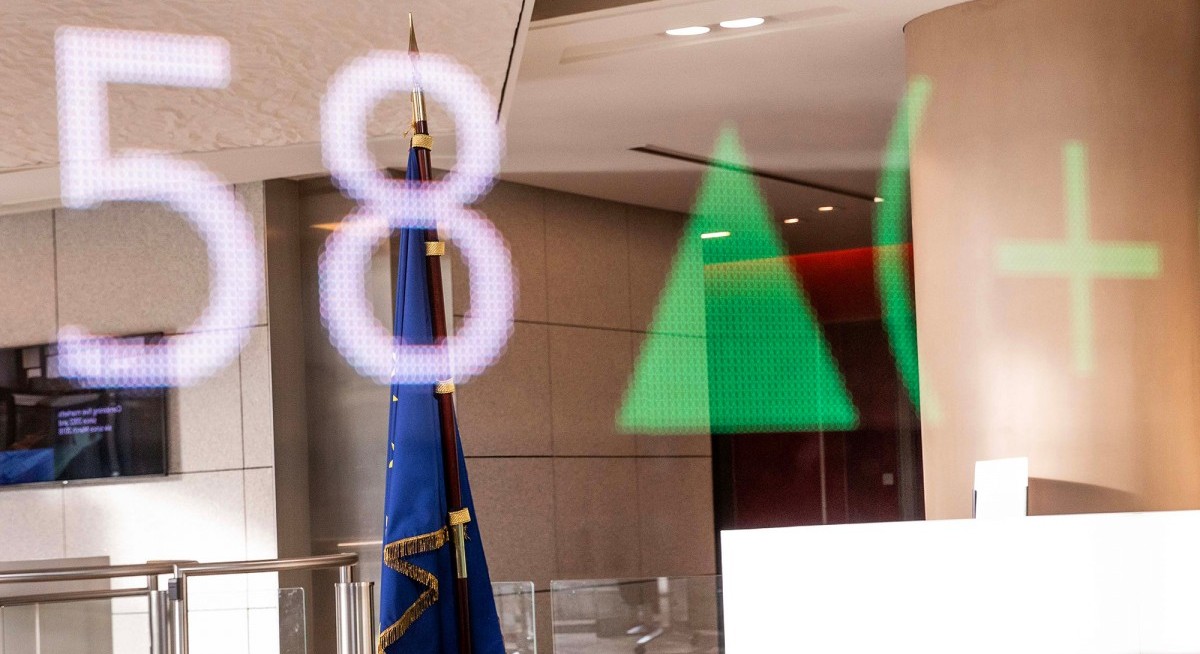


Worries that the frenzy around artificial-intelligence has gone too far caused a recent wobble in equities. But the strong outlook for the sector and wagers that policy easing will fuel corporate profits bolstered hopes on further gains.
“The key question hanging over markets is whether a potential Federal Reserve rate cut next week can trigger a so-called Santa rally,” said Fawad Razaqzada at Forex.com. “For now, the S&P 500 forecast remains cautiously constructive, albeit with more hesitancy creeping in.”
The pattern for the first couple of weeks of December could prove far choppier than the last part of the month, noted Mark Newton at Fundstrat Global Advisors. With bets on a December rate cut rising to near certainty, he said we’re seeing sectors like industrials, financials and small caps climbing.
The S&P 500 closed near 6,860. The Russell 2000 added 0.8%. In late hours, Hewlett Packard Enterprise Co gave a sales outlook that fell short of estimates.
See also: S&P 500 halts rally as bonds climb on retail sales
The yield on 10-year Treasuries rose four basis points to 4.10%. The dollar fluctuated. Bitcoin dropped below US$93,000.
Given the equity market’s snapback from late November, technicals have improved to match some of the bullish seasonality thought possible for this month, Newton added. While trends are bullish, he says technicals support further choppiness until after the Fed decision.
“The market’s ‘risk-on’ light is on, led by expectations for a Fed rate cut next week and a broadening rotation down-cap,” said Craig Johnson at Piper Sandler. “But we still anticipate more ‘backing and filling’ as the major indices approach their year-to-date highs.”
See also: US stock turnover tops US$1 tril a day amid trading surge
While the S&P 500 has made limited progress so far this week, several previously broken levels have now been reclaimed, reinforcing the impression that the bulls maintain a degree of control, noted Razaqzada.
To Matt Maley at Miller Tabak, while the market has spent the past few days consolidating gains, the set-up is a good one.
“So unless we get a big reversal over the next few trading days, the advantage will definitely be with the bulls,” he said.
Maley notes that one area that could do well if we get a strong year-end rally is the small-cap space.
“A push to a new significant all-time high might finally attract the kind of momentum money that could help this part of the stock market outperform,” he said. “Of course, if the mega-cap tech stocks start to roll over in a big way, all bets will be off.”
At Interactive Brokers, Jose Torres noted that the cyclically oriented Russell 2000 is sustaining its recent momentum and is poised to rally in an environment of looser financial conditions alongside a still solid economy.
While the US tech sector is likely to remain a key driver for the market’s next leg up, its recent underperformance also points to other compelling opportunities across the market, according to Ulrike Hoffmann-Burchardi at UBS Global Wealth Management.
To stay ahead of Singapore and the region’s corporate and economic trends, click here for Latest Section
“As we expect US equities to rally into 2026, we think under-allocated investors should add exposure,” she said. “Beyond the tech sector, we expect a good performance from the health care, utilities, and banking sectors to broaden the foundation for further gains.”
Hoffmann-Burchardi says the Fed’s easing path is supportive to equities and also creates a positive backdrop for quality bonds.
On the macro front, applications for US unemployment benefits fell last week to the lowest in more than three years, indicating that employers are still largely holding onto workers despite a wave of recent layoffs.
Separate data from Challenger, Gray & Christmas showed announced layoffs at US companies fell last month after surging in October, but were still the highest for any November in three years.
“Overall, the net takeaway from the data served to confirm the crosscurrents evident in the labor landscape,” said Ian Lyngen at BMO Capital Markets.
Policymakers will not yet have the government’s November jobs report in hand for their meeting next week. The report, originally due Dec 5, was delayed until Dec 16 as a result of the record-long government shutdown. That release will also include October payrolls figures.
“There remain some negative payroll employment readings. But the US labor market is not collapsing based on timely data and reports that have leading indicator properties,” said Don Rissmiller at Strategas. “We continue to believe the Fed will cut the fed funds rate again by 25 basis points in December.”
Yet Fed policymakers have rarely been so divided as many still prefer leaving rates elevated to keep inflation in check.
Before their final meeting of the year, officials will get a dated reading on their preferred inflation gauge. On Friday, the September income and spending report — long delayed because of the government shutdown — is due to be released.
The figures will include the personal consumption expenditures price index and a core measure that excludes food and energy. Economists project a third-straight 0.2% increase in the core index. That would keep the year-over-year figure hovering just below 3%, a sign that inflationary pressures are stable, yet sticky.
“We continue to expect two rate cuts by the end of the first quarter of 2026, with Friday’s personal consumption expenditure index likely to show price pressures under control,” said Hoffmann-Burchardi at UBS Global Wealth Management.
Uploaded by Isabelle Francis




