


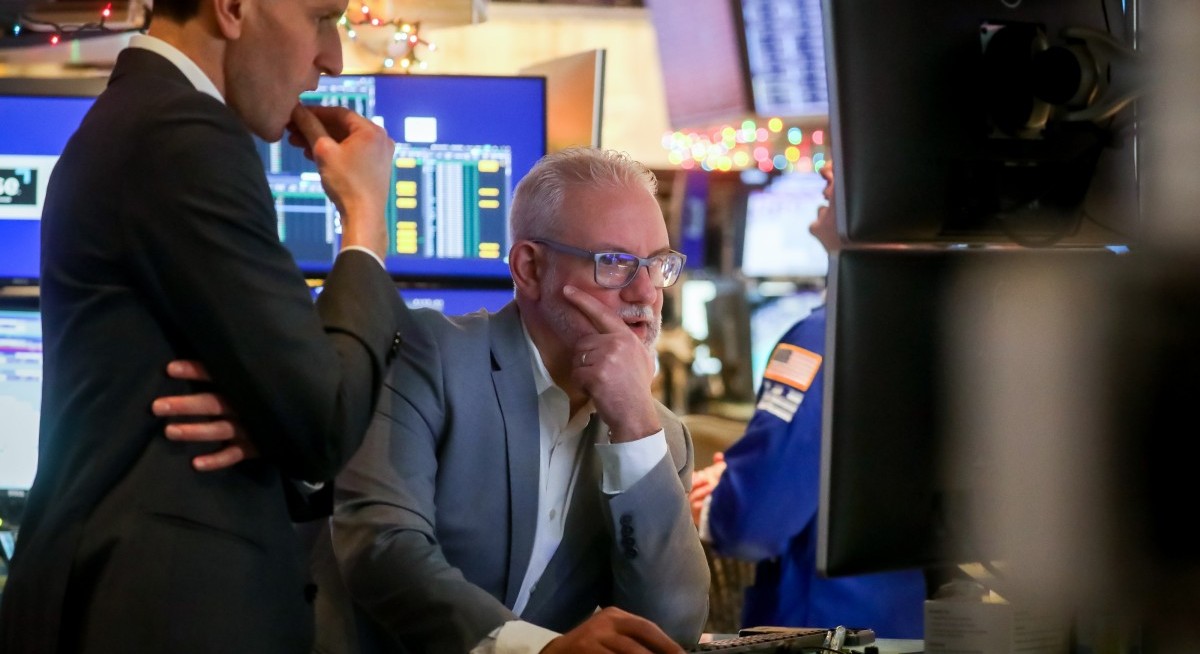


(Jan 15): A slide in US stocks continued on Wednesday as a flurry of economic data failed to change any expectations for the Federal Reserve’s (Fed) interest-rate path and traders digest the latest round of big bank earnings.
The S&P 500 Index closed 0.5% lower in New York, notching its first back-to-back decline of the year. The tech-heavy Nasdaq 100 Index dropped 1.1%, also adding to losses from Tuesday’s session, almost wiping out gains for the year.
“US equities traded mostly lower as investors digested a mixed set of bank earnings and economic data that did little to alter expectations for Fed rate cuts this year,” said Axel Rudolph, a senior technical analyst at IG.
Wholesale inflation picked up slightly in November from a month earlier, driven by a jump in energy costs. The producer price index rose 0.2% after climbing 0.1% in the prior month, according to the Bureau of Labor Statistics.
“The November PPI came in structurally problematic,” said Natalie Gallagher, a principal economist at Board. “Producer prices are running well above consumer inflation, and that gap is widening. When that happens, it typically signals margin compression or delayed pass-through, not relief.”
Gallagher added that the Fed now faces a “challenging trade-off”, noting that core producer inflation is still elevated relative to the central bank’s 2% target while job growth is “clearly softening”.
See also: US consumer sentiment rises unexpectedly to a six-month high
“That combination complicates the policy path and suggests a cautious approach to any further rate adjustments,” Gallagher said.
Meanwhile, retail sales in November rose more than forecast, fuelled by a rebound in car buying and holiday sales. The value of retail purchases, not adjusted for inflation, increased 0.6% after a downwardly revised 0.1% drop in October, Commerce Department data showed on Wednesday.
“The supply shock from tariffs combined with a demand slowdown meant prices didn’t rise as much as many thought, but quantities sold fell more than many feared,” said Annex Wealth Management’s Brian Jacobsen.
See also: Traders chase ‘AI resistant’ stocks as disruption fear hits tech
Geopolitics weighed on traders’ minds as the unrest in Iran continued. Oil has reached the highest level since October as the market awaited the US response to the situation. US President Donald Trump has been ratcheting up military threats, while Reuters reported some personnel have been advised to leave the US air base in Qatar.
Earnings are key
Big bank earnings continued to roll in. Citigroup Inc dropped 3.3%, reversing earlier gains, as chief executive officer Jane Fraser tempered analyst expectations on regulatory penalties. Despite Bank of America Corp’s equity traders posting their best quarter ever, shares in the lender declined 3.8%. Meanwhile, Wells Fargo & Co fell 4.6% after reporting net interest income and revenue that were slightly below consensus estimates.
Expectations for earnings season are “very high”, according to Miller Tabak’s Matt Maley, adding that is one of the key reasons for Wall Street’s bullish view on 2026.
“If the earnings/guidance merely meets expectations over the coming weeks and does not create a wave of earnings estimate increases, it could create some problems for the stock market,” Maley said.
For Bellwether Wealth’s Clark Bellin, stocks have had an “encouraging start” to the year so far, even with political and geopolitical concerns coming out of Washington.
“We believe the upcoming tech earnings reports at the end of January and early February will be the most important in recent memory,” said Bellin. “Regardless of what happens with tech stocks in 2026, we expect the stock market’s broadening story to play an even bigger role this year as the bull market grinds along.”
To stay ahead of Singapore and the region’s corporate and economic trends, click here for Latest Section
Elsewhere, Intuitive Surgical Inc declined after its forecast for its flagship surgical robotic system in 2026 fell short of estimates. Meanwhile, travel stocks including Airbnb Inc and Booking Holdings Inc tumbled by 5.2% and 2.4% respectively, as the US State Department moved to pause immigrant visas for people from 75 countries, including Brazil, Somalia and Iran.
Energy stocks pared gains after Trump said he had been assured that Iran would stop killing protesters and the country won’t conduct executions. Despite pulling back from session highs, Chevron Corp and Exxon Mobil Corp ended the day up, while WTI crude oil fell.
Uploaded by Isabelle Francis




