


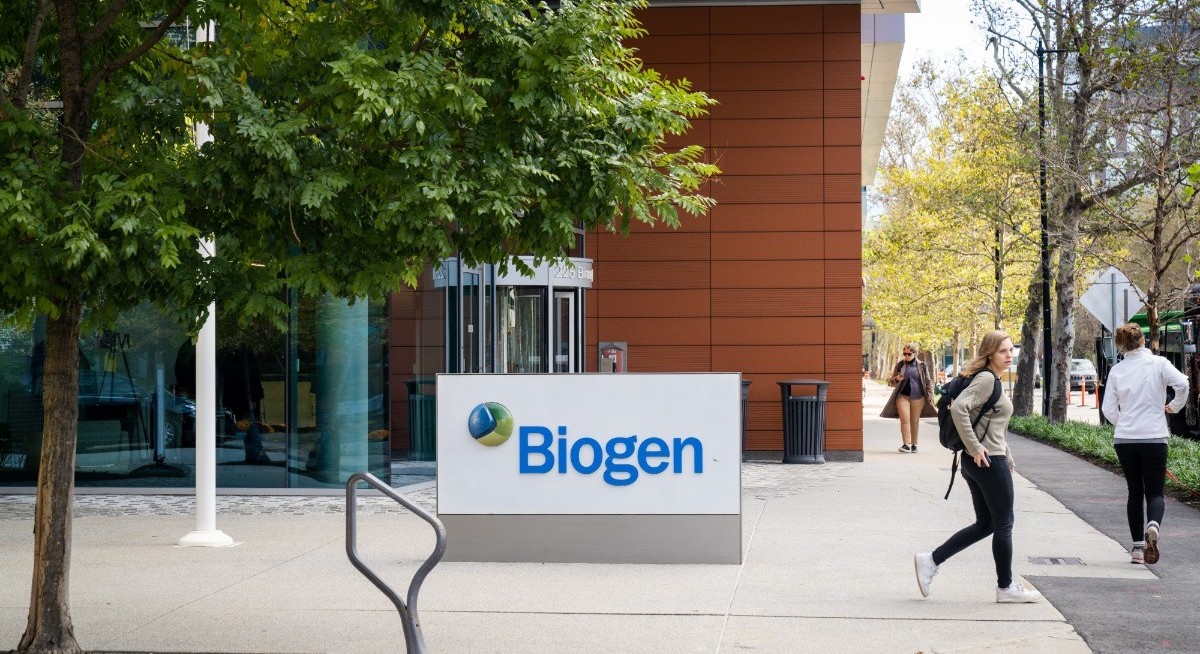


(Feb 6): Biogen Inc forecast 2026 profit above Wall Street’s expectations, signalling that steep cost-cutting measures are cushioning the impact of shrinking sales from its multiple sclerosis franchise.
Adjusted earnings will be between US$15.25 and US$16.25 a share this year, the Cambridge, Massachusetts-based biotech said in a statement on Friday, topping the average of analyst estimates. Revenue is projected to fall by a mid-single-digit percentage, extending pressure on a business long reliant on multiple sclerosis treatments.
Biogen has been exercising “an awful lot of discipline on the cost side” while trying to grow new products, chief executive officer Chris Viehbacher said in an interview. Since taking over as CEO more than three years ago, he’s cut hundreds of jobs and reduced expenses, in part by removing drugs from its research pipeline.
Biogen is betting that growth from newer drugs — including Alzheimer’s treatment Leqembi and rare-disease drugs Skyclarys and Spinraza — will offset its declining multiple sclerosis medicines as competition from generics erode sales.
The company doesn’t expect that to happen this year. Sales are expected to fall in 2026 after growing 2% last year, driven largely by multiple sclerosis drugs losing exclusivity in Europe and facing new competition in the US, Viehbacher said.
Approved in early 2023, Leqembi has sold slowly, constrained by bottlenecks in the healthcare system, including shortages of neurologists and infusion capacity. Leqembi’s fourth-quarter (4Q) sales totalled about US$134 million, roughly in line with analyst expectations, up from US$121 million in the prior quarter.
See also: Wall Street’s favourite trades collapse after market sell-off
“We’d like to see an acceleration of that at some point in 2026,” Viehbacher said of Leqembi’s sales.
Biogen and its Japanese partner, Eisai Co, are seeking US approval in May to allow patients to start Leqembi at home via a subcutaneous injection, a change that could make the drug easier to use and differentiate it from a competing Alzheimer’s treatment from Eli Lilly & Co.
Viehbacher said wider use of blood tests to diagnose Alzheimer’s could also help expand the pool of patients eligible for treatment.
See also: KKR’s 4Q profit hit by clawback at Asia private equity fund
Viehbacher has been trying to rebuild the company to make it less reliant on risky neuroscience. Under his leadership, Biogen’s biggest deal has been its US$7.3 billion purchase of Reata Pharmaceuticals Inc in 2023 that gave the company Skyclarys, the first approved treatment for a rare nerve condition called Friedreich’s ataxia. Recently, Biogen has focused on forging early-stage research deals in immunology, a field known for blockbusters like the arthritis treatment AbbVie Inc’s Humira.
Biogen’s 4Q sales of US$2.3 billion and adjusted earnings of US$1.99 a share both topped Wall Street’s estimates. Sales of Skyclarys and Spinraza, for the muscle-wasting disease spinal muscular atrophy, both fell short of analysts’ expectations, with Spinraza impacted by shipment timing outside the US.
Biogen shares were little changed in premarket trading. They’ve risen 30% over the past 12 months.
European regulators recently approved a higher-dose version of Spinraza that Biogen says is more effective. A US regulatory decision is expected by April.
The company is also awaiting data from several key trials this year, including studies of an experimental Alzheimer’s drug that works through a different mechanism than Leqembi, and litifilimab to treat a form of lupus that often affects Black women and causes their immune systems to mistakenly attack healthy tissues, leading to skin rashes, arthritis and other symptoms.
Uploaded by Felyx Teoh




