


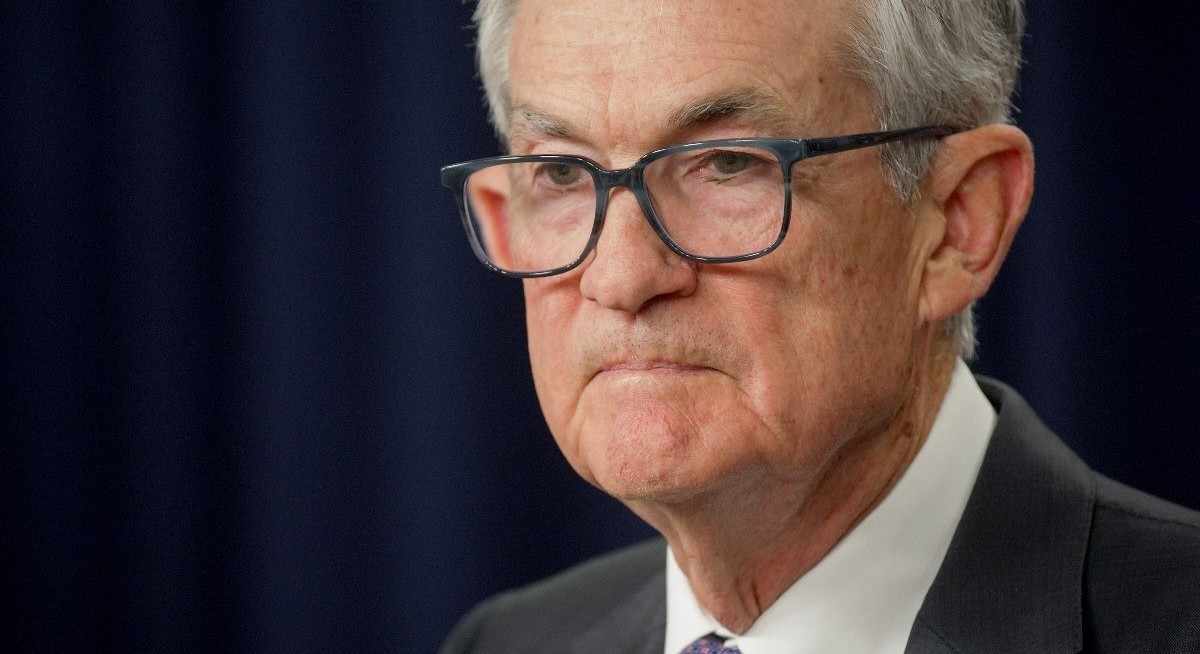


“The threat of criminal charges is a consequence of the Fed setting interest rates based on our best assessment of what will serve the public, rather than following the preferences of the president,” Powell said.
Powell added, “This is about whether the Fed will be able to continue to set interest rates based on evidence and economic conditions — or whether instead monetary policy will be directed by political pressure or intimidation.”
In an interview with NBC News on Sunday, President Donald Trump denied having any knowledge of the DOJ’s investigation into the central bank.
The US dollar weakened on the news, falling against all its major counterparts, while gold extended gains to a record high. Futures on the S&P 500 Index fell 0.3%.
See also: US services activity contracts for first time since 2023
Powell said the Fed was served the subpoenas last Friday. The unprecedented move by the Trump administration marks an escalation of Trump’s long-standing feud with the Fed chair. The president has repeatedly called for aggressive rate cuts, arguing the Fed should be acting to boost housing affordability and ease the government’s borrowing costs.
He’s also long mused about firing Powell, and, in another extraordinary step, has sought to fire Fed governor Lisa Cook. The Supreme Court is set to take up the Cook case later this month.
Fed policymakers last month cut their benchmark rate to a target range of 3.5% to 3.75% — the third consecutive quarter-point cut, after holding rates steady through much of 2025. Officials have signalled they are in no rush to lower rates again until they have more data on inflation and jobs.
See also: IMF says Fed has little scope for rate cuts this year
Policymakers next meet on Jan 27-28, and futures trading shows a minimal chance of a move at that gathering.
Powell’s future
In the statement, Powell said he intends to continue doing his job “with integrity and a commitment to serving the American people”.
Powell was first elevated to the chair role in 2018 by Trump. While his current term as the Fed chair will expire in May, his underlying post as a Fed governor doesn’t end until 2028. He hasn’t indicated whether he intends to depart in May or stay on at the central bank.
Trump said he had already picked his nominee to replace Powell. He has not named Powell’s successor, but Kevin Hassett, the director of the National Economic Council, is a front runner.
Republican Senator Thom Tillis, a member of the Senate Banking Committee which oversees the Fed, came to the Fed’s defence on Sunday night. In a statement, he said he would “oppose the confirmation of any nominee for the Fed — including the upcoming Fed chair vacancy — until this legal matter is fully resolved”.
Without Tillis’ support, Republicans would face a significant hurdle to advance any nominee out of the committee to the full Senate for confirmation.
To stay ahead of Singapore and the region’s corporate and economic trends, click here for Latest Section
“If there were any remaining doubt whether advisers within the Trump administration are actively pushing to end the independence of the Fed, there should now be none. It is now the independence and credibility of the Department of Justice that are in question,” Tillis said.
The investigation is being run by the US Attorney’s Office for the District of Columbia, according to people familiar with the matter.
Attorney General Pam Bondi has directed US attorneys offices to look into cases of potential taxpayer abuse, said one of the people, who asked not to be identified discussing the probe.
The White House referred questions to the Justice Department. A spokesperson for the Justice Department didn’t immediately respond to a request for comment.
Renovation
The Trump administration last summer ramped up scrutiny over the Fed’s renovation of two historic buildings and rising costs associated with the project. Fed budget documents show cost estimates for the project had risen to US$2.5 billion ($3.2 billion) in 2025, compared with US$1.9 billion in 2023.
The Fed has attributed the higher costs in part to differences between original and actual estimates for materials, equipment and labour, and unforeseen issues, such as toxic contamination.
In testimony last June, Powell broadly disputed media reports, and criticisms from administration officials and some congressional Republicans, that the project had extravagant design features, such as a VIP dining room and roof terrace gardens.
Powell also said during the testimony that the project’s plans had “continued to evolve” and that some earlier features “are no longer in the plans”.
Office of Management and Budget director Russ Vought referenced the testimony in a letter he sent to Powell last July asking for details on the renovation. Bill Pulte, the director of the Federal Housing Finance Administration and a fierce critic of Powell, has alleged — without providing details — that Powell lied about the specifics of the project during the hearing and suggested the matter could amount to sufficient legal “cause” to justify removing the Fed chief from his role.
At the time, Republican Representative Anna Paulina Luna also asked the Department of Justice to consider investigating and prosecuting Powell for allegedly lying under oath in his testimony.
Amid the controversy, Trump toured the renovation site and signalled the project was not reason enough to fire Powell. Months later, on Dec 29, Trump said he is considering a “gross incompetence” lawsuit against Powell related to the project.
Under the law that created the Fed, the president can remove members of the board of governors only for cause, generally interpreted to mean inefficiency, malfeasance in office or neglect of duty.
“It sounds like Trumpian vengeance and pressuring him to leave in May,” Mark Spindel, the author of The Myth of Independence: How Congress Governs the Federal Reserve, said in reaction to the subpoenas. “If Powell hung around on the board, that complicates Trump’s majority — he needs the seats.”
Uploaded by Tham Yek Lee




