


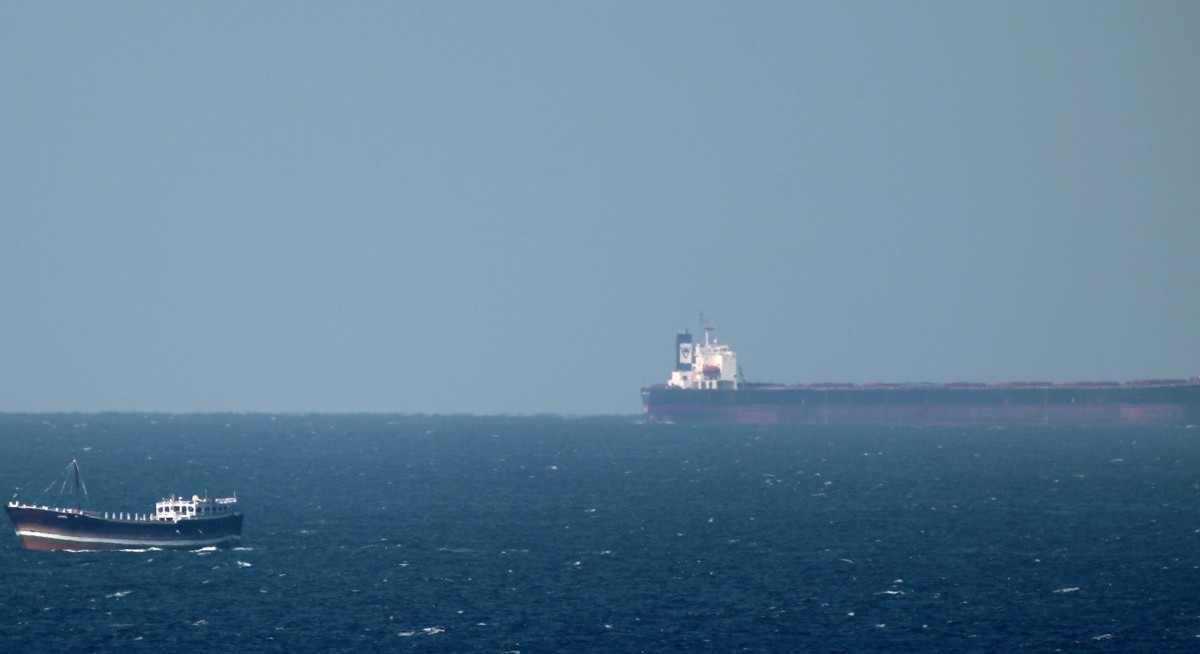


Oil traders are monitoring Hormuz flows closely because the blockage of the waterway has already cut about a billion barrels from global supply. While shipments from countries other than Iran have crept up, those from the Islamic Republic have slumped sharply since an American blockade.
In recent weeks, some ships have crossed with their satellite signals off, meaning it’s possible the number increases down the line once those vessels re-emerge away from the Middle East. Hormuz has remained largely blocked since the war began in late February and has been subject to an international diplomatic arm wrestle ever since.

Iran earlier this month laid out an updated process for ships wanting to cross Hormuz that involved dealing with a body called the Persian Gulf Strait Authority. At the same time, the US has maintained a blockade, from the edge of the Gulf of Oman, on Iranian ports.
See also: US, Iran edging towards interim deal signing close to G7 next week — senior officials
That has slowed maritime traffic in the region, though some vessels have been able to cross thanks to agreements between governments. Still, while a handful of tankers have been able to escape, it’s much less clear whether they’ll be willing to return given the risks to shipping.
“There’s been an increase but the levels are so low that it won’t make much of a difference,” said Georgios Sakellariou, a freight analyst at Signal Maritime. “The major issue is that even if all the tankers inside leave, new ones won’t be entering anytime soon.”
Of the four ships that departed with their signals on, three loaded crude oil in Iraq. The other is carrying cargoes from the United Arab Emirates (UAE) and Kuwait, the vessel tracking data show.
See also: Trump vows more attacks on Iran, says US will take Kharg Island
Iran said on Thursday that it is now allowing Chinese ships to pass the Strait of Hormuz following discussions with the country’s foreign ministry. A day earlier, the supertanker Yuan Hua Hu became the third Chinese VLCC to cross the waterway.
There’s been a similar trend in other markets too, with a series of very large gas carriers adding to the number of crossings in recent days.
Tracking the number of ships crossing Hormuz has been complicated by the fact that some vessels have transited while switching off their satellite transponders. Last month, the boss of commodity trader Mercuria Energy Group said the company has been able to get vessels out of the waterway, but declined to elaborate on how.
Middle Eastern oil companies, including Saudi Arabia Aramco Trading Co and the UAE’s state-owned Abu Dhabi National Oil Co have also moved crude cargoes through the waterway since it was closed, people familiar with the situation said last week.
Uploaded by Felyx Teoh




