


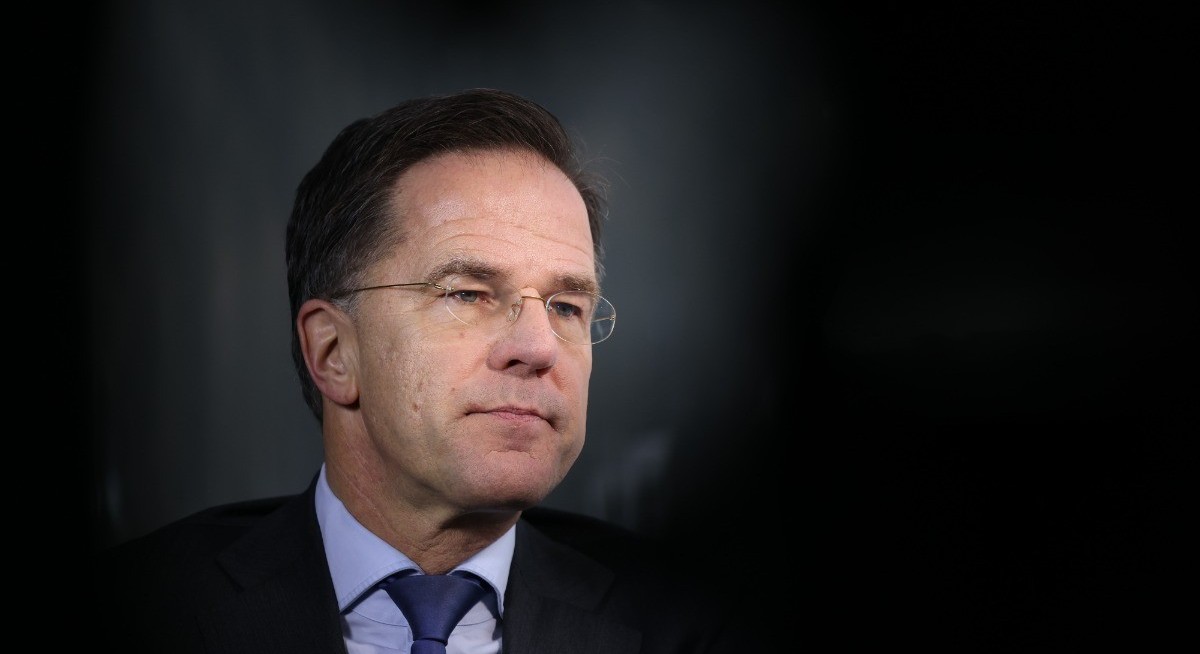


(May 4): Nato secretary general Mark Rutte warned European leaders that US President Donald Trump is disappointed with their reluctance to assist with the war in Iran.
“European leaders have gotten the message,” Rutte said ahead of the European Political Community [EPC] meeting of nearly 50 leaders in Armenia’s capital, Yerevan, on Monday. “There has been some disappointment from the US side when it comes to the European reaction” to the US war against Iran.
The US has announced it will withdraw around 5,000 troops from Germany over the next year after Trump accused European countries of ignoring his requests to help reopen the Strait of Hormuz. That came days after German Chancellor Friedrich Merz questioned Washington’s handling of the war in unusually blunt terms, saying the administration was being “humiliated”.
Rutte pointed to a French and British initiative to organise a coalition of countries willing to help secure the Strait of Hormuz — a crucial waterway for global oil supplies — after the fighting stops, saying that some allies had started prepositioning assets in the region.
The US will begin guiding some neutral ships trapped in the Persian Gulf out through the strait starting from Monday, Trump posted on his social media on Sunday.
French President Emmanuel Macron said the decision to reopen the waterway was “very good” and something that allies “have been asking for from the start”.
See also: Bessent calls on China, allies to join US operation in Hormuz
“But we are not going to take part in any forceful operation within a framework that does not seem clear to me,” Macron told reporters in Yerevan, reiterating the position of many European countries.
European pillar
The US move to withdraw some troops from Europe prompted surprise and questions from North Atlantic Treaty Organization (Nato) allies. They were bracing themselves for a gradual reduction of US forces, but expected the process to be coordinated and small in scale.
See also: Iran war fuels piracy surge off Somalia coast, EU agency says
“I think it shows that we really have to strengthen the European pillar in Nato and we have to really do more,” the EU’s top diplomat Kaja Kallas said in Yerevan. US troops in Europe were not just protecting Europe but also serving “American interest”, she said.
The announcement marks the latest escalation in Trump’s criticism of the military alliance, whose other members he’s long accused of “freeloading” off US protection instead of paying more for their own defence. More recently, he’s threatened to take over Greenland from Nato partner Denmark and criticised some allies for not doing more to help in Iran.
Rutte said that a number of European countries were fulfilling their bilateral agreements with the US and “making sure that when it comes to basing requests and all the logistical support, this is delivered” for operations in Iran. He mentioned Montenegro, Croatia, Romania, Portugal, Greece, Italy, the UK, France and Germany.
Some 35,000 troops — almost half the total of US forces in Europe — are stationed in Germany, where the American command for the region is headquartered. The US has relied heavily on its wide network of bases and other facilities in Germany, a legacy of the Cold War, to launch operations against Iran.
Any effort to reduce troop levels in Europe would likely face opposition in the US Congress. Trump’s last attempt to remove forces from Germany, in 2020, was blocked by legislative opposition. Current US law sets a minimum level of 76,000 troops permanently stationed or deployed in Europe.
Estonian Prime Minister Kristen Michal sought to play down Europe’s latest rift with the Trump administration, saying that on a practical military level the alliance was still working well.
“This kind of political rhetoric definitely needs to be watched closely; everything that the American president says must be taken seriously,” Michal told Bloomberg News in Yerevan. “But I don’t think Nato isn’t working or that Nato is a paper tiger.”
To stay ahead of Singapore and the region’s corporate and economic trends, click here for Latest Section
Some respite for the transatlantic relationship might come later this week, when US Secretary of State Marco Rubio visits Italy. He’ll meet with his Italian counterpart Antonio Tajani and possibly with Premier Giorgia Meloni as well, Bloomberg reported on Sunday.
Meloni, after initially engaging in a complex balancing act that saw her avoid public criticism of Trump, has recently been targeted by Trump directly for her condemnation of the Iran war and of his attacks on Pope Leo XIV.
She has played the role of conduit between Europe and the US at times, calling for mediation in January when Trump threatened further tariffs on countries sending troops to Greenland, saying the entire affair had been a misunderstanding.
The EPC initiative is one of the ways in which Europe has been trying to strengthen its geopolitical reach with the meeting in Armenia attended by Canadian Prime Minister Mark Carney, a first for the country’s leader.
Turkish Vice President Cevdet Yilmaz also joined the gathering as Ankara and Yerevan step up efforts to normalise ties and reopen their border. He’s the highest-ranking Turkish official to visit Armenia since President Abdullah Gul attended a soccer game between the two nations in 2008, in what was dubbed “football diplomacy” aimed at reconciling the historic foes.
Ankara closed the border with Armenia in 1993 in support of its ally Azerbaijan during the first Nagorno-Karabakh war. Reopening it could boost bilateral and regional trade, while advancing energy and transport corridors linking Europe with Central Asia — a key pillar of Turkey’s ambitions to become a transit hub.
Uploaded by Felyx Teoh




