


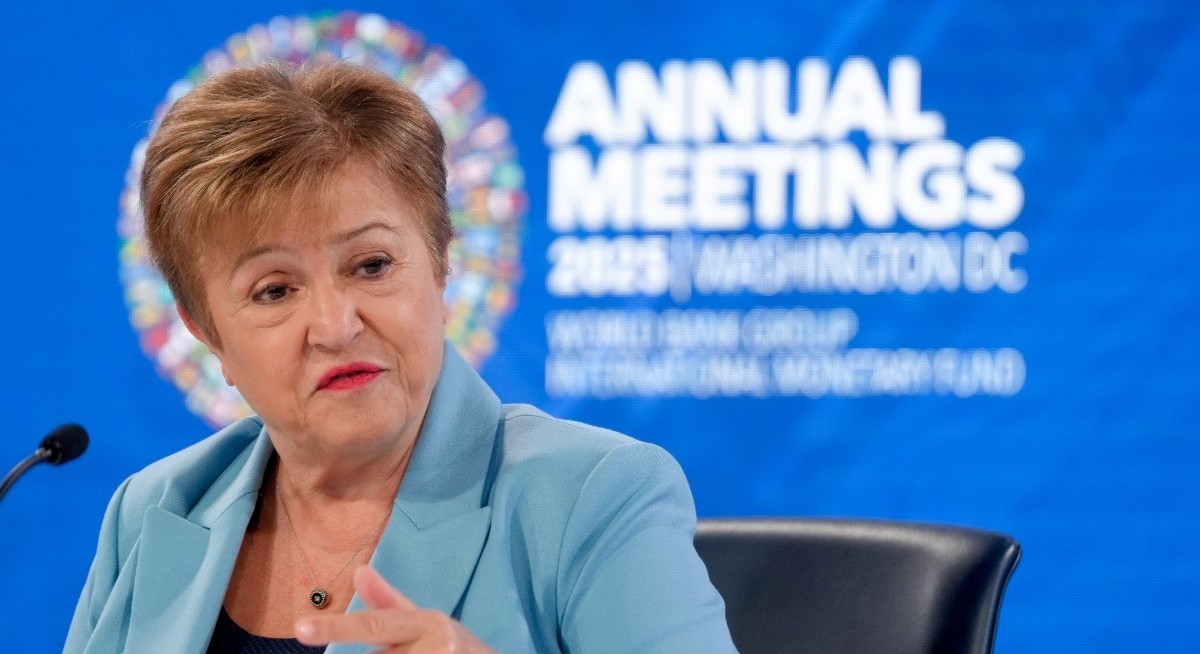


(Feb 9): The head of the International Monetary Fund (IMF) downplayed the dollar’s decline over the past year, saying the US currency will probably retain its preeminent position.
“We should not get carried away by short term variations of the exchange rate,” the IMF managing director Kristalina Georgieva said in an interview on Monday with Bloomberg Television. “I don’t see a change in the role of the dollar anytime soon.”
People “should look closely to why the dollar plays such an important role in the international monetary system,” she said, citing “the depth and liquidity of capital markets in the US, the size of the economy and the entrepreneurial spirit of the US.”
Georgieva, echoing comments she’s made in the past year, spoke at an IMF conference on emerging markets in Al-Ula, Saudi Arabia.
The Bloomberg dollar index, which tracks the greenback against a basket of 10 other leading currencies, fell 8.1% last year, the most since 2017. It’s declined another 1.3% this year as the Trump administration’s tariffs and the US government’s weakening fiscal position fuel concern among global investors.
On Monday, Bloomberg reported that Chinese regulators have advised financial institutions to rein in their holdings of US Treasuries, citing concerns over concentration risks and market volatility.
See also: US consumer sentiment rises unexpectedly to a six-month high
Treasury Secretary Scott Bessent said last week that the US “always has a strong dollar policy”, and that authorities hadn’t intervened to drive the greenback down. His comments came shortly after Trump was asked if he was worried about the dollar’s depreciation, with the president answering: “No, I think it’s great.”
Georgieva said a weaker dollar can be “good” for many emerging markets because it eases their interest payments on foreign debt. “Those that borrow in the greenback will pay less now,” she said.
Reflecting that, the extra yield investors demand to hold emerging-market sovereign dollar bonds instead of US Treasuries has fallen to about 250 basis points (bps), according to JPMorgan Chase & Co’s indices. That’s the lowest level since January 2013 and almost 500bps tighter than the spread witnessed at the height of the Covid pandemic five years ago.
Uploaded by Felyx Teoh




