


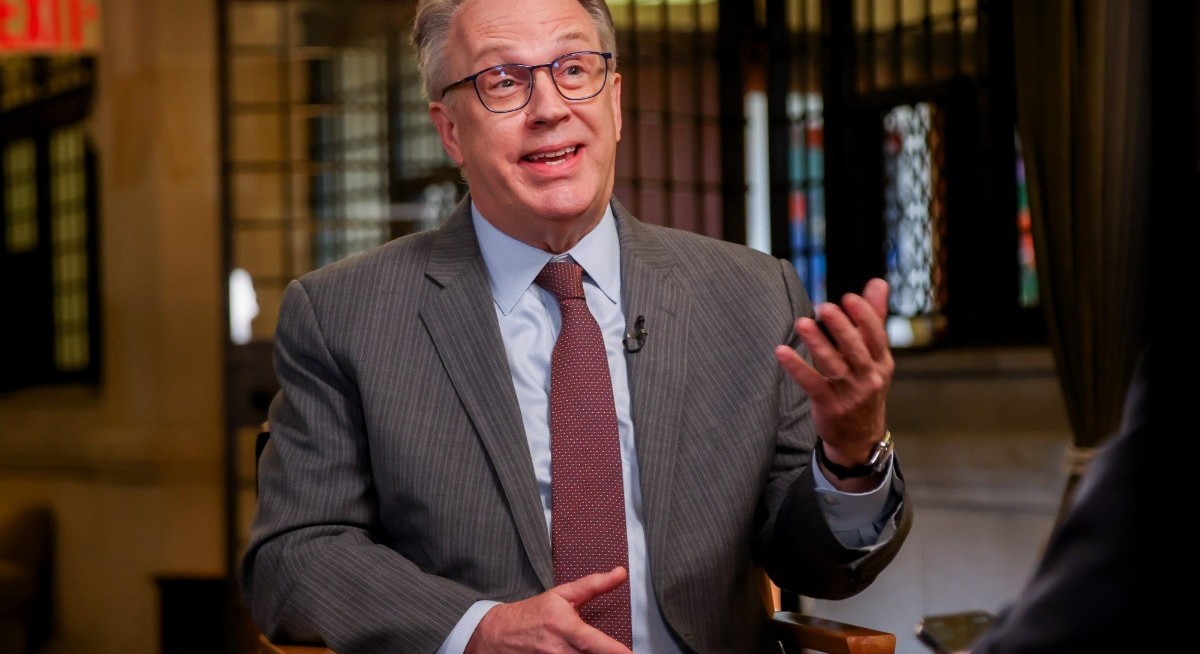


(July 15): Federal Reserve Bank of New York president John Williams said interest rates are “well-positioned” even as demand driven by artificial intelligence (AI) puts upward pressure on inflation.
“I am confident that these investments will support strong productivity growth in coming years. But, right now, we’re in a race between available supply and surging demand,” Williams said on Wednesday in remarks prepared for an event in New York.
Still, he said, “the current stance of monetary policy is well-positioned” to bring inflation back towards the Fed’s 2% goal.
“Inflation is unquestionably too high,” Williams added. “But there are encouraging reasons to expect that inflation has peaked and should edge down in coming quarters.”
Tariffs shouldn’t add additional pressures on consumer prices, shelter inflation remains on a downward trajectory and energy prices appeared to have peaked, Williams said. He added that he saw no evidence the labor market was adding to inflationary pressures.
Williams expects inflation to be around 3.25% by the end of this year before declining to the Fed’s 2% goal by 2028.
See also: US consumer sentiment climbs on cheaper gas, tops forecasts
Williams also expressed optimism that AI’s impact on inflation will abate in time.
“The supply-demand imbalances stemming from AI-related investment should recede over time as more supply comes online,” he said. “That said, the magnitude and duration of these supply-demand imbalances are highly uncertain.”
Fed chairman Kevin Warsh, who took office in May, has promised to scrap the central bank’s system of signalling where interest rates are headed, known as forward guidance.
See also: US housing starts surge on rebound in multi-family construction
In comments to reporters after his speech on Wednesday, Williams said that forward guidance isn’t appropriate at this time. He said Fed policymakers will continue to provide “perspectives on where the economy is, and how this all fits together in terms of our achieving our price stability and maximum employment goals.”
June relief
A surprising decline in headline inflation in June, linked to a drop in energy prices, prompted investors to bet that officials will hold interest rates steady when they meet in July.
Williams said he’ll be looking at how the June numbers translate into July because “I don’t want to overreact or put too much weight on one month of data.”
Policymakers appear divided over the path for interest rates. Half of 18 officials who submitted projections in June penciled in at least a quarter-point rate hike, while a few saw a case to tighten at their last meeting. Earlier this week, governor Christopher Waller said the committee may need to raise rates in the near term if price pressures continue to broaden.
Williams estimated the economy will expand 2% to 2.25% this year. The unemployment rate should edge down “very gradually” to 4% by 2028 as the labour market shows signs of resilience and stability, he said.
Last week, the New York chief raised more pointed concerns over inflation. He said if the AI-driven demand was sustained, the Fed wouldn’t be able to “look through” its results.
To stay ahead of Singapore and the region’s corporate and economic trends, click here for Latest Section
Warsh said the improvement in June’s inflation print doesn’t mean the central bank’s mission is accomplished. During a hearing before lawmakers on Tuesday, he said the committee will have a “good family fight” when they meet on July 28-29 “about the extent and timing” to deploy the Fed’s tools. He gave no further detail on which tools he meant.
Williams said one thing he’ll be watching is the trajectory of inflation expectations. In the New York Fed’s June survey, the outlook among consumers for inflation over one-year and three-year periods both rose by 0.2 percentage point.
“The movement so far is relatively modest,” Williams told reporters. “We saw the three year ahead inflation move up quite a bit on a sustained basis during the inflation run-up after the pandemic.”
Uploaded by Felyx Teoh




