




UBS has raised its price targets for the banks by 25% “driven primarily by lower cost of equity assumptions reflecting the decline in market-implied equity risk premiums (ERPs) in recent months”.
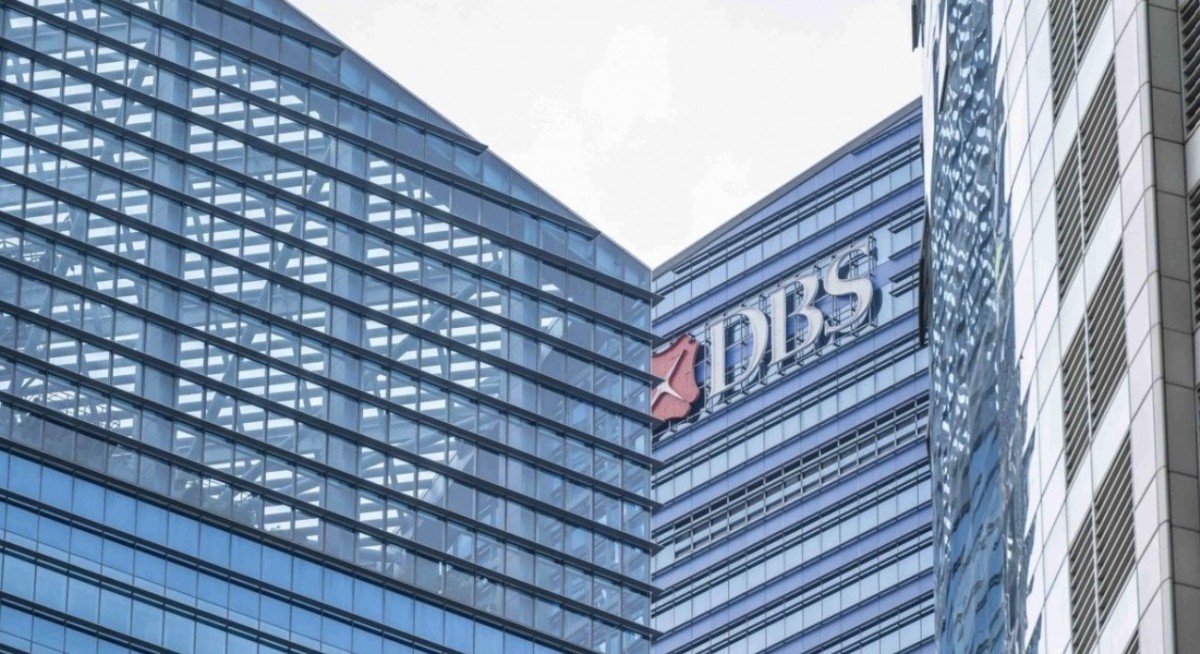
Hence, DBS’s dividend discount model (DDM)-based price target is raised to $72.5 (from $58.0), implying 2.9x FY2027 price-to-book ratio.
DBS’s higher price target is driven by a combination of 2% to 4% earnings per share (EPS) upgrades for FY2026 and FY2027, a 100bps reduction in the cost of equity assumption to 9.7%, and a higher sustainable ROTE assumption of 20% (from 19%). “The lower cost of equity is broadly in line with the decline in the market-implied cost of equity over the last three months,” the UBS analysts write in their report.
For OCBC, UBS has raised the price target to $27.5 (from $21.0), implying 1.8x FY2027 price-to-book ratio. As with DBS, the higher price target reflects a lower cost of equity assumption and a higher sustainable return profile for OCBC. “Specifically, our target is driven by 1% to 2% EPS upgrades for FY2026 FY2027, a 100bps reduction in our cost of equity assumption to 9.7%, and a higher sustainable ROTE assumption of 14.0% (from 13.5%).
See also: RHB sees DBS as ‘core holding’ for investors despite premium valuation, ups TP to $75.70
UOB’s price target is raised to $45.0 (from $37.8), implying 1.3x FY2027 price-to-book. Similar to DBS and OCBC, the higher target reflects a lower cost of equity assumption and a modestly stronger earnings outlook for UOB. “Our target is driven by 1% to 2% EPS upgrades for FY2026 and FY2027, a 100bps reduction in our cost of equity assumption to 11.2%, and a higher sustainable ROTE assumption of 13.5% (from 13.0%),” Rawat and Tan write.
UBS points out that UOB remains the cheapest of the three Singapore banks on both price-to-book and implied ERP metrics. “The key question is whether this valuation gap can narrow over time. In our view, this will depend largely on UOB's ability to accelerate growth in its wealth management franchise and close the gap with peers,” the UBS report says.
OCBC is UBS’s least-favourite bank because of its lower distributable yield and “our view that expectations of improvements in ROE are already largely priced in”.
Rawat and Tan point to DBS as their top pick in the sector, supported by superior capital returns. “While its valuation of 2.75x price-to-book may appear optically demanding on an absolute basis, adjusting for its structurally higher ROE implies an equity risk premium broadly in line with OCBC, we believe the valuation premium remains justified,” the duo write in their report.




