


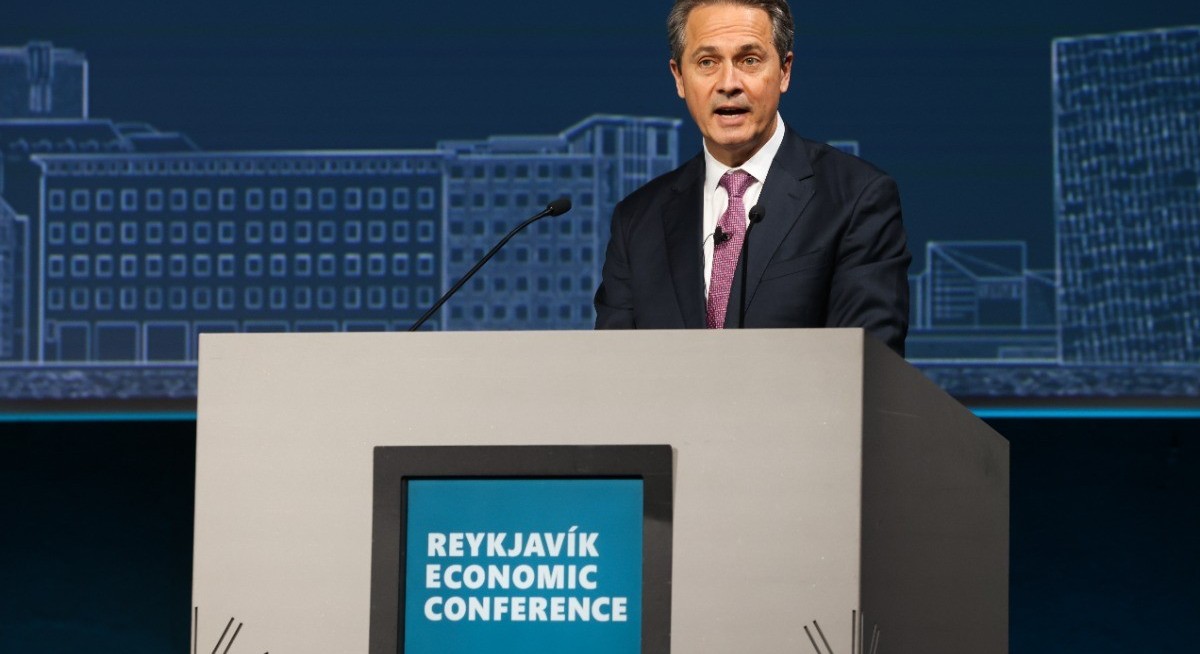


(May 28): Federal Reserve (Fed) Bank of St Louis president Alberto Musalem said US policymakers cannot depend on a potential productivity boom from artificial intelligence (AI) to ease elevated inflation.
“I believe it would be risky to rely on the prospect of higher productivity growth in the future to solve our inflation problem today,” Musalem said on Thursday in remarks prepared for a conference in Reykjavík, Iceland.
The war with Iran has renewed price pressures and led more policymakers to warn that interest rates may need to go higher if inflation remains elevated. Many officials would have preferred to remove language from the Fed’s post-meeting statement last month that signalled an “easing bias” for the direction of interest rates, according to minutes of the April 28-29 gathering.
Musalem cautioned that, after accounting for inflation, the Fed’s benchmark rate is below the so-called neutral level that neither slows nor stimulates the economy. He also said the labour market is stable, inflation is “meaningfully above” the Fed’s 2% target and long-run inflation expectations are “drifting higher”.
New data out on Thursday reinforced those worries. The Fed’s preferred inflation metric, the personal consumption expenditures price index, rose 3.8% in the 12 months through April, according to the Bureau of Economic Analysis.
Investors are betting there is more than a 50% chance the Fed will raise rates by year end, according to pricing in futures contracts. The Fed’s next policy meeting takes place June 17-18, the first gathering led by new Fed chairman Kevin Warsh.
See also: Trump tells Warsh to do ‘own thing’ as Fed chair sworn in
Warsh has suggested AI could unleash a productivity boom that will allow for non-inflationary growth, and lower rates to accompany it.
The St Louis Fed chief said he’s an avid user of AI and an optimist on its potential to boost the economy. But he sees rising enthusiasm in the technology lifting demand for electricity and chips, as well as boosting the share prices for certain AI companies. That may push central banks to raise policy rates in the absence of evidence that productivity gains are helping to lower inflation.
“The data suggest the probability of the US currently being in a high productivity growth period is meaningfully below 50%,” said Musalem. “I believe we should base monetary policy decisions on evidence stronger than that.”
Uploaded by Tham Yek Lee




