


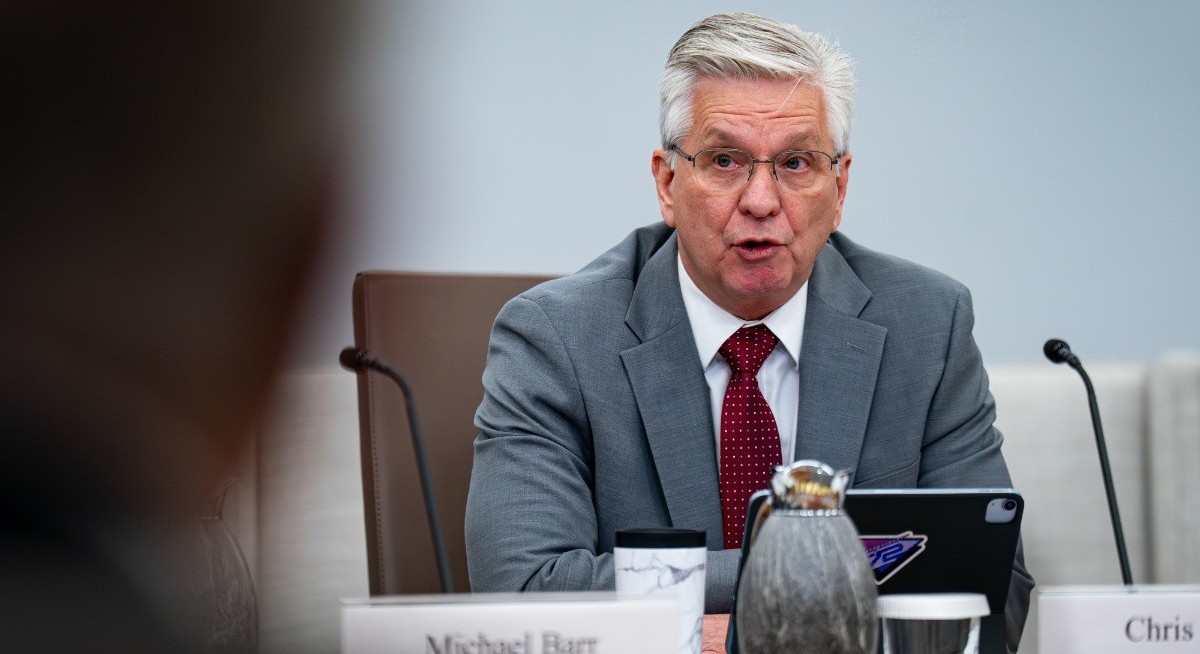


(May 22): Federal Reserve governor Christopher Waller said he supports making clear the central bank’s next interest-rate move is just as likely to be an increase as a cut, as the energy shock from the Iran war pushes up prices.
Waller said his current position is to be patient in holding rates until the war’s impact is clearer, but he warned on Friday that he wouldn’t rule out a future rate hike if inflation doesn’t start to slow soon.
“Inflation is not headed in the right direction,” Waller said on Friday in a speech entitled Policy Risks Have Changed delivered at a conference in Frankfurt. “I would support removing the ‘easing bias’ language in our policy statement to make it clear that a rate cut is no more likely in the future than a rate increase.”
Waller said the oil shock could dissipate soon, but, he added, “I can no longer rule out rate hikes further down the road if inflation does not abate soon.”
Traders boosted bets for higher interest rates following Waller’s remarks, with swaps markets fully pricing a quarter-point Fed hike by December for the first time.
At its April policy meeting, the Federal Open Market Committee elected to leave its benchmark federal funds rate unchanged in a range of 3.5% to 3.75%. But the decision prompted dissents from three policymakers who objected to the so-called “easing bias” in the post-meeting statement’s language suggesting the Fed will eventually resume rate cuts.
See also: US consumer sentiment drops to record low on inflation worries
Minutes from that meeting showed a majority of Fed officials warned the central bank would likely need to consider raising rates if inflation continued to run persistently above their 2% target. Since the April policy decision, stronger-than-expected data on employment and faster-than-expected inflation figures have reinforced the notion that price pressures remain the bigger risk from the conflict than a sharp growth slowdown.
New survey data out Friday showed consumer sentiment slumped to a record low in May, as Americans expect prices to rise an annualised 3.9% over the next five to 10 years, up from 3.5% in April and the highest in seven months. They also saw costs advancing 4.8% over the next year.
In a question and answer session after his speech, Waller said recent economic data had spurred him to reconsider his view on the central bank’s policy statement.
See also: Walmart warns its earnings will be impacted by higher fuel costs
“I’ve been in favour of the easing bias for a long time, but the last couple of labour market reports and inflation reports just turned me the other way,” Waller said.
He added that the recent surge in government bond yields is tightening financial conditions and could help the central bank in its inflation fight.
Waller described the labour market as stabilising, but not booming, and said he views the current level of the Fed’s benchmark as having a restrictive effect on the US economy.
Still, he said the bigger driver of policy now is the inflation outlook, which hinges on the ultimate duration of the war.
“If I believe inflation expectations start to become unanchored, I would not hesitate to support an increase in the target range for the federal funds rate,” Waller said. “But at this point that action is premature. It is time to simply sit and watch how the conflict and the data evolve.”
New Fed chair
Waller’s remarks came just before Kevin Warsh was expected to be sworn in as the new Fed chair in a White House ceremony.
To stay ahead of Singapore and the region’s corporate and economic trends, click here for Latest Section
President Donald Trump has put immense pressure on the Fed to lower rates more rapidly, and made clear that he would only select a new chair that agreed with his views. That has led some of Warsh’s critics to question whether he will be open to the president’s demands and if the central bank will remain independent under his leadership. Warsh during his confirmation hearing for the chair role rejected those concerns.
Waller on Friday cautioned that any perceived threat to the Fed’s independence would likely trigger volatility in bond markets that couldn’t be ignored, but expressed optimism that independence would stand.
“I kind of believe the institution, when it comes into play, will stand by and see the need for central-bank independence and protect it,” Waller said.
Uploaded by Felyx Teoh




