


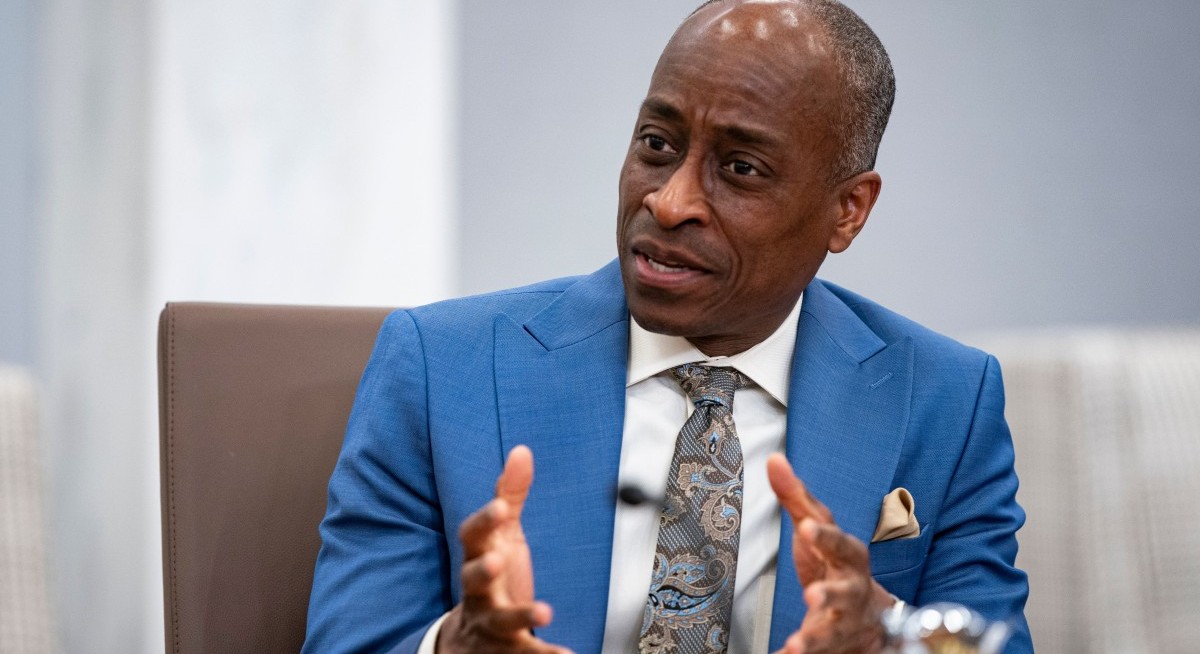


(April 8): US Federal Reserve (Fed) vice-chair Philip Jefferson said the Iran war will stoke uncertainty and push US inflation higher in the near term, though the central bank’s policy setting remains appropriate.
Describing interest rates as broadly in a range that neither spurs nor restrains the economy, Jefferson said the current stance will support jobs and allow inflation to ease back to the 2% target as the effect of tariffs wanes.
“I remain cautious about my outlook,” Jefferson said on Tuesday in prepared remarks for a speech at the University of Detroit Mercy. “Uncertainty about the economy is elevated, and the rise in energy prices and the conflict in the Middle East add to that uncertainty. I continue, however, to see our current policy stance as appropriately positioned to allow us to assess how the economy evolves.”
While Jefferson said he expects a broad disinflationary trend to continue, he sounded a cautious tone on how the Iran war will impact inflation and consumer demand, saying the conflict has complicated his own outlook for prices.
“The recent increase in energy prices, however, will apply some upward pressure on headline inflation, at least in the near term,” Jefferson said. “The ongoing trade policy uncertainty and geopolitical tensions pose upside risk to my inflation forecast.”
Fed officials have expressed growing anxiety over the US economic outlook due to the war in the Middle East which has sent energy costs soaring and threatened the supply of other key commodities. The Fed left interest rates unchanged at its March 17-18 policy meeting and cautioned about elevated uncertainty created by the war.
See also: Treasuries steady after mixed economic data as oil rebounds
The central bank is trying to balance inflation — which was about a percentage point above its 2% target in January and is set to jump due to oil prices — against a job market that has shown signs of stabilising but generated very little hiring over the past year.
Businesses are already warning about the impact from the war. The US service economy expanded in March at a slower pace as employment shrank by the most since 2023. Input prices accelerated sharply, with executives citing the war for triggering fresh uncertainty about the economic outlook.
Jefferson also sounded a note of caution on the labor market, which he described as roughly in balance but vulnerable to the latest bout of uncertainty.
See also: Fed minutes show US officials saw two-sided risks from Iran war
“If the current elevated level of uncertainty persists, there is a risk that firms’ reluctance to hire could also persist and hold down job growth for longer,” Jefferson said. “I will remain attentive to the pace of job growth going forward as I assess the extent of potential fragilities in the labor market.”
Earlier on Tuesday, New York Fed president John Williams said the Fed’s interest-rate setting was “exactly where it needs to be,” allowing the central bank to respond if economic conditions change.
Uploaded by Isabelle Francis




