


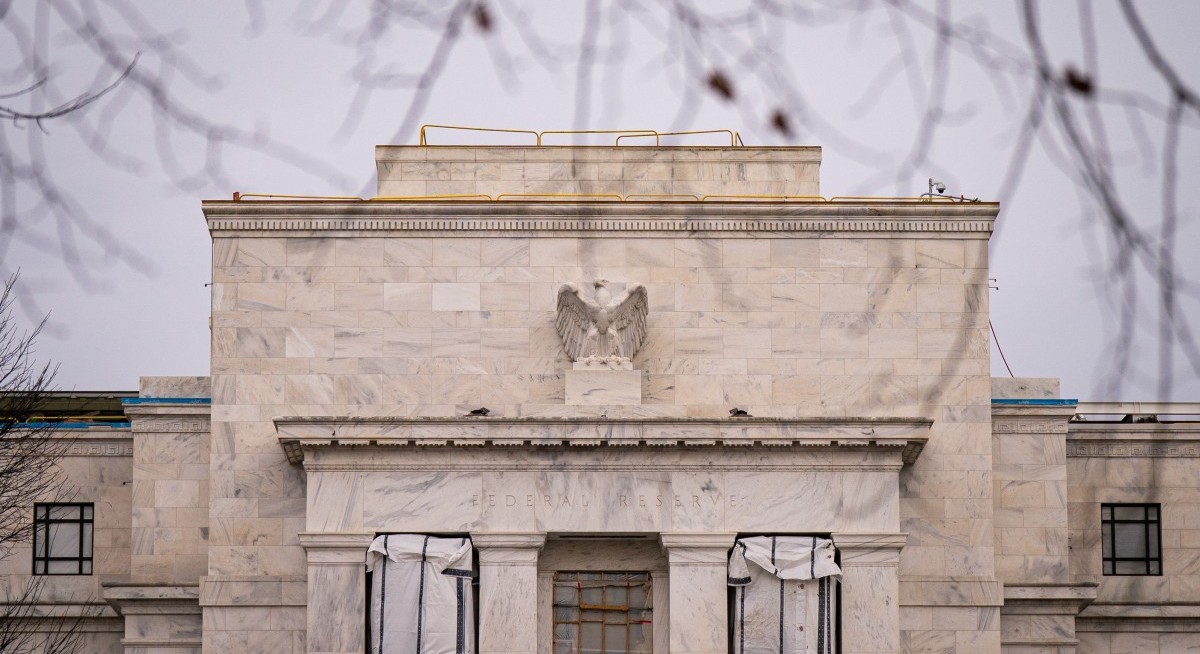


(Feb 19): Federal Reserve (Fed) officials appeared surprisingly wary of cutting interest rates when they met last month, with several even suggesting the central bank may need to raise rates if inflation remains stubbornly high.
While the minutes of the central bank’s Jan. 27-28 policy meeting, released Wednesday, fell far short of suggesting most officials were contemplating the possibility of rate increases, they made clear the Fed is shifting further away from agreeing on another cut.
That could put it on a collision course with President Donald Trump and complicates the task of Trump’s nominee for Fed chair, Kevin Warsh.
Trump has repeatedly said he wants the next Fed chief to deliver lower interest rates, and on Jan 30, two days after this policy meeting, he announced he would nominate Warsh, a former Fed governor, to take over when Jerome Powell’s tenure as chair ends in May.
“The minutes carry a distinctly more hawkish tilt,” Gregory Daco, chief economist at EY-Parthenon, wrote in a note to clients. “This sets up an interesting dynamic if and when Kevin Warsh is confirmed as Fed chair.”
White House Spokesman Kush Desai said recent favorable price data provided proof that inflation is now “cool and stable” due to Trump’s policies aimed at spurring the economy’s supply side.
See also: US core CPI rises as expected in January on services costs
“It’s high time for the Federal Reserve to acknowledge this abundantly clear reality and cut rates to deliver further economic relief for American homebuyers and businesses,” he said.
The minutes showed most of the Federal Open Market Committee believed last year’s labor market weakness, which prompted the central bank to lower rates three times in late 2025, was fading by late January.
“The vast majority of participants judged that downside risks to employment had moderated in recent months while the risk of more persistent inflation remained,” the minutes said.
See also: Investors pour another US$4 bil into US high-grade bond funds
That was before the release of a strong January employment report. Moreover, one group of policymakers at the meeting was embracing a view even more hostile to additional rate cuts.
“Several participants cautioned that easing policy further in the context of elevated inflation readings could be misinterpreted as implying diminished policymaker commitment to the 2% inflation objective,” the record showed.
Still, another group of “several officials” remained open to more rate cuts if inflation declined as they expected, though most said inflation progress could be slower than generally forecast.
The FOMC voted 10-2 at its January meeting to hold the benchmark federal funds rate in a range of 3.5%-3.75%. Governors Christopher Waller and Stephen Miran dissented in favor of a quarter-point reduction. Officials dropped language pointing to increased downside risks to employment that had appeared in the three previous statements.
Better data
Numbers published since the Fed’s January meeting have signaled accelerating growth, slowing inflation and a stabilising labor market. The consumer price index rose modestly in January, restrained by lower energy costs, according to Bureau of Labor Statistics. An underlying metric known as core CPI, which excludes food and energy, advanced as expected from a month earlier.
Payrolls rose in January by the most in more than a year and the unemployment rate unexpectedly fell, suggesting the labor market continued to stabilise at the start of 2026. Employers added 130,000 jobs and the unemployment rate declined to 4.3%, according to BLS data.
To stay ahead of Singapore and the region’s corporate and economic trends, click here for Latest Section
Since the January meeting, several Fed policymakers have maintained that an overall stable US economy provides them room to be patient in considering additional rate adjustments. President Donald Trump and other administration officials continue to call for the Fed to lower rates immediately.
Traders this year have eased back their expectations for when officials might next lower rates, though Fed funds futures contracts still suggest a cut is likely by June.
At their January meeting, the committee also voted unanimously to elect Fed Chair Jerome Powell as chair of the FOMC, and to fill various other committee positions, “until the selection of their successors at the first regularly scheduled meeting of the committee in 2027.”
Uploaded by Isabelle Francis




