


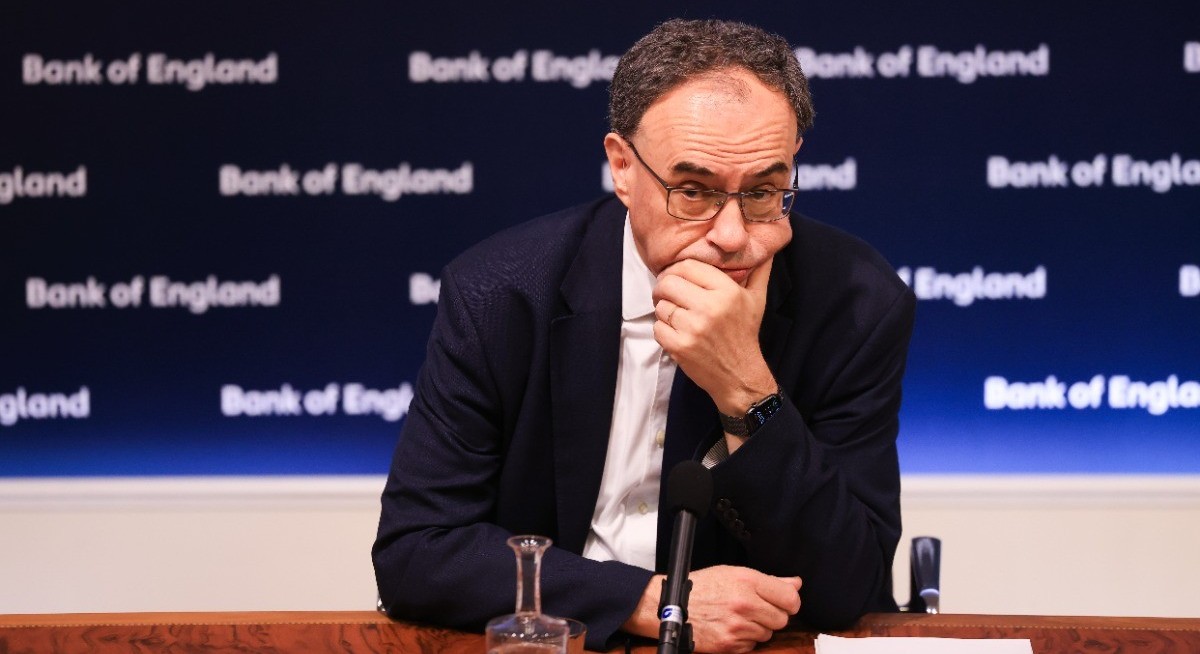


Jan 30): Bank of England (BOE) governor Andrew Bailey has warned for months that UK firms may start to trim jobs. That trend’s now showing up under his own roof, as the bank embarks on a sweeping reorganisation driven by the need to pare costs.
It started with the central bank inviting employees to volunteer to leave. Now, it’s looking at everything from moving staff to the North of England to selling off a sports club that’s used for the Wimbledon tennis championships as it targets an 8% reduction to operating costs in the next financial year.
The UK central bank is also shaking up its research department, piloting the use of artificial intelligence and scaling back its work on climate-change resilience under the far-reaching measures, according to people familiar with the matter who asked not be named discussing internal operations.
Bosses at Threadneedle Street are simultaneously trying to invest more in the BOE’s outdated tech infrastructure, after former Federal Reserve chair Ben Bernanke criticised its forecast software as out-of-date under a 2024 root-and-branch review that prompted a rethink of how the bank operates
In order to redirect that expenditure towards IT, the bank’s shifting away from its London-based operations which have the most intensive staffing costs. There’s been a sharp rise in the BOE’s wage bill in recent years: since Bailey arrived in 2020, wage costs have jumped by 55% to over £450 million, according to its most recent annual accounts.
The package of measures includes trimming the bank’s property portfolio, albeit not at its Threadneedle Street headquarters where it’s been based since the 1730s.
See also: UK’s Octopus Energy to enter China with power trading platform

It is looking to re-initiate the sale of a London sports club that helps host the annual Wimbledon tennis tournament each year, Bloomberg earlier reported. Those premises were bought in the early 20th century to provide staff with leisure facilities and are currently leased to the All England Lawn Tennis Club which uses them to run the Wimbledon qualifiers.
That comes on top of plans to move the banking regulator out of its office in the City of London’s Moorgate by 2028 and position a bigger share of its workforce outside the capital.
See also: London’s vanishing office buildings are being replaced by hotels
The bank is searching for a new location in the Yorkshire city of Leeds as it looks to increase the number of staff there from 100, last year, to 500 by 2027. It has brought in property services firm CBRE to help it identify a new site there and staff already in Leeds are ineligible for the voluntary departures while the bank expands its presence.
Elsewhere, the BOE is piloting artificial intelligence in several areas of its operations, and has scaled back in its stress-testing of the banking sector, shelving plans for a regular examination of climate risks amid growing threats elsewhere.
Two of the people said the bank’s bloated research department is also vulnerable to cost-cutting. Another said the central bank is currently reviewing its approach to research to give policy areas more control but stressed that change was not part of the efforts to save money.
“The bank manages its budget in order to deliver on its statutory objectives to maintain monetary and financial stability,” a Bank of England spokesperson said. “This requires us to make decisions in a constrained environment and as we implement a significant, multiyear transformation of all aspects of our operations. We are committed to making the bank a more modern, efficient and resilient institution.”
Officials at the central bank are also being asked to prioritise macroeconomic policy work as they scale back how often it stress-tests the resilience of the financial sector.
They’ll transition to carrying out bank-capital stress tests once every two years rather than annually, as of now. Those plans are expected to result in efficiencies for both the central bank and the participating private banks.
There’s also a change in emphasis, with it focusing more on other potential shocks, such as those that could derive from the expansion of private markets, at the expense of those deriving from climate change.
To stay ahead of Singapore and the region’s corporate and economic trends, click here for Latest Section
The bank is yet to follow up its first so-called exploratory scenario looking at the financial risks posed by climate change in 2021, having aimed, at the time, to run those tests every other year. Bailey told lawmakers last week the BOE will “come back to it, but we have had to prioritise other exploratory scenarios in the meantime.”
Sam Woods, the outgoing head of the Prudential Regulation Authority, recently said it doesn’t have plans to repeat the climate exercise, as the central bank believes it would not learn much more about the threat posed.
Campaigners and banks also note a lack of action on nature-related financial risks despite Chancellor of the Exchequer Rachel Reeves moving to add nature to the BOE’s financial stability remit after she was appointed in 2024.
Asked at a recent Treasury select committee hearing whether the bank should look beyond climate risks to broader nature and environmental risks, Woods said: “With my CEO hat on, I do not think that we should. The reason is that you have to have a degree of focus for a regulator to be effective.”
Some 16 banks also highlighted the exclusion of nature in a recent policy statement by the banking regulator on managing climate-related risks.
“It’s hard to square senior Bank of England officials stating that climate has fallen down the list of priorities, whilst in the same breath describing it as an existential threat with risks now materialising on firms’ balance sheets,” said Ellie McLaughlin, senior policy and advocacy manager at Positive Money. She said the BOE should look to the European Central Bank, “who have hired scientists to inform their own work.”
Uploaded by Evelyn Chan




