




(Jan 21): Ricky Lawrence’s daily routine often began behind the wheel of his 1986 Rolls-Royce, cruising through the pristine streets of London’s elite Belgravia district in convoy with his friends in their luxury cars.
This exclusive club would pull up along Motcomb Street, a short, polished stretch lined with designer boutiques and cafés, before walking into Motcombs Restaurant, their regular haunt. Known to locals as the “Motcomb regulars”, they would sit for hours puffing on cigars and quaffing red wine while their cars gathered parking tickets and passersby took photos.
But that’s over now. Lawrence, a 34-year-old originally from south-east London who owns a local tailor called Lawrence & Winslade, is the only one left after the rest sold their cars and moved abroad recently. Some of the others, who spoke to Bloomberg and asked not to be identified, said they got out ahead of the government’s promised tax hikes on the UK’s wealthiest residents.
“Every single one of us had a Ferrari, a Porsche or a Rolls-Royce,” Lawrence said. “I’m the only one left. The other six have gone.”

Lawrence’s friends are part of a group of wealthy business owners, heirs and expats who’ve left London since the Labour government began targeting the rich with tax rises and cracking down on tax breaks for them. The government abolished a two-century-old tax benefit for non-domiciled residents last April and targeted the nation's wealthy elite in other ways including a levy on private school fees.
See also: UK's 4Q growth disappoints as services stagnate
Luxury-car sales are under pressure globally but the UK is suffering a “major impact”, potentially due to the so-called non-dom changes, said Daniele Ministeri, a senior consultant at automotive research firm Jato Dynamics.
Ferrari’s UK registrations slumped 44% in the third quarter of 2025 from a year earlier to just 116 vehicles, according to Jato data, marking its weakest quarter in the country this decade. In an October interview with the Financial Times, CEO Benedetto Vigna said Ferrari had cut the number of cars it sells to the UK, attributing the slump to people leaving the country for tax reasons.
Elsewhere, UK sales of Rolls-Royces fell 26% from a year earlier in the three months through September as the British ultra-luxury brand recorded its weakest quarter since the start of 2021, according to Jato. Meanwhile, Aston Martin Lagonda Global Holdings plc’s UK sales plunged by nearly a third in the same quarter, according to its own results, the biggest slump of its major markets.
See also: Starmer vows to fight on as PM after second top aide resigns
“Our demand tends to move with the location of our clients – and what we are seeing is a lot of our ultra-high net worth clients; they move around to different locations,” Rolls-Royce Motor Cars Ltd CEO Chris Brownridge said in an interview. “So the demand level in the UK has not surprised us based on those facts.” Broader UK sentiment is also affecting domestic demand, he said.
This niche part of the car market, where collectors buy and sell rare Aston Martins and Ferraris for six-figure sums, is an important indicator of the underlying health of the UK’s luxury car industry. Historically high resale rates have also made these vehicles an asset and a way to store wealth.
The second-hand market has also come under pressure. The segment that includes dealers trading in rare used Porsches and Ferraris dropped 8.6% in the third quarter of 2025 from a year earlier, even as overall used car sales had their best quarter since 2021, according to a report from the Society of Motor Manufacturers and Traders lobby group.
The exodus has already hit London’s luxury housing market, with the prices of mansions tumbling in 2025. The value of properties going for £5 million or more has dropped by about 15% in the past year, according to research from real estate data company LonRes.
“People aren’t buying luxury cars anymore,” said Lawrence. “The clue’s in the name: it's a luxury. People only buy luxuries with spare money — but when you start messing around with tax, you start playing around with what people are going to have spare.”
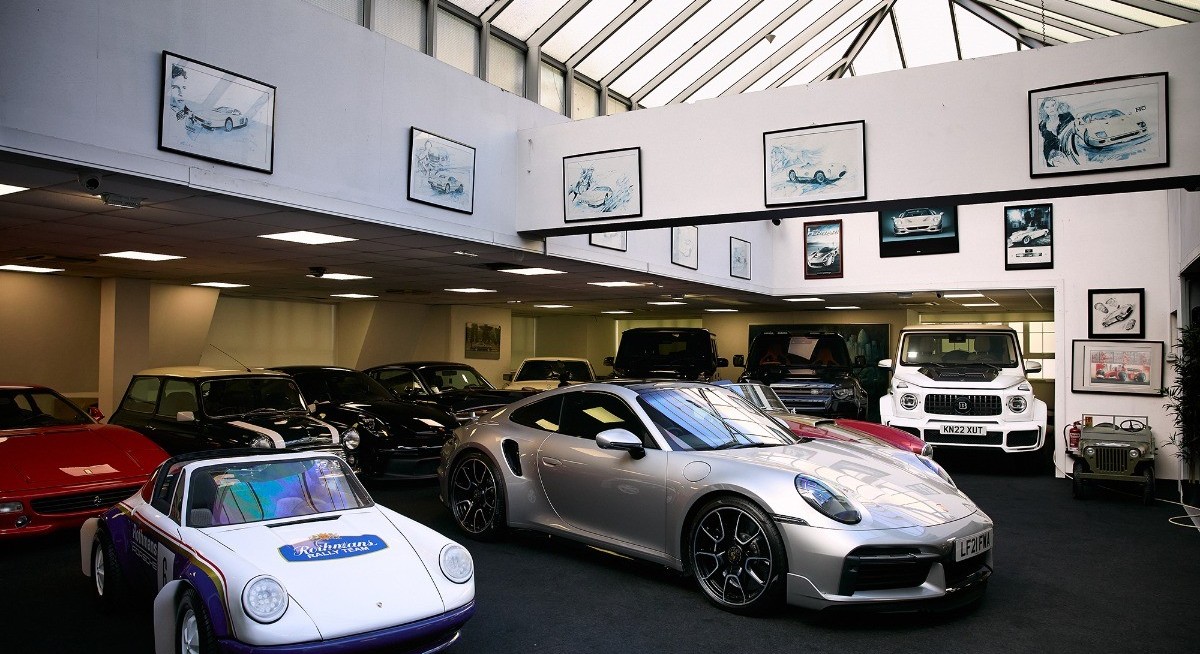
Mayfair Prestige, a dealer in Marylebone that sells everything from £450,000 Rolls-Royce Phantoms to a £330,000 Lamborghini Aventador, is seeing deteriorating demand. After bouncing back after the Covid-19 pandemic, business plummeted to its worst ever, causing sales to drop 50% in the last 18 months as wealthy foreigners began leaving, the company said.
It’s a similar story about a hundred miles north at Tollerton Hall, a former stately home near Nottingham that’s been transformed into a luxury dealership by Kaaimans International. There, co-owner Gary Tolson is dealing with one of the worst markets he’s seen in his 27 years in the high-end car business. He recently had to slash the price of a two-month-old Ferrari 12Cilindri by £50,000 to just below £390,000. Normally, newer Ferrari models fly out the door, Tolson said.
To stay ahead of Singapore and the region’s corporate and economic trends, click here for Latest Section
Last year was “the worst summer as far as car sales have gone, as we have seen less people staying in the UK,” said Tolson, who traced the start of the slump back to the middle of 2024. “We have seen a shift in the market, where there are less UK buyers.”
Once a global powerhouse, Britain’s car industry has been in gradual decline for decades but the country has carved out a niche as a hub for high-end vehicles, with Rolls-Royce, Bentley, McLaren, Aston Martin and Lotus all producing luxury vehicles and supercars. All still manufacture in the UK while other major international carmakers, such as Honda, quit the country or scaled back production after Brexit made exporting vehicles to the continent pricier and more cumbersome.
About 90% of high-end models built in the UK are exported, mainly to the US and Asia, according to the SMMT. Top-tier brands are being hit by muted luxury spending in China.
While Chancellor of the Exchequer Rachel Reeves curbed the most punitive parts of Labour’s “non-dom” reforms at November’s budget, fears linger over a fresh raid on Britain's big fortunes this year as she continues her effort to shore up the country’s finances and improve public services.
Back among the white stucco terraces of Belgravia, Lawrence said it’s enough to stop him splashing out on another high-end vehicle any time soon. “You used to be confident buying a car, knowing that you could either sell it yourself or take it to the dealer and trade it in and they would give you sensible money,” he said. “But no one is buying cars at the minute so who are you going to sell it to? Which means you’re going to take a huge hit.”
Uploaded by Arion Yeow




