




That’s not to say that chip sales have slowed to a complete halt. The restrictions have helped to power a vibrant black market for Nvidia chips. That has drawn the attention of US law enforcement, which has been cracking down on smugglers who violate export controls by shipping the chips through countries such as Hong Kong, Singapore, and Malaysia.
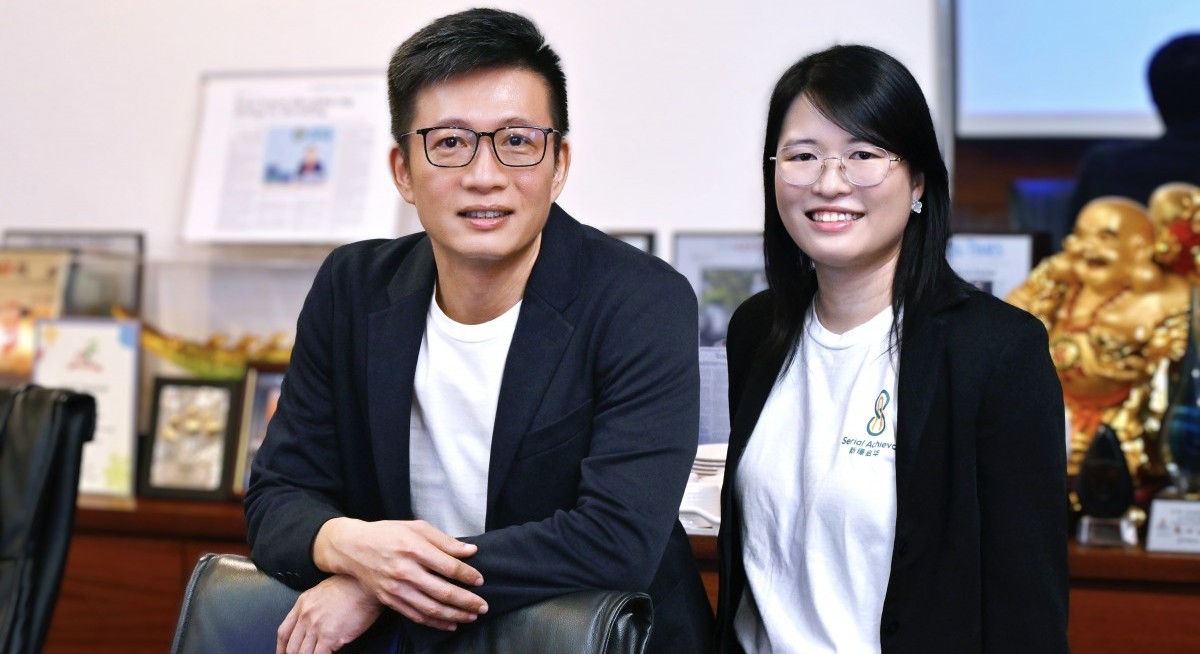
Dealing with export restrictions isn’t new for Victoria Goh, the newly minted CEO of Catalist-listed Serial Achieva (SGX:XHV ) . The local tech distributor is a subsidiary of Mainboard-listed Serial System, which went public via a reverse takeover with Axington, a shell company, in 2024. Serial Achieva’s ties to its parent company means it has the experience needed to navigate the complexities of selling chips and sensitive hardware components to clients.
“It is definitely more heightened than last time, but it was also like that even back in the day. It is just that it is not known to the public,” Victoria told The Edge Singapore. “When it comes to the military, it is all still very sensitive. So, things like having an end-user certificate or having software to be able to put in and see whether any companies are blacklisted, we already have all of it because we came out from Serial System.”
“Trade compliance is not new to us,” she adds. “It might be new to other players in this field because this is their first time with it. We have suppliers that audit us all the time. For us, we are super transparent. It’s not like, ‘Oh, I need to learn that area now.’”
See also: SoftBank’s shares tumble after report of OpenAI’s IPO delay
On Feb 28, 2025, Serial Achieva terminated a joint venture agreement with A-Speed Infotech (ASP) after ASP’s director, Alan Wei Zhaolun, was accused of illegally sending Nvidia chips from Singapore to China and charged with fraud.
Victoria is no stranger when it comes to deconstructing the nuts and bolts of Serial Achieva’s business. While she was only named CEO in February, she has been working at Serial System since 2017; the company, founded in 1988 by her father, Derek Goh, who remains very much in charge today as the company’s executive chairman and group CEO.
That’s not counting the time she spent interning and working part-time at Serial System when she was still a business student at the Nanyang Technological University between 2012 and 2015.
See also: AI IPO wealth seen bolstering luxury industry hurt by Iran war
Before taking over the reins of Serial Achieva, Victoria held roles ranging from business development and marketing to inventory and supply chain management. Now, as Serial Achieva’s CEO, she reports to her uncle, Sean Goh, who serves as the company’s non-executive chairman. Sean is also deputy group CEO at Serial System.
“At the start, I didn’t expect myself to be in the company,” Victoria says. “People’s expectations for you are a lot higher because they expect you to know it already. The good thing, of course, is that if you have an idea, people will not immediately shut you down. But you also need to learn how to convince them and not just force your way through; otherwise, there will be no adoption.”
Victoria had briefly considered other jobs in marketing or banking. “If you are going to work for someone, if you are going to give so much of your time, why not just help the family business rather than help other companies,” she reasons. “It’s actually kind of the same thing: the job scope, the amount of work. It’s all the same. It doesn’t differ that much. Of course, there will be industry specifics, but otherwise, it is more or less the same thing.”
Bet on AI, partnerships
Serial Achieva might have its roots in the IT distribution business, but with the AI boom in full swing, Victoria has much greater aspirations for the company.
In September 2025, Serial Achieva secured a US$22 million ($28 million) contract with a data centre provider to provide AI cloud services over three years. On April 27, the company landed a US$18.8 million contract to supply switches to support AI-optimised infrastructure hardware.
As a distribution business, Serial Achieva knows the importance of partnerships and networks. On June 11, Hong Kong-based UFCT Technology became Serial Achieva’s second-largest shareholder at 11% after investing $4.62 million to buy 21 million new shares at 22 cents each — a significant premium over Serial Achieva’s March 16 closing price of 15 cents, the date the investment was announced.
To stay ahead of Singapore and the region’s corporate and economic trends, click here for Latest Section
A unit of Shenzhen-listed Shannon Semiconductor Technology Co, UFCT, according to Serial Achieva, has distribution rights for brands such as MediaTek, SK Hynix and Advanced Micro Devices. It sells to customers such as Alibaba, Tencent and ByteDance, all of whom are mainland Chinese companies leading the AI charge.
Besides its headquarters in Shenzhen, UFCT runs offices in Beijing, Shanghai, Hangzhou, Hong Kong and Qingdao.
Serial Achieva, meanwhile, calls Malaysia and Thailand its core markets. In more recent times, it has expanded into Vietnam through a joint venture with local IT distributor Vietson. Victoria says the company is also looking to make inroads into both the Philippines and Indonesia and to go up the value chain. “It’s not just about AI. I’m not just looking to be a distributor. I want to be a service provider,” Victoria says.
Instead of rushing ahead, Victoria plans to take an incremental approach, first leveraging the company’s comparative advantage in distribution before gradually broadening its capabilities by hiring the right talent or pursuing acquisitions.
“We didn’t really have a choice. We want to enter that space, so we still very much have to do what we are good at, which is the distribution side,” Victoria says. “If you ask me how we can compete? It will take time because we’re new to this market, but that’s true of everything. The good thing about us is that we still have that Serial System aspect, whereby when we talk to suppliers, we will be able to get certain things, so definitely there’s still that credibility.”
In the face of increasingly loud murmurs, Victoria maintains that AI isn’t a bubble waiting to burst but a transformative technology here to stay, given how it is becoming part of everyone’s lifestyle, just like the internet. “It really is about how much people can adopt it,” she says.
That said, Serial Achieva isn’t forgetting its roots just yet. The company’s distribution business remains a key focus. “That’s why we are not saying that we will stop our core business. It’s not so much an AI play; it’s a service play,” she says.
“We don’t just want to be able to do distribution. We want to be able to provide a service, so that the value add we can give to customers will be more, whether it be in the AI space or in the traditional space.”
Chasing margin growth
In FY2025, Serial Achieva’s revenue was US$96.8 million, up 22% y-o-y, while net loss narrowed 58% y-o-y to US$609,000 in FY2025.
Victoria hopes to further improve the numbers with the transition to becoming a service provider, and she is eyeing acquisitions to achieve this goal.
The shortage of hardware components, such as memory chips, is likely to impact Serial Achieva’s profit margins this year. According to Gartner, combined prices for dynamic random-access memory (DRAM) and solid-state drives (SSDs) are expected to surge by 130% by the end of 2026. This will be both a boon and a bane to Serial Achieva.
“Usually, when there’s a shortage, whoever has the stock will be able to sell it at a higher price,” says Victoria. “There’s only a bigger margin if you have the stock. If you don’t have the stock, then naturally you are already buying at the current market rate.”
“The shortage is not going to end so soon, so you have to continue to buy. If you don’t buy, next time you will be the one who cannot provide or supply to your customers,” she adds.
Victoria is mindful of charging higher prices, even if demand for some components has increased. “We don’t want to offend any resellers if they find that you are too opportunistic,” she says.
“If we have the products that they want, we can do it in two ways: one is I capture that margin; the other one is to say, ‘Hey, I actually have some ageing inventory. Let’s bundle it together so that I can push some of it out.’ Then I will take that hit on the margin, but I will then be able to clear some of the ageing inventory that has been stuck.”
Charting a new path
Now, despite its growth prospects, Serial Achieva suffers from a common grouse — its shares are thinly traded, and even with UFCT’s dilution, Serial System remains firmly in control with 69.09%.
Victoria argues that the ownership structure reflects where the company is — a fledgling player trying to gain a foothold in a highly competitive space. In that sense, Serial Achieva needs to rely on its parent company first to earn the trust and credibility of investors and customers.
“We cannot just say that we want to do it on our own,” Victoria says. “When we do it on our own, sometimes the investor might also be thinking, ‘Is it that you don’t have confidence in yourself? Are you just letting it go to the market because this is a business that you don’t want anymore?’ So, Serial System is there because we still believe in it.”
In the long run, Victoria expects Serial Achieva’s ownership structure to change, especially if it succeeds in its quest to become a service provider rather than just a traditional distribution business.
“Over time, definitely, Serial System will slowly be diluted out because we are still a separate entity,” Victoria says. “That is what we want to tell the investors. We are starting to see some of the rewards, but it is not yet our end goal. We have not reached that final destination.”




