


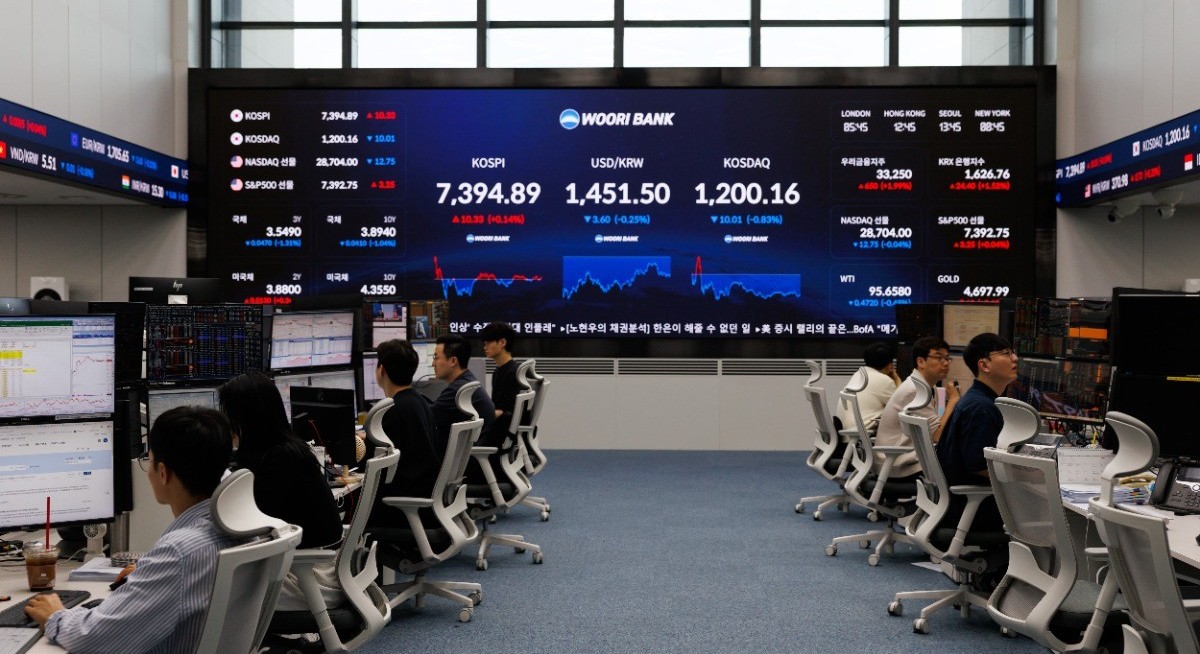


(May 11): JPMorgan Chase & Co raised its target for South Korean stocks for the second time in less than a month, citing improvement in the semiconductor cycle, corporate governance reforms and industrial-sector growth.
The Wall Street bank lifted its base-case for the Kospi to 9,000 and its bull‑case target to 10,000, implying a 27.8% upside from Monday’s close. That compares with base and bull targets of 7,000 and 8,500 set in late April.
Strategists are racing to upgrade their outlook on South Korean equities, buoyed by earnings growth fuelled by the global artificial intelligence (AI) boom. The Kospi surged 4.3% on Monday to a record of 7822.24, extending its year‑to‑date rally to around 86% and cementing its status as one of the world’s top performers. JPMorgan’s move follows Goldman Sachs Group Inc, which last week raised its Kospi target to 9,000, citing Asia’s strongest earnings momentum.
While technicals will again look stretched near-term, “key fundamentals of the market remain on track for now — memory cycle conditions, governance reforms, thematic growth”, JPMorgan strategists including Mixo Das wrote in a note. “In these unique conditions, we believe it remains appropriate to stay positioned for further upside and not preemptively anticipate a cycle-end.”
As Kospi’s gains extend, overheating signals are also growing. The index has been in overbought territory every session this month, based on its 14‑day relative strength index. Market breadth is also narrow, with only about 120 stocks in the 835-member benchmark rising on Monday.

See also: Goldman sees ‘AI-driven super surplus’ swelling in South Korea, Taiwan
Steve Brice, Standard Chartered’s global chief investment officer, said there’s heightened risk of a correction in the coming weeks. The bank recently downgraded semiconductors to neutral from overweight.
“This is very much a crowded trade now,” he said in a Bloomberg TV interview. “So we wouldn’t be surprised at all to see some sort of short-term correction coming through.”
Domestic retail investors have been a key source of support for the latest leg of the rally, adding nearly six trillion won (US$4 billion or $5.18 billion) worth of Kospi shares this month. Foreign investors have been taking profit, selling more than seven trillion won on a net basis.
See also: SoftBank plans to make large-scale batteries for AI data centres
The next two years may mark a sustained upcycle for memory chips, driven by average selling prices and volumes, the strategists added. Memory-chip stocks account for 50% of the weight in the South Korean equity benchmark and have driven about 70% of the gains this year.
Uploaded by Tham Yek Lee




