


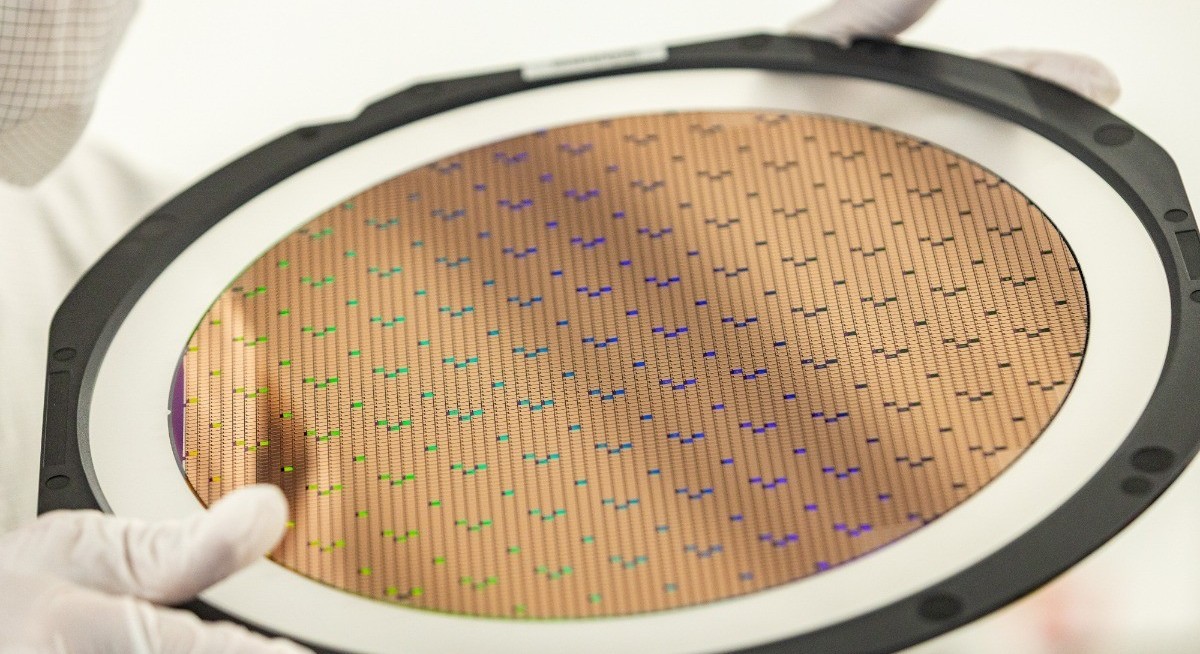


BERLIN (June 12): Infineon Technologies AG is preparing to open its largest single investment, a €5 billion (US$5.8 billion or $7.43 billion) semiconductor factory built with the help of European Union subsidies, as the bloc seeks to boost chip production.
The power chip fab, which is an extension of the German company’s Dresden campus, will open on July 2, chief operating officer Alexander Gorski said this week at the site. The project is a major recipient of EU Chips Act funds and received about €1 billion in subsidies.
The new plant represents a rare success for the bloc’s flagship semiconductor law, which was drawn up during Covid-era hardware shortages with the goal of doubling the EU’s share of chip production to 20% by 2030. However, the act has fallen short of its ambitions and key projects, such as a cutting-edge fab operated by Intel Corp in the German city of Magdeburg, were called off despite generous subsidies.
Brussels has drafted a new version of the act this year in a fresh attempt to bolster investment in the sector. The effort is a pillar of the EU’s technology sovereignty strategy, a plan to reduce the continent’s dependencies on Chinese and US technologies by investing in local champions and favouring EU-made tech products such as chips or cloud services over foreign alternatives.
Infineon, traditionally a chipmaker for the automotive industry, has increasingly benefited from soaring demand for power chips used in AI data centres, which will be produced at the new facility.
“The AI data centres currently being built and planned around the world will consume twice as much electricity in 2030 as they do today,” Gorski said. “That’s as much as the entire Federal Republic of Germany.”
See also: Closer to the quantum computing dream
Chip production at the Dresden fab will be scaled over time depending on demand, potentially adding as much as €5 billion in revenue per year, Gorski said, declining to comment on when full capacity will be reached. The company has invested around €2 billion on construction and the remaining amount will be spent over time to add more machines to the fab, he added.
The new facility is “a key catalyst”, Bank of America analysts including Didier Scemama wrote in a note last week. Demand from Al customers is materially above Infineon’s current capacity, they said, adding the imbalance could improve in the 2027 and 2028 financial years. The analysts raised their Al power revenue forecast for the company by €500 million to €4.5 billion for 2028.
Infineon expects data centre-related revenue to rise from around €1.5 billion in fiscal 2026 — roughly 10% of sales — to €2.5 billion in 2027, it said last month.
See also: Meta starts unwinding Manus deal by splitting operations, data — Bloomberg
Infineon shares rose 2.6% on Thursday to €77.06 and have more than doubled this year.
The hundreds of billions of dollars being invested in AI are driving the rapid expansion of data centre capabilities around the world. Infineon doesn’t produce advanced AI chips, like those designed by Nvidia Corp. But the power semiconductors it plans to produce in Dresden are still needed for AI infrastructure.
As the spending boom lifts the fortunes of companies even tangentially linked to AI, some investors fear a bubble while others clamour to get a piece of the action. Elon Musk’s SpaceX — which includes xAI, its satellite business and the X social network — is preparing for a record initial public offering this week that would value the company at about US$1.8 trillion ($2.31 trillion). OpenAI and Anthropic PBC, two leading generative AI startups, are also preparing to list. However, some planned data centre projects have failed to materialise.
“Investments in building AI data centres are real investments,” Gorski said. Major tech companies are investing more than US$700 billion in such projects this year and Infineon is “seeing very strong growth here”, he added.
Uploaded by Chng Shear Lane




