




It took the Islamic finance industry nearly 35 years to reach US$1 trillion ($1.29 trillion) in global assets. The second trillion followed in just four years. These include asset classes like Islamic banking, sukuk (Islamic bonds), Islamic funds and takaful (Islamic insurance).
Today, Islamic finance assets stand at approximately US$5.98 trillion worldwide, having expanded 21% y-o-y in 2024, according to the London Stock Exchange Group (LSEG).
While Islamic banking dominates with 72% of total assets, the comparatively low penetration of Islamic funds (5%) and takaful (2%) points to significant headroom for growth.
For wealth holders with cross-border exposure, these shifts are no longer theoretical. Increasingly, portfolios built around conventional, single-market strategies are revealing gaps in risk filtering, governance and cross-jurisdictional coherence as markets fragment and succession timelines accelerate.
Closer to home, many high-net-worth individuals (HNWI) in Southeast Asia often receive fragmented, inconsistent advice across jurisdictions. As legacy wealth grows and family structures become more complex, this misalignment can create challenges in governance, succession planning and portfolio oversight.
The world’s first modern commercial Islamic bank was founded in 1975, forming the foundation of the modern Islamic finance industry. Half a century after its establishment, the Dubai Islamic Bank has evolved Islamic finance from a niche offering into a values-based framework for long-term wealth preservation and purposeful capital creation, anchored in principles such as asset backing, transparency and disciplined stewardship.
Shariah screens exclude companies involved in prohibited sectors and those with excessive leverage, helping to support portfolio discipline and resilience. Islamic practices such as zakat also encourage financial contribution to the less privileged segments of the community at both the individual and institutional levels.
Viewed this way, Islamic finance is not merely an ethical overlay. It can also function as a form of structural risk discipline within portfolios, aligning values-based principles with the broader objective of mitigating risk. This alignment with sustainability and financial discipline has enabled Islamic finance to weather multiple economic shocks, note Mustafa Adil, LSEG’s head of Islamic finance, and Khalid Khalafalla, acting CEO of the Islamic Corporation for the Development of Private Sector (ICD).
“This is leading to an ever-closer union of Shariah and sustainable principles and products, and this has helped the Islamic finance industry weather some of the biggest storms of the global economy, whether the financial crisis of 2008 or the collapse in oil prices following the onset of regional conflicts,” they add in a foreword for ICD and LSEG’s 74-page Islamic Finance Development Report 2025, released in October 2025.

Although Islamic finance is present in 98 countries, it remains concentrated in a handful of core markets. Regionally, the Gulf Cooperation Council (GCC) and the rest of the Middle East and North Africa (MENA) regions each hold approximately US$2.34 trillion in assets, while Southeast Asia is nearing the US$1 trillion mark.
Based on metrics such as financial performance, knowledge and awareness, Malaysia emerges as the world’s top market, according to LSEG’s Islamic Finance Development Indicator (IFDI). Indonesia, another significant Southeast Asian market, places fourth in LSEG’s 2025 ranking. In between them are Saudi Arabia (#2) and the United Arab Emirates (#3). These most-developed Islamic finance markets continue to drive an expansion across banking and capital markets, reinforcing Islamic finance as an increasingly significant component of global capital flows.

Islamic finance in Southeast Asia
Southeast Asia’s Islamic finance ecosystem is shaped by complementary strengths across its key markets. In Malaysia, these values have been institutionalised through Value-Based Intermediation (VBI), a system jointly developed by Bank Negara Malaysia and the industry to encourage Islamic financial institutions to align their operations with outcomes that generate positive and sustainable impact.
Since the start of this journey in 2018, the Islamic finance industry in Malaysia has facilitated over US$154.4 billion in VBI-aligned initiatives, empowering micro-, small- and medium-sized enterprises (MSMEs), expanding access to affordable housing, enhancing public infrastructure, and supporting renewable and green projects.
Singapore, meanwhile, plays a strategic role as a regional wealth hub, supported by its regulatory framework and its ability to intermediate cross-border capital. Together with Indonesia’s large and youthful market, these three economies form a natural Asean corridor for cross-border Islamic and conventional wealth flows.
As client needs and expectations evolve, Islamic finance is becoming an integral component of broader wealth and financing strategies, offering a holistic approach across wealth creation, accumulation, preservation, purification and distribution.
This allows Shariah-compliant solutions to be integrated across deposits, investments, financing and risk management, while preserving flexibility across jurisdictions.
The Islamic finance industry is projected to grow around 10% annually through 2029, reaching nearly US$9.7 trillion by 2029. Key trends that will shape this growth include cross-border connectivity, regulatory improvements and strategic initiatives by governments.
“Islamic finance is no longer peripheral — it is a globally relevant financial framework shaping the future of cross-border wealth and capital,” says Sazzali Sabandi, head of Islamic banking, Maybank Singapore.

Rooted in Asean, Maybank positions itself as a trusted regional wealth partner for clients seeking holistic financial solutions. Its commitment to Islamic wealth management is reflected in its focus on philanthropy and estate planning solutions.
Maybank also has the region’s largest team of trained Islamic wealth management specialists, supported by a bespoke training programme developed with the International Centre for Education in Islamic Finance (INCEIF), a Kuala Lumpur-based university established by Bank Negara Malaysia in 2005 to develop human capital and knowledge leadership in Islamic finance.
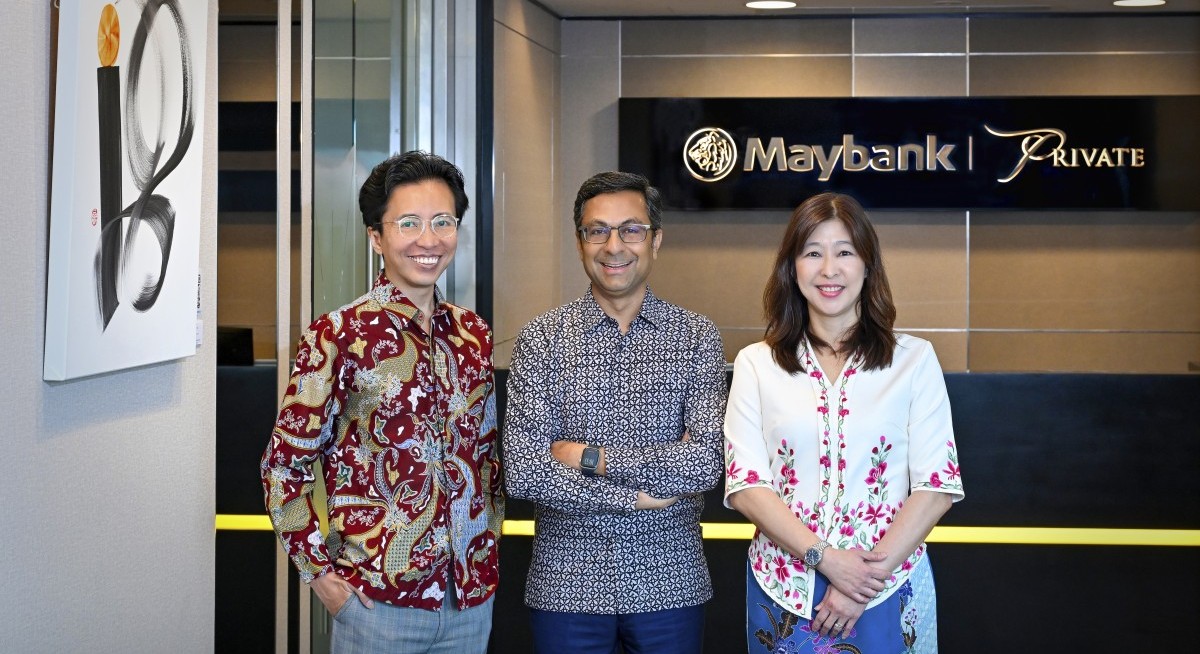
“Islamic solutions today are not standalone; they are fully integrated into how sophisticated clients structure, grow and preserve wealth across markets,” says Maybank’s head of group Islamic wealth management Anurag Mathur.

The new demands of Asia’s wealthy families
Wealth clients today are operating in an environment defined by volatility, geopolitical fragmentation and structural change. Many are seeking to preserve real returns in a higher-forlonger interest rate environment while balancing capital preservation with long-term growth.
Within their own businesses and families, HNWIs must also manage intergenerational wealth transfer amid increasingly complex succession needs. Their priorities are expanding beyond accumulation to include legacy planning, family governance, philanthropy and long-term preservation across generations.
A recent joint report led by Boston Consulting Group highlights this shift, noting that Asia’s private wealth is projected to reach US$99 trillion by 2029, with succession planning and governance emerging as defining issues for wealthy families in the region. Beyond their home markets, HNWI also face cross‑border structuring challenges including tax, regulatory and multi-jurisdictional considerations. Above all, many are seeking greater transparency and control over portfolio structures and outcomes.
Demand for trusted advice and transparency is often just as valued as the suite of wealth products available. This reflects the changing profile of the region’s HNWIs and the growing sophistication of their portfolios.
Asset managers in Singapore oversee more than $5.4 trillion in assets under management, with a substantial proportion sourced from offshore investors. Singapore continues to strengthen its position as a regional and global financial hub; the number of family offices here has grown from around 400 in 2020 to over 2,000 today, reflecting strong regional wealth inflows.
Singapore’s Variable Capital Company (VCC) framework has also seen strong adoption since its launch in 2020, with approximately 1,200 VCCs and close to 2,700 sub‑funds established as at end-2024. A significant proportion of these structures are linked to family offices and external asset manager strategies.
Singapore has also emerged as a key destination for Greater China wealth flows, particularly among entrepreneurs and business families. Private banks have reported annual AUM growth of approximately 25% to 30% in their Greater China family office segments.
Fund flows into Singapore suggest a growing appetite for growth assets. Allocations to alternatives, hedge funds and private equity increased materially from US$7.4 million in 2024 to US$84.9 million in 2025, indicating a shift from capital preservation towards more return-seeking strategies.
Greater exposure to private markets can help portfolios access illiquidity premiums (the additional returns expected from assets with longer holding periods) and return drivers beyond traditional public assets. It may also reflect confidence in long-term structural opportunities, rather than a purely defensive stance in uncertain markets.
For a family office, however, alternatives and private market allocations must be tailored to the client’s objectives, values, liquidity needs and risk appetite. A model portfolio should be guided by reference points such as the family’s investment policy, return targets, time horizon, governance framework and relevant institutional benchmarks.
The final allocation should also account for client-specific risks and preferences, including sector or geographic tilts, values alignment, concentration risks, succession needs and tolerance for illiquidity. This is particularly important in private markets, where information is less transparent than in public equities. Family offices must therefore remain nimble, combining rigorous due diligence with the flexibility to adjust allocations as opportunities and client priorities evolve.

From product-led selling to integrated advisory
As the Asia-Pacific wealth industry enters a new age of sophistication, product-led selling has steadily lost relevance, exposing the limitations of fragmented, single-market approaches. Instead, HNWI in the region seek holistic advisory-led solutions.
Clients who are entrepreneurs themselves, for example, find that their wealth and businesses are becoming increasingly interconnected; this requires holistic solutions that can serve both their personal and corporate needs. This is a breadth that lies beyond the remit of single-market, product-led services.
Segments that were once a corner of the global market, like Islamic finance, have matured into full-fledged industries as the web of the world grows increasingly complex. Making the shift to an integrated, advisory-led cross-border approach offers better control and governance of one’s business and portfolio. For families and founders reviewing cross-border structures, the priority is clarity and control across jurisdictions and asset classes.
Against this backdrop, Maybank positions itself as a trusted regional wealth partner with deep Asean connectivity. With key operating markets of Malaysia, Singapore and Indonesia, Maybank’s wealth suite complements both intra-Asean businesses and southbound fund flows from Greater China.
Serving as a gateway for Asean clients to access regional and global investment opportunities, Maybank leverages its universal banking capabilities to deliver holistic wealth, business and investment solutions as a onestop financial supermarket.
Through the Malaysia-Singapore-Indonesia corridor, Maybank aims to facilitate cross-border wealth flows and business expansion, offering both conventional and Islamic wealth solutions. This allows clients to pursue values-based investing alongside financial returns.
Alice Tan, Maybank’s head of group wealth management, says Maybank’s advantage goes beyond its presence in Asean and extends into the bank’s ability to connect capital, opportunities and clients across the region. “Our role goes beyond managing capital. We help clients connect wealth, opportunity and purpose across Asean’s long-term growth story.”

Photos: Maybank, Albert Chua/The Edge Singapore




