


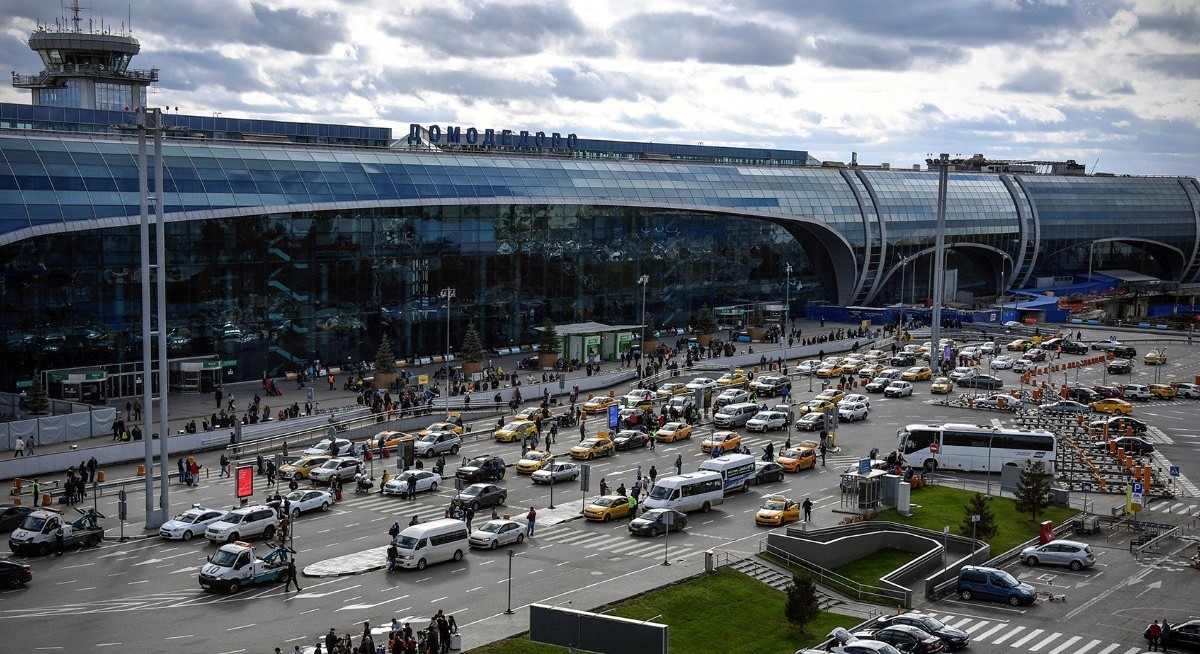


(Jan 21): Russia seized a record amount of assets last year but is struggling to profit from their sale, with the failed auction of a major Moscow airport underscoring the challenges the state faces in topping up its coffers with the proceeds.
The Kremlin’s effort to monetise its ownership in Domodedovo Airport, one of Russia’s busiest, fell flat on Tuesday (Jan 20) after the state sought at least 132 billion rubles for the property, which would have eclipsed last year’s total proceeds from privatisations but didn’t attract a single qualifying bid.
Companies linked to several billionaires are interested in the property, according to local media, but potential bidders stepped back from the purchase, deterred by the airport’s sliding performance and heavy debt load.
“Setting legal issues aside, how can you try to sell something worth 40 billion rubles for 130 billion?” billionaire Oleg Deripaska said in a Telegram post Tuesday after the unsuccessful sale. While Russian media had named his companies as among those interested in Domodedovo, Deripaska singled out high borrowing costs and a strong ruble — both the result of Russian economic policy — as factors making such a deal less attractive.

Russia confiscated a record 3.12 trillion rubles' worth of property in 2025, more than four times the amount in 2024, according to a report by Moscow-based corporate law firm Nektorov, Saveliev & Partners. The airport was seized last summer after authorities said the strategically important asset was under the control of people with foreign citizenship and residence — a violation of Russian law.
See also: Greece and Malta hesitate over EU’s Russia oil services ban — Bloomberg
Asset grabs have surged as the state seeks to raise revenue with Russian President Vladimir Putin’s invasion of Ukraine approaching the four-year mark. Russia’s economy is on the brink of recession while collapsing energy revenue and increased war spending have widened the budget deficit. Proceeds from privatisation sales could help fill the hole but high borrowing costs and weakness in civilian industries are slowing the pace of such sales — and depressing potential prices.
In December, the government failed to sell the previously nationalised Raven Russia Group, which owns nearly two million sq m of warehouse property, including in Moscow and St Petersburg. That auction drew no bids. A 90 billion ruble price tag limited the pool of potential buyers.
The sale of Yuzhuralzoloto PJSC, one of the country’s biggest gold producers, which was nationalised last year, was delayed due to the company’s complex corporate structure and ownership of non-core assets, including in agriculture, the Russian business daily RBC reported, citing Deputy Finance Minister Aleksey Moiseev.
See also: Zelenskiy asked Trump for 50-year security guarantee for Ukraine
Russia plans to try selling Domodedovo again next week in a so-called Dutch auction that could see the price fall by as much as half, according to a person familiar with the government’s plans who declined to be identified because the information is not public.
Russia’s biggest airport, Moscow’s Sheremetyevo, where billionaire and Putin ally Arkady Rotenberg is a co-investor, would take part in a second auction for Domodedovo if the state moves forward with a price-cutting round, the airport’s press service told RBC on Tuesday.
The government press service didn’t immediately respond to a request to comment on prospects for the Domodedovo auction.
Domodedovo’s previous owner, Dmitry Kamenshchik, took control of the airport in the 1990s and spent billions of dollars to attract foreign airlines such as Lufthansa and British Airways, turning it into Russia’s largest aviation hub at one time. In 2016, he was placed under house arrest when prosecutors blamed the tycoon for “unsafe services” over a 2011 suicide bombing at the airport. The charges were eventually dropped.
The airport was Moscow’s third busiest and fourth in Russia overall in 2024, handling 15.6 million passengers. Russia’s 2022 invasion of Ukraine has affected its operations as many airlines halted flights to the country amid international sanctions. The airport also has more than 75 billion rubles of debt.
Amid the high volume of asset grabs, the government has stumbled upon another dilemma.
“You can’t sell them just to anyone; buyers should be loyal people, competent to run companies,” said Alyona Vandysheva, head of Transparency International Russia. At the same time, potentially competent buyers fear their property rights could be challenged in the future, she said.
Nevertheless, property seizures are likely to continue, according to Alexandra Prokopenko, a fellow at the Carnegie Endowment for International Peace. “The war creates a very fertile environment for assets to change hands,” she said.
Uploaded by Arion Yeow




